Join
Join
 Shorts

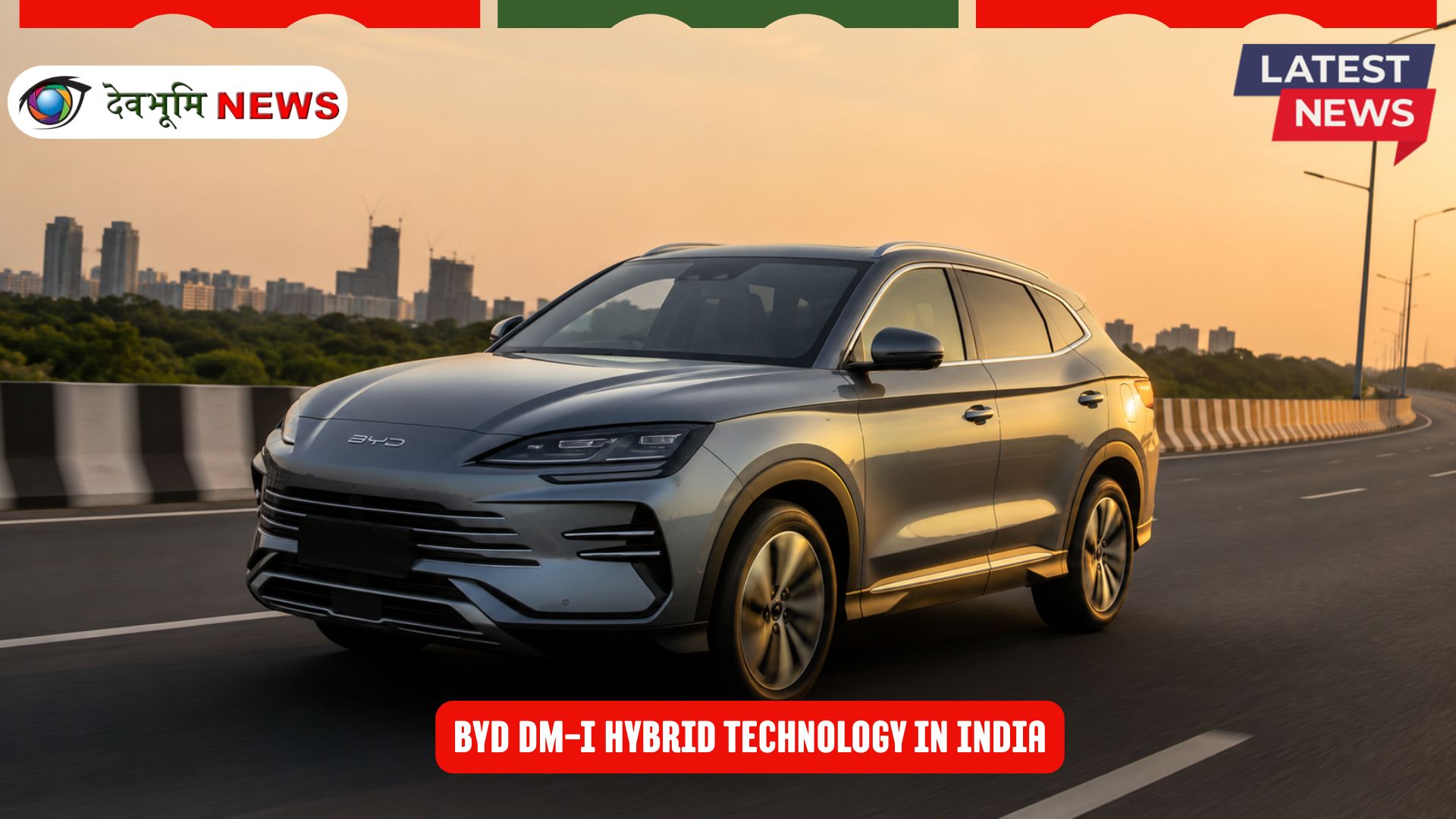
BYD DM-i hybrid technology in India has arrived at a very interesting time. EV buyers want low running costs, petrol buyers want peace of mind, and everyone stuck in traffic just wants the car to stop drinking fuel like it has a personal grudge against their wallet.
BYD has now showcased its DM-i plug-in hybrid system for India, and the big headline is hard to ignore: a claimed combined driving range of over 1,200km. The technology is expected to make its India production debut with the BYD Seal U DM-i, which is slated for launch by the end of 2026.
In simple words, this is not a regular hybrid. It is not just a petrol car with a small battery helping in traffic. BYD DM-i is designed to feel more like an EV first, with the petrol engine stepping in when needed. Think of it as an electric car that carries its own backup generator, minus the drama of searching for a charger at 11:30 pm.
What is BYD DM-i Hybrid Technology in India?
BYD DM-i hybrid technology in India refers to BYD’s Dual Mode Intelligent plug-in hybrid system. It combines a petrol engine, an electric motor, a battery pack, and smart energy management software to deliver an electric-first driving experience.
Unlike a traditional strong hybrid, where the petrol engine often remains the main hero, DM-i gives the electric motor a much bigger role. In most city driving conditions, the vehicle can move primarily on electric power. The petrol engine supports the system when extra power is needed or when the battery needs help during longer journeys. BYD describes its Super DM technology as offering EV-like smoothness, instant response and quiet driving, with the petrol engine used efficiently to extend range.
That matters for India because our market has one giant problem: people like EVs, but not everyone trusts charging infrastructure yet. Range anxiety is real. Sometimes it is not even anxiety; it is just Google Maps showing one charger, three reviews, and two of them saying “not working.”
Why BYD is Bringing DM-i Hybrid Technology to India Now
BYD already sells electric vehicles in India, including models such as the Atto 3, Seal and Sealion 7. But the arrival of BYD DM-i hybrid technology in India signals something bigger than just another product showcase. It shows that BYD is looking at Indian buyers who want electrification, but still need long-distance flexibility.
As of June 2026, BYD India has introduced DM-i technology locally, and reports say it will support the company’s future vehicle plans in the country. The system has been positioned around high efficiency, long range and reduced dependence on public charging.
This is where plug-in hybrids can become interesting. A pure EV is great if you have reliable charging at home or work. A strong hybrid is great if you want efficiency without plugging in. A plug-in hybrid sits in the middle: charge it regularly and it can behave like an EV for short trips; take it on a highway run and the petrol engine saves the day.
Basically, it is the “why not both?” meme, but with wheels.
BYD Seal U DM-i India Launch: What We Know
The first major India-bound model linked with BYD DM-i hybrid technology in India is the BYD Seal U DM-i. Autocar India reports that BYD has showcased its proprietary DM-i plug-in hybrid technology in India and that the Seal U is expected to launch by the end of 2026 with a PHEV powertrain.
CarWale also reports that the Seal U DM-i has been introduced in India with a plug-in hybrid powertrain and is expected to launch by 2026-end. The model is claimed to offer over 1,200km of combined range, including around 70km of EV-only driving.
That EV-only figure is important. For many urban users, 70km can cover daily office runs, school drops, grocery trips and the occasional “I just went out for bread and returned with three shopping bags” detour. If charged regularly, the petrol engine may not need to wake up every day.
How BYD DM-i Hybrid Technology Works
The DM-i setup uses a petrol engine, an electric motor and BYD’s battery technology. Reports from India mention a 1.5-litre Xiaoyun petrol engine with a claimed thermal efficiency of 43.04%, along with BYD’s Blade Battery.
The system can operate in different modes depending on driving conditions:
EV Mode
In EV mode, the car runs mainly on battery power. This is ideal for city driving, short commutes and low-speed traffic. It keeps the cabin quiet and helps reduce fuel use.
HEV Series Mode
In this mode, the petrol engine can act more like a generator to support the electric drive system. The wheels may still be driven primarily by the electric motor, which keeps the driving feel smooth.
HEV Parallel Mode
At higher speeds or during stronger acceleration, the petrol engine and electric motor can work together. This helps deliver better performance when needed, especially on highways.
In human language: the car decides when to sip electricity, when to burn petrol, and when to use both. Hopefully, it makes better decisions than we do when ordering “just one plate” of momos.
1,200km+ Claimed Range: Why It Matters
The biggest marketing hook for BYD DM-i hybrid technology in India is the claimed 1,200km+ combined range. This figure gives BYD a strong talking point because Indian buyers still take range very seriously. We are a country where people ask “kitna deti hai?” before they ask about airbags, boot space or even price.
The 1,200km+ range claim does not mean every buyer will get the same number in real-world use. Driving style, traffic, road conditions, battery charge level, AC usage and highway speeds will all affect efficiency. But even with real-world variation, the idea is clear: DM-i wants to reduce the two biggest worries buyers have — fuel bills and charging stops.
For long-distance users, this can be a practical advantage. A pure EV may need planned charging breaks. A DM-i plug-in hybrid can use petrol when charging is not available. That makes it easier for people who travel between cities, visit smaller towns or simply do not want their road trip to become a charger-hunting treasure hunt.
Why Plug-In Hybrids Could Finally Enter India’s Spotlight
India has seen hybrids before, but plug-in hybrids have never truly gone mainstream. They often faced three problems: high prices, limited model options and unclear customer awareness.
Now, things are changing. EV adoption has made buyers more familiar with batteries, motors and charging. At the same time, many people still want the convenience of petrol. This creates space for BYD DM-i hybrid technology in India to make a stronger case.
The timing also matters because more premium buyers are now open to alternative powertrains. Reports have also pointed to renewed attention around plug-in hybrids in India, with models like the BYD Seal U DM-i and Mercedes-Benz S-Class PHEV bringing the format back into discussion.
If priced well, DM-i could appeal to buyers who are not ready for a full EV but want something more advanced than a conventional petrol SUV.
BYD DM-i Hybrid Technology in India vs Strong Hybrid Cars
A regular strong hybrid charges its battery through regenerative braking and engine operation. You do not plug it in. It is simple, efficient and convenient.
A plug-in hybrid like the Seal U DM-i has a larger battery and can be externally charged. This allows more electric-only driving. The advantage is that short daily trips can be completed mostly on electricity, while the petrol engine remains available for longer trips.
The catch? Owners need to actually charge it. A plug-in hybrid without regular charging becomes like a gym membership you never use: technically useful, emotionally disappointing.
So, BYD DM-i hybrid technology in India will make the most sense for buyers who have access to home or office charging and want low daily running costs without fully depending on the public EV charging network.
What This Means for Indian Buyers
For Indian buyers, DM-i could offer three big benefits.
First, it gives EV-like driving for everyday use. That means quiet starts, smooth acceleration and lower fuel use in the city.
Second, it reduces range anxiety. With petrol backup, drivers do not have to plan every long trip around charging points.
Third, it provides a bridge between petrol cars and full EVs. Some buyers may not be ready to jump directly into a battery-only car. A plug-in hybrid gives them a softer landing.
But there are still questions. Price will be crucial. Import duties, localisation, battery cost and positioning will decide whether the Seal U DM-i becomes a niche premium SUV or a serious volume product. BYD also needs to build trust around service support, resale value and long-term battery durability in India.
READ MORE
- Hardik Pandya ODI Return:10 ओवर का पूरा स्पेल डालकर वनडे क्रिकेट में वापसी के लिए हुए फिट
- Christopher Nolan The Odyssey: 7 Epic Reasons This Powerful July 17 Debut Has India Obsessed
- ज़ोजिला टनल: भारत की सामरिक ताकत को नई उड़ान, पाकिस्तान और चीन के खिलाफ सेना की बढ़ेगी गतिशीलता
Final Thoughts: Is BYD DM-i Hybrid Technology in India a Big Deal?
Yes, BYD DM-i hybrid technology in India could be a big deal, but only if BYD gets the pricing, positioning and ownership experience right.
The technology itself sounds promising: EV-like driving, petrol-backed range, Blade Battery integration and a claimed 1,200km+ combined range. The upcoming Seal U DM-i could give Indian buyers a new kind of electrified SUV, one that does not ask them to fully trust charging infrastructure from day one.
In a perfect world, everyone would have clean electricity, fast chargers everywhere and zero range anxiety. In the real world, we have power cuts, blocked chargers, highway dhabas and family members who ask, “Beta, petrol gaadi hi le lo na?”
That is exactly why plug-in hybrids could make sense.
BYD DM-i hybrid technology in India is not just another fancy automotive acronym. It may become the middle path Indian buyers have been waiting for: electric when possible, petrol when necessary, and efficient enough to make every fuel stop feel a little less painful.