Join
Join
 Shorts

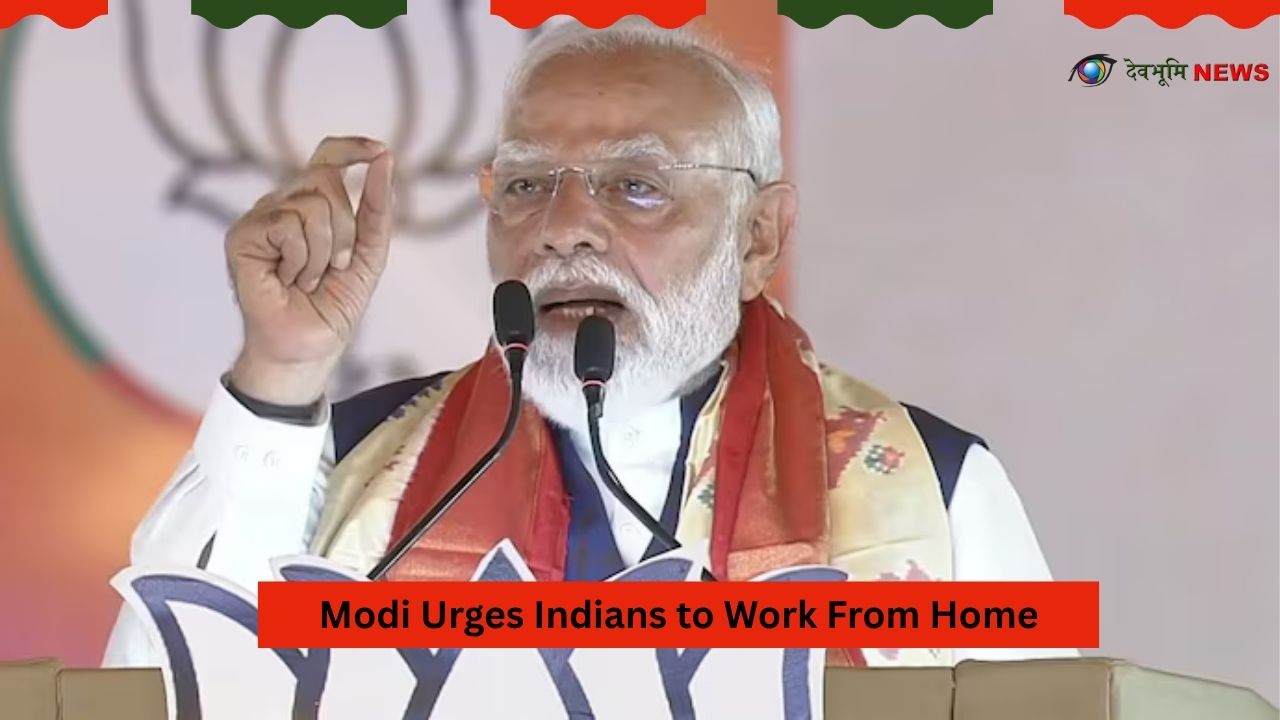
Modi Urges Indians to Work From Home, Cut Gold Buying, and Limit Foreign Travel Amid Iran War Oil Crisis: Prime Minister Narendra Modi has appealed to Indians to return to the idea of working at home. Invest in less gold and restrict foreign travel in order to cope with an increase in prices for energy around the world caused by the lingering tensions within the Middle East.
At a public gathering in Hyderabad on the 10th of May, Modi framed the appeal as both an economic and a national obligation, stating that the systems used during the Covid-19 pandemic, such as remote work online, online conferences, and video conferences, were already working and ought to be reintroduced to serve the national interest.
India imports the majority of its oil, and its bill for crude has seen a multi-billion-dollar rise in the wake of the US’s and Israel’s conflict against Iran, as well as the Strait of Hormuz—the narrow Gulf chokepoint — closed for two and a half months currently. Analysts have described Modi’s appeal as the “most radical” yet.
In his speech, Modi invoked the spirit of patriotism to unite citizens in support of the cause. “Patriotism is not just concerned with the desire to give up your life to protect the frontier. Today it’s about living responsibly and observing our obligations to our nation every day,” he said.
What Modi Asked Citizens to Do
In a bizarre appeal aimed towards the middle class, Modi asked citizens to be able to avoid vacations abroad or weddings abroad, as well as any other travel that is not essential for a minimum of one year. Modi said that cutting down on expenditures on discretionary travel can help preserve India’s reserves of foreign currency. Modi also urged Indians to stay clear of buying gold for a whole year, as the import of large quantities of gold puts more pressure on reserves of foreign exchange.
Modi advised farmers to cut their use of chemical fertilizers by 50 percent and use solar-powered irrigation pumps instead of diesel-powered systems. He also highlighted the importance of reducing the consumption of edible oils and linked it to national economic interests as well as public health. He also urged the use of domestic tourism over international.
Markets Rattle, Rupee Weakens
The impact was evident in the Indian trading on Monday. Analysts believe Modi’s remarks were among the main reasons why the benchmark Sensex index fell by more than 1,000 points during the first trade, amid fears of an extended economic turmoil.
The consequences have been apparent across a variety of industries, as a multitude of job opportunities are being threatened in glass factories, plastic tiles, and other products. A decrease in the supply of fertilizer has led to concerns over the availability of farm products and higher prices for food. The effects have been particularly severe for the Indian rupee, which has smashed new lows in recent weeks, causing an increase in import costs and increasing pressure on inflation.
India has spent $174.9 billion on petroleum and crude products, or around 22 percent of its total imports during the fiscal year that ended in March 2026, which highlights the country’s dependence on commodities from overseas. India is the world’s second-largest gold buyer, following China, and has spent nearly $72 billion in gold imports.
Opposition Hits Back
The announcement was met with harsh criticism from leaders of the opposition. Congress party’s leader Rahul Gandhi said the government was shifting the burden to ordinary citizens. “These aren’t a sermon—they are evidence of incompetence,” he wrote on X, in which he claimed the government was deflecting accountability by shifting the burden onto the citizens.
A Global Crisis
The conflict within Iran and the choke of the Strait of Hormuz have affected economies all over the world, particularly in Asia, and many nations are suffering from rising costs for fuel. It is said that the International Energy Agency has described it as the “largest supply disruption of all time.”
China has ordered its oil refineries to temporarily stop exporting fuel; however, petrol remained expensive, and certain Chinese airlines halted flights when the prices of jet fuel soared. Certain Australian states have made public transportation free or cut prices to discourage driving. The Philippines declared a national emergency in the month of March and offered subsidies to transport drivers and established a four-day working week for civil employees. Sri Lanka introduced fuel rationing and also shifted to a four-day work week, which included closing schools, colleges, and administration offices every Wednesday.
International broker UBS Securities has lowered its estimate of India’s growth rate in the year to March 2027 by 6.2 percentage points from 6.7 percent. The brokerage describes this Middle East conflict as “a huge energy shock that has historically high risk and unidirectional macro risks.”
Analysts believe Modi’s comments indicate that government directives from the top to limit energy use, or perhaps a revision of diesel and petrol prices, could be too far off.
Read Also: PM Modi Congratulates Vijay After major Tamil Nadu CM Swearing- In