Join
Join
 Shorts

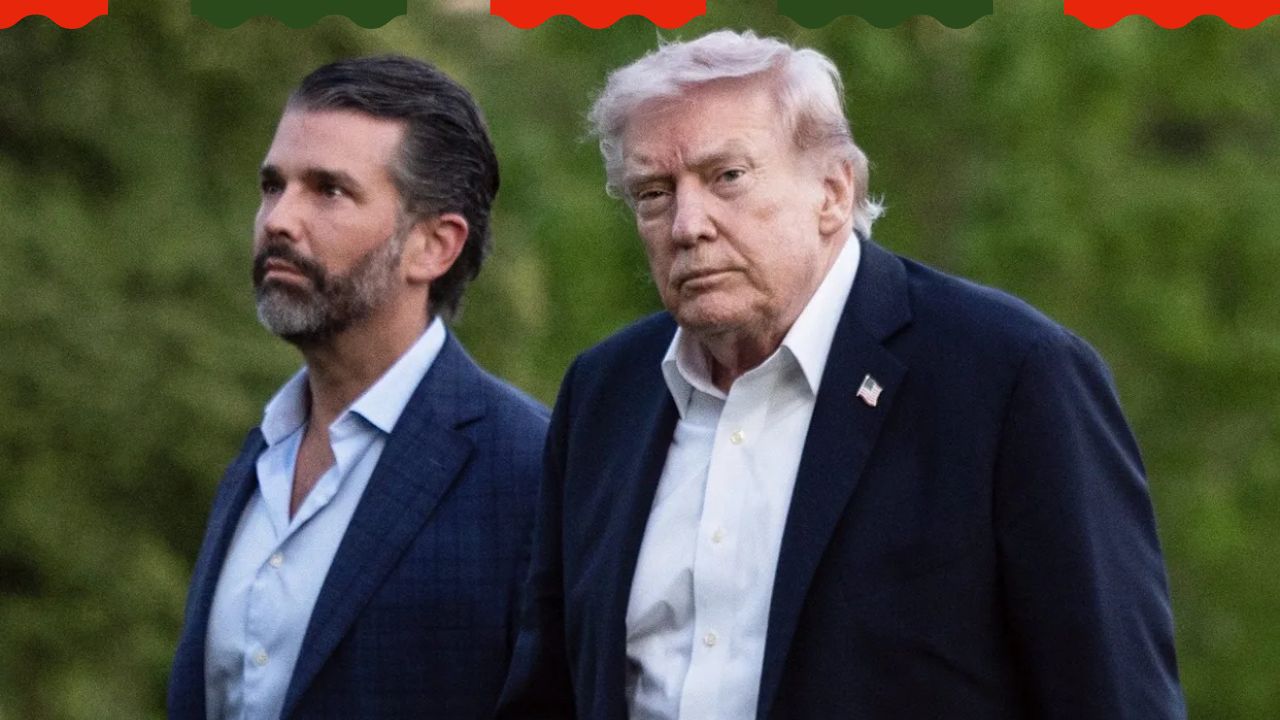
Trump Now Has Three Options. They Are All Bad: The U.S. Supreme Court struck down President Donald Trump’s broad tariffs at the end of February in 2026 didn’t stop the trade war between America and China. It just gave Trump an easier hand to play with.
In the course of his first term, Trump used his power under the International Emergency Economic Powers Act -known as IEEPA as a virtually unlimited tool for tariffs that imposed duties of up to 140 percent on Chinese products, and altering global supply chains almost overnight. On February 20, the Court decided 6-3 that the IEEPA’s ability to “regulate importation” does not apply to the imposing of tariffs. This is an essential power of the Congress to tax that the President was never intended to use unilaterally. In a single decision, the structure of the most powerful U.S. trade agenda in decades was demolished.
There are still three legal avenues – Section 122, Section 301, and Section 232. Trump’s advisors say they can reconstruct the wall of tariffs using these tools. However, economists, trade lawyers, and foreign policy experts are increasingly cautioning that each option is flawed. Each of them poses substantial legal, economic, and risk to the political risks. None of them gives Trump the same advantages that IEEPA provided him with: agility, speed, and the ability to fend off the entire world all at once.
Option 1: Section 122 — A Temporary Fix on a Ticking Clock
In the hours following a Supreme Court ruling, the Trump administration took a flurry of action to use Section 122 of the Trade Act of 1974 – an amendment that has never been utilized in the more than fifty years since it was first written. The law permits the president to impose an all-inclusive import surcharge as high as 15 percent to deal with “balance of payments” problems without requiring approval from Congress.
On the 24th of February 2026, 2026, a 10- percent universal tariff went into effect under this power, which covers an estimated $1.2 trillion in annual imports. Trump has since announced plans to increase it up to the maximum legal rate of 15 percent.
The issue is structural. Section 22 is a legally-enforceable stopwatch and not a method of implementation. The authority expires within 150 days, which means that those tariffs currently in place are due to expire on July 24, 2026, unless Congress approves of extending the tariffs. An extension isn’t assured, especially with the midterm elections approaching and lawmakers from both parties becoming increasingly concerned about rising prices for consumers. Tax Foundation estimates the current tariffs are costing consumers in the typical American household around $1,500 per year — the biggest tax hike as a percentage of GDP since 1993.
In addition, Section 122 is already being slammed by the law. Two suits have been filed to challenge the validity of the statute: one by a group of 24 states within the Court of International Trade, and another filed by businesses affected. Legal experts say that the lawsuits remind us of the first cases that ultimately overturned IEEPA as an indicator that courts are currently reviewing trade decisions of presidents with an unprecedented level of examination.
“The Section 122 tariffs appear to be a runway to other duties,” one trade policy analyst said. However, runways only work in situations where something is ready to go off.
Option 2: Section 301 — Slow, Narrow, and Already Under Attack
Administration’s most ambitious post-IEEPA strategy is based on section 301 of the Trade Act of 1974. The statute permits the U.S. Trade Representative (USTR) to examine and take action against commercial practices that they consider to be “unreasonable or discriminatory” and impact American commerce. In contrast to Section 122, Section 301 tariffs do not have a deadline for expiration, and there is no limit on the rates. This makes them theoretically a stronger base for a trade war.
On the 11th of March 2026, the USTR initiated massive new investigations that targeted 16 significant trade partners for what they described as “structural excess capacity and production in manufacturing sectors.” The list of targets includes China, the European Union, Mexico, Japan, Vietnam, Taiwan, South Korea, and other countries — basically the whole structure for global commerce.
However, Section 301 has one critical issue: it takes time. Unlike IEEPA, which permitted Trump the ability to place tariffs on one executive order, Section 301 requires a formal investigation process, a public comment period, and a report of conclusions before duties can be applied. USTR Jamieson Greer stated that she hopes to complete the investigation before Section 122 authority expires in July, a long but, according to some, a flimsy timeframe.
The bigger strategic issue is also a source of concern. Section 301 gives the administration the ability to focus on specific nations, but it’s not as effective as the ability of IEEPA to impose hefty tariffs on all products from a specific trading partner at the same time. According to Peterson Institute senior fellow Chad Bown, has stated that the tariffs imposed on China were specifically crafted to encourage the move of the supply chain away from China. “All of that went away with the IEEPA decision,” Bown stated. “If the Trump administration wants to replicate what they had last year in terms of that differential… they’ve got to figure out new legal authorities to get them there.”
In the meantime, the trading partners named in the investigation are in a state of dismay. Many, such as Mexico, were parties to trade agreements previously signed under the shadow of IEEPA agreements that are now without their legal foundation. In Brussels, the chair of the trade committee of the European Parliament said the current situation was “pure tariff chaos.”
Option 3: Section 232 — Permanent, But Narrow and Legally Vulnerable
A third component is Section 232 of the Trade Expansion Act of 1962, which allows the President to place tariffs on imports considered to pose a threat to national security. Trump has previously used it in a threatening manner throughout both terms, including aluminum, steel, and copper, cars, automotive parts, pharmaceuticals, semiconductors, furniture, and timber, all of which are in the scope of Section 232.
At first glance, this appears as the most robust instrument -It is a very robust tool – Section tariffs on 232 aren’t bound by the 150-day expiration timer of Section 122. They were specifically left in place in the Supreme Court’s ruling in February. Tariffs on aluminum and steel have only been in effect since Trump’s first presidency.
However, section 232’s power lies also in its weakness, in that it only applies to specific categories of products that are based on national security research, but not to all countries in general. It’s not going to replace IEEPA’s purpose as a broad geopolitical instrument. The administration’s capacity to further expand it is getting more restricted. New tariffs on pharmaceuticals and duties on semiconductors are being challenged in the courts, and Congress has demonstrated that it is open to testing its protest power by the Senate having voted in the month of October 2025 to cancel tariffs targeted at Brazil.
The Council on Foreign Relations has identified a more fundamental issue: economic statecraft is most effective with threats that are reliable, quick, and adaptable. By removing the President from IEEPA, the Court has weakened one key element of this flexibility. “Speed, in coercive diplomacy, is itself a form of leverage,” CFR stated in a post-ruling analysis. “That leverage is now more limited.”
Read Also: Jeffrey Epstein Suicide Note Revealed “ Watcha Want Me To Do? Bust Out Crying ” Sparks New Questions
Beijing Watches and Waits
There is no place where the impact caused by the Supreme Court ruling is more keenly felt than in the U.S.-China relationship. In March 2025, U.S. tariffs on Chinese products reached the aforementioned 164 percent. At the time of the ruling of the court in February 2026 that average had dropped to 36 percent after a string of truces negotiated. With the end of IEEPA, Beijing sees an opening.
“China will almost certainly toughen its stance in forthcoming trade negotiations with the U.S., as Trump’s tariff weapon has now been weakened and blunted,” economist Eswar Prasad has cautioned. “Beijing is no doubt strategizing about how to use this ruling to its advantage while not overplaying its hand.”
There are still structural barriers in Sections 223 and 301, specifically on high-tech products and raw materials continue to place China under considerable pressure. Furthermore, China is still the dominant player in key industries: rare earths permanent magnets, and legacy semiconductors. The decoupling of supply chains over the last two years has dismantled all the “easy bits,” as Bown said. The remaining industries are extremely difficult to shift.
Trump will travel to China, as well as U.S. Trade Ambassador Greer has said that the administration is seeking new commitments for purchases of agricultural commodities. China has already pledged to purchase 25 million tonnes of U.S. soybeans annually through 2028. However, how willing Beijing is to make significant concessions in the post-IEEPA worldconsidering that Trump’s most powerful leverage instrument has now been taken away in doubt.
The Bigger Picture: A Trade War Without a Sword
The main issue that the Trump administration is facing now is not a legal one, but a strategic one. IEEPA served as a negotiation tool precisely due to its quick, wide, sweeping, and erratic nature. It permitted the President to increase tariffs over a period of minutes, to threaten each country at once, and to punish or reward certain actors in real-time. In the context of coercive diplomacy, a credible threat.
The new version is more sluggish and narrower, and is already under legal scrutiny. Section 122 is due to expire in July. Section 301 is a lengthy process that takes months. Section 232 is specific to products but not specific to a country. Together, they could result in, as the administration itself stated, “virtually unchanged tariff revenue” in 2026. However, revenue isn’t leverage and a wall of tariffs built brick-by-brick over many months isn’t like the blunt instrument used by emergency powers.
The administration is left with one last possibility, a mostly theoretical section 338 from the Tariff Act of 1930, an unused retaliatory provision that allows duty rates up to 50% on countries that are infringing U.S. commerce. Invoking it would likely cause immediate legal issues.
The three choices are all bad. The question is which one is the least harmful -the answer, as well, is not clear.