Join
Join
 Shorts

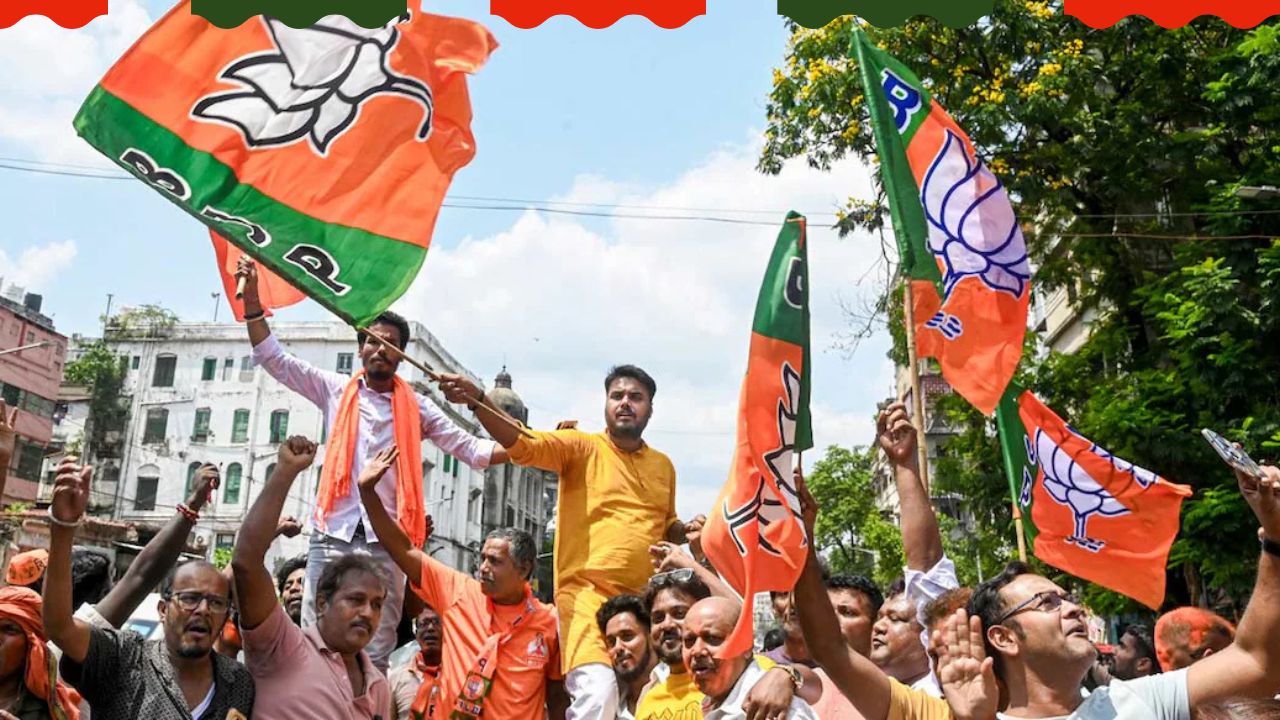
Assembly Elections 2026: BJP Storms West Bengal, TVK Rewrites Tamil Nadu History, UDF Returns to Power in Kerala: India awakened to radical political changes on May 4th, 2026, as the counting of votes for the Assembly Elections 2026 concluded across five states: West Bengal, Tamil Nadu, Kerala, Assam, and Puducherry. The results brought about astonishing mandates, reversing decades of dominance in politics as well as removing the chief ministers who were in office and creating completely new chapters in the history of electoral politics of several states.
From the Bharatiya Janata Party’s historic triumph in West Bengal to the rise of a fresh political power that is gaining momentum in Tamil Nadu and the return of the Congress-led UDF in Kerala, the 2026 Assembly elections will be known as an event that was among the biggest and most important elections that took place in post-independence India.
West Bengal 2026: BJP Ends 15 Years of TMC Rule in a Historic Landslide
BJP Secures 206 Seats, Saffronizes the East
Following a high-voltage campaign that kept the state and the entire country on edge, the Bharatiya Janata Party secured a historic mandate, securing the 206 seats of West Bengal’s 293-seat legislature, putting an end to the Trinamool Congress’s hold over the state that had lasted for nearly a decade.
Mamata Banerjee Survives, But TMC Does Not
The All India Trinamool Congress, which is led by the chief minister Mamata Banerjee, was hoping to remain in power for a second term despite increasing anti-incumbency. However, the BJP’s victory transformed the TMC-against-BJP contest into one of the most scrutinized contests in the Assembly Elections 2026. While Mamata herself was able to hold her ground in the Bhabanipur district, her party’s decline was decisive.
What Drove the BJP Wave in West Bengal?
The campaign was shaped by disagreements regarding the electoral censuses and nationality, border security, and immigration without documentation, as well as larger discussions about the issue of identity, as well as women’s safety, governance and security, job creation, and anti-incumbency after fifteen years under AITC rule.
The BJP promoted jobs and industrial revival in its critique of the state government; however, the AITC ran on welfare programs and promised continued investment as well as expansion of infrastructure.
Record Voter Turnout Signals Decisive Public Mood
The election was marked by a historic voter participation rate of 92.93 percent, which was the highest turnout ever recorded within the entire state, exceeding the election of 2011, which was a reflection of the public’s extraordinary desire to vote for change.
Tamil Nadu 2026: TVK’s Earthquake — MK Stalin Loses His Own Seat
Tamilaga Vettri Kazhagam Emerges as the Single Largest Party
In the most dramatic shock of the 2026 elections, Tamil Nadu witnessed a complete political revolution. Tamil Nadu saw a break from its long-standing duopoly in the 2026 election cycle when Tamilaga Vettri Kazhagam emerged as the largest political party, with 107 seats. The party, founded and helmed by actor-politician Vijay, has shattered the long-running DMK-AIADMK power that had shaped the state’s political landscape for decades.
Stalin Falls in Kolathur—A Moment for the History Books
The outcome was a highly publicized shock in Kolathur, the state where TVK’s VS Babu beat Chief Minister MK Stalin. The demise of a chief minister in reelection within his own parliamentary district caused shockwaves throughout the nation and reflected the full extent of the anti-incumbency wave TVK made use of.
Deputy CM Udhayanidhi Stalin Holds On
As the incumbent, Stalin dropped, and Deputy Chief Minister Udhayanidhi Stalin won the election in the Chepauk Triplicane constituency, providing a little consolation for the DMK in a potentially disastrous election night.
TVK’s Rapid Rise: From Party Launch to Chief Ministerial Power
The result is a remarkable political trajectory for TVK, established just several months ago by Vijay, who went from Tamil film’s most famous star to becoming the state’s most transformative political leader. The party’s victory of 107 seats marks an unprecedented reorientation of Tamil Nadu’s voters.
Read Also: Thalapathy Vijay — The Family Behind the Commander
Kerala 2026: UDF Returns After a Decade, Left Without a Single State Government
Congress-Led UDF Wins 102 Seats, Ousts LDF
The Congress’s United Democratic Front dominated Kerala with 102 seats. In contrast, the LDF won just 35 seats. The election brought an end to the left-wing Front’s 10-year dominance and marked an historic return to the Congress-IUML-led coalition after more than ten years of opposition.
Pinarayi Vijayan Resigns; 13 Cabinet Ministers Defeated
Pinarayi Vijayan was forced to resign from his position as Kerala Chief Minister after the election results. The magnitude of the LDF’s loss was emphasized in the manner that 13 members of the 21-member LDF Cabinet, which is headed by the chief minister, Pinarayi Vijayan, were defeated in the Kerala Assembly elections as the ruling party suffered a huge defeat throughout the state.
CM Vijayan Himself Trails in Dharmadam
Chief Minister as well as CPI(M) candidate for CPI(M) Pinarayi Vijayan trailed in the Dharmadam Assembly constituency, with Congress candidate VP Abdul Rasheed leading by 2,812 votes, the most symbolic loss for the long-time Left leader.
Historic Blow to the Indian Left
It was a matter of time before the Left Democratic Front in Kerala left Left parties without a single state-level government at the time for the first time in more than five decades, highlighting the national trend of decline. It was reported that the CPI(M) Politburo acknowledged the severity of the decision, declaring that the party would rethink the factors that led to the loss and take all necessary steps to correct the situation.
Assam 2026: BJP Completes a Hat-Trick
Beyond the three main states, beyond the three states that headline the election, the BJP also scored a shrewd performance in Assam. The BJP alone took 82 seats out of 126, and its allies, Bodoland People’s Front and Asom Gana Parishad, took 10 seats each. The Congress was confined to 19 seats. This ensured a third term in a row of the BJP in the state of the northeast and further consolidated its position in the region.
Puducherry 2026: NDA Returns to Power
Puducherry also went to the polls along with the other four states. The final composition of its 30-member Assembly resulted in the NDA coming back to power.
Key Takeaways: What the 2026 Assembly Elections Mean for Indian Politics
1. The BJP’s Eastern Expansion Is Complete—With West Bengal now firmly in the saffron column, the BJP has done what seemed impossible 10 years back. The reach of the BJP now extends beyond the Hindi center all the way to the Bay of Bengal.
2. New Political Forces are Unstoppable – TVK’s rise to power in Tamil Nadu proves that voters are ready to break away from established parties when a viable alternative emerges. The time of the two-party rule of Tamil Nadu is over.
3. Congress finds its feet in the South—Its UDF triumph in Kerala offers the Congress a substantial state administration and confidence boost for the upcoming national elections. It is also a crucial Congress victory in a state that is located in the South.
4. The Indian Left faces an existential crisis. The loss of Kerala, which was once its largest area of support, left the Left Front without a significant state-level government. This could be the biggest setback to left-wing political parties in the history of India.
5. Anti-incumbency remains the dominant force across each state in the five; the verdict of 2026 punishes long-serving governments. Whether there were 15 or 10 years of TMC ruling in Bengal or ten years of LDF ruling in Kerala, the voters of Kerala gave a clear signal that the change they want is unavoidable.
Read Also: PM Modi Condemns Fujairah Attack, India Reacts explosively to UAE Strike Injuring Indians
Conclusion:
These assembly elections of 2026 will be discussed, debated, and analyzed by many for the next several years. A new party that has snatched the crown from the chief minister who is in office in Tamil Nadu; the BJP’s victory at the polls in West Bengal after 15 years, as well as the Left losing its most important fortress in Kerala. These aren’t typical outcomes for elections.
There are profound changes in the way Indian people are choosing to express their hopes or frustrations about the way they are governed. The political landscape in India has been completely altered, and every major party will have to rethink its strategy before this year’s general election.