Join
Join
 Shorts

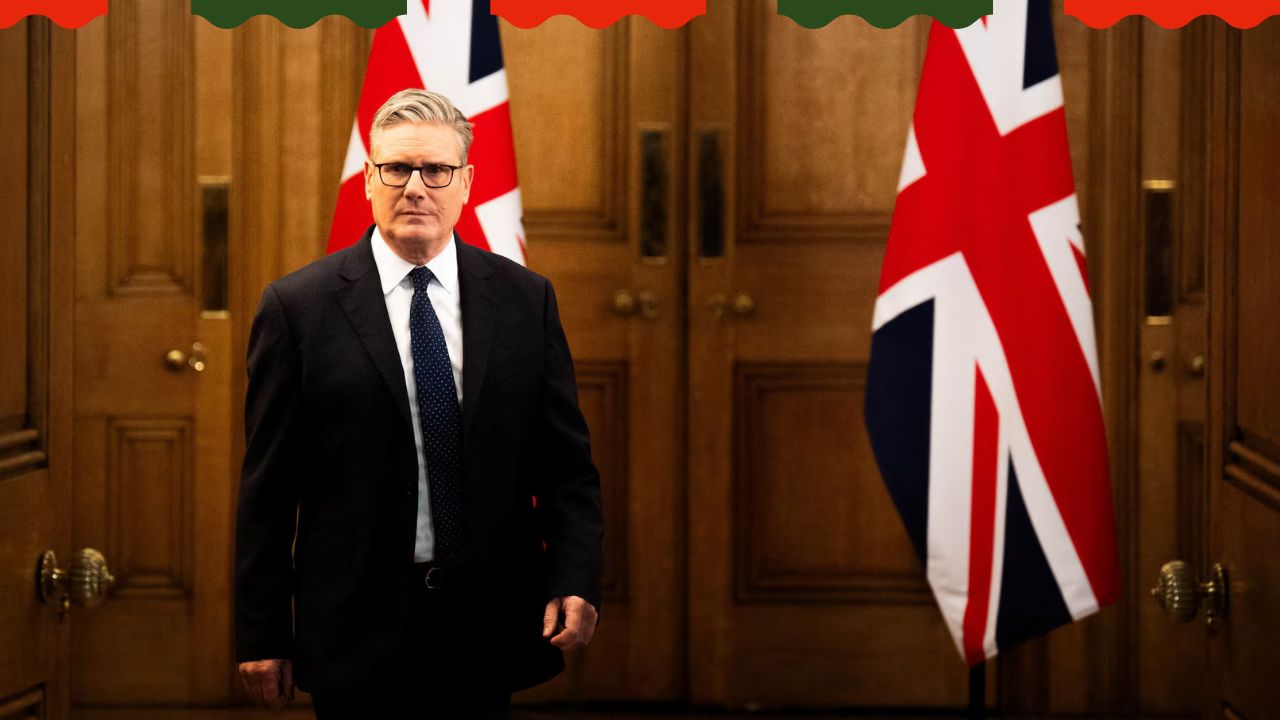
Starmer opens door to banning protests as antisemitism fears mount: The Prime Minister, Sir Keir Starmer, has indicated his first public indication that the government is open to bans on certain protests in certain circumstances, claiming that there are instances where a total stop to marches might be a good idea. The comments are an eerie shift from a leader who repeatedly insisted on his dedication to defend the right to peacefully protest.
On BBC Radio 4’s Today show on Saturday, Sir Keir was asked straight if he was in favor of more rigorous policing of the language used during demonstrations or if he thought that some protests should be shut down completely. His response was straightforward: “I think certainly the first, and I think there are instances for the latter.”
The comments came a few days after an attack at Golders Green, north London, which the police declared a terror incident. Two Jewish men were assaulted on Wednesday night. Essa Suleiman, 45, who was in the court on Friday, was accused of trying to murder, in conjunction with the attack. The incident is the latest in a worrying series of violent incidents targeting Jewish people living in Britain.
The case the Prime Minister is making
Sir Keir was cautious to frame his argument in terms of “the cumulative impact of repeated pro-Palestinian protests in the British Jewish community. “He said on the program that the Jewish community has repeatedly raised his concerns, not only about the specifics of marches but also the sheer repeated nature of them.
“Many people in the Jewish community have said to me, it’s the repeat nature; it’s the cumulative effect,” he stated. “I accept that, which is why we intend to deal with cumulative effects.”
The president also stated that his government will look to expand its powers to tackle the problem. “We need to look at what further powers we can take,” he added in his statement, and said he would stand up for the right to peaceful protest and freedom of expression “very strongly.”
He also criticized the “globalize the Intifada” chant, which is derived from an Arabic word that means uprising, and described it as “very dangerous” to the Jewish community and urged the chant to be investigated. “If you are on a march where people are chanting this, you do have to stop and ask yourself, why am I not calling this out?” He declared.
Read Also: Trump Declares End to Iran Hostilities, Dismisses War Powers Deadline as Democrats Cry Foul
Calls for a moratorium
Sir Keir’s comments broadly are in line with those made by Jonathan Hall, the government’s independent examiner of legislation on terrorism, who, earlier this week, called for a definite moratorium on marches that are pro-Palestinian. Hall stated that it is now “clearly impossible” for the protests not to contain the dehumanizing or antisemitic words within the crowds.
Chief Rabbi Ephraim Mirvis has also demanded a temporary suspension on marches in the wake of the Golders Green attack, telling the BBC that the protests have been a contributing factor to what he called an “tone of Jew hatred” in the United Kingdom.
The episode has reignited scrutiny of a government-commissioned review of public order and hate crime legislation, ordered after two Jewish people were killed in an attack near a Manchester synagogue last year. The review was to conclude in February. The review has not yet been published.
How the law currently works
The police forces of England and Wales are already able to regulate marches that include routes or a finish time. However, securing a march completely is a much higher requirement. It requires approval from the Home Secretary and is not often employed.
In the last month, in an important move that the government endorsed, the government approved the Metropolitan Police’s request to ban the Al Quds Day march in London—the first ban outright on a protest since 2012.
A divided political response
The Prime Minister’s remarks provoked fierce reactions from all political parties. Conservative Leader Kemi Badenoch pushed further than Starmer in calling for the immediate, complete, and unavoidable interdiction of the protests.
She informed broadcasters this weekend that protests were “used as a cover for promoting violence and intimidation against Jews” and warned that incidents similar to those that were witnessed at Golders Green and Manchester would continue to happen unless decisive action was taken.
Reform UK’s home affairs spokesperson Zia Yusuf said Sir Keir’s remarks came “far too late” and committed to a zero-tolerance policy towards those who incite violence during protests.
On the other hand, Green Party leader Zack Polanski said that the Prime Minister is “using the pain and fear of Jewish people to threaten further authoritarian restrictions on peaceful protest,” warning that this could cause more conflict rather than healing. The leader of Jeremy Corbyn’s Your Party cautioned that the reaction in response to “abhorrent” attacks must not be used to restrict the fundamental rights of citizens.
The Liberal Democrats struck a more moderate tone, saying that demonstrations should be allowed only when it is secure for them to take place, and called for police to be more educated and equipped to recognize and detain those who engage in antisemitic violence during marches.
The Stop the War Coalition, which has played a role in organizing a variety of the marches, has said that it condemns any form of antisemitism or discrimination against minorities, but the idea was “wrong” to connect the marches with attacks on Jewish people.
Read Also: Man charged with attempted murder of two Jewish men in Golders Green stabbing
Accusations of inaction
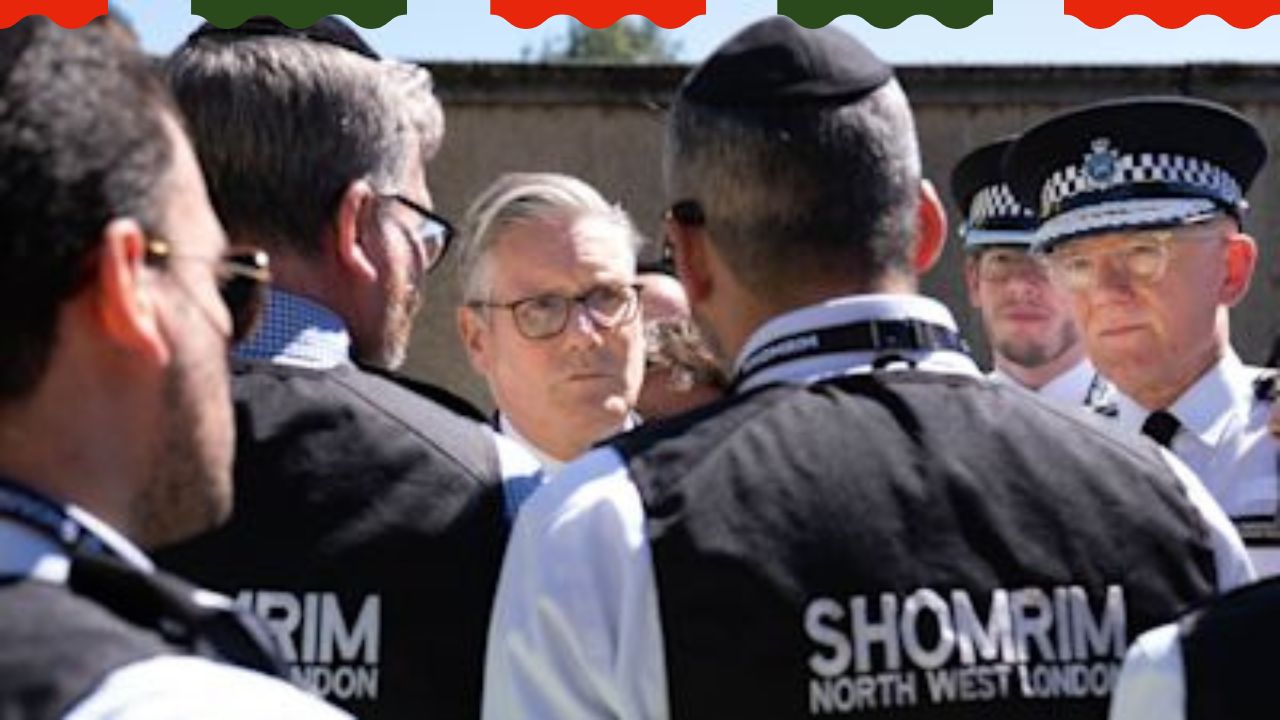
Sir Keir also came under fire from the Jewish community, who felt that the government did not do enough to protect people. He was taunted on a visit to Golders Green on Thursday by protesters who were chanting “Keir Starmer, Jew Harmer.” He admitted to “the depth of feeling” and said that a lot of Jewish individuals felt “very scared.”
But he also resisted any suggestion of inaction by the government by pointing out the increased security measures by the police in areas like Golders Green that have been in place for a while and also an increase in government funding for the security of Jewish community-based sites and institutions.
“It’s not right to say we haven’t done anything,” he said to the BBC.
The government is currently under tension from a variety of directions, including Jewish groups as well as the right-wing political class, who demand swift and decisive action, as well as from civil liberties activists as well as a section of the left who claim that any effort to stifle protests could undermine a fundamental democratic freedom. What it does to manage the tension and whether it responds before a major incident happens will be closely watched in the coming weeks.