Join
Join
 Shorts

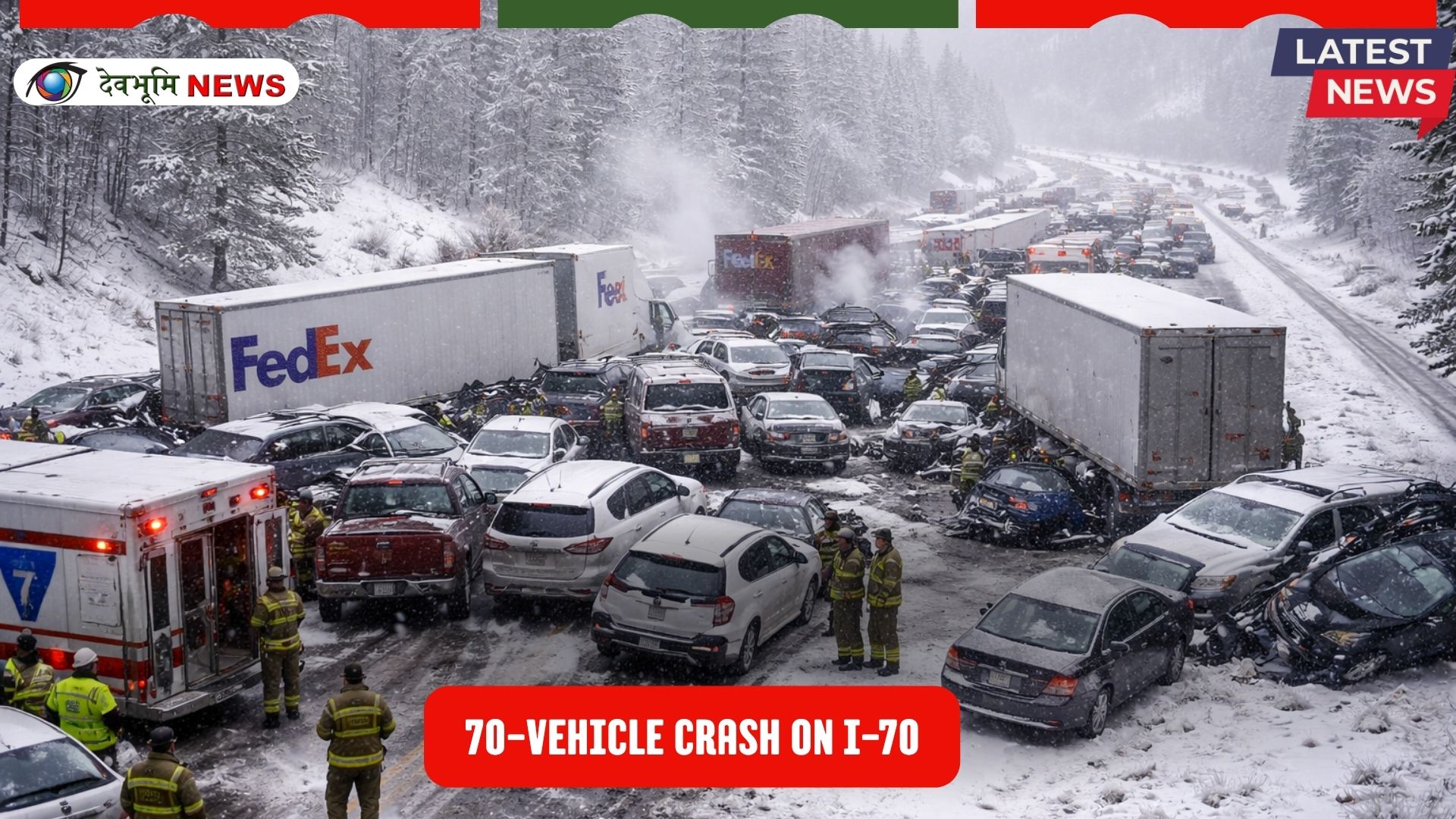
The 70-vehicle crash on I-70 wasn’t just another bad-weather accident—it was a real-world stress test of how fragile highway systems (and human reflexes) can be.
On April 14, 2026, what began as a routine drive through the Rockies turned into a chain-reaction pile-up involving roughly 70 vehicles. And while the absence of fatalities feels almost miraculous, the legal aftermath is anything but simple.
Because in Colorado, blame isn’t assigned—it’s calculated.
What Happened Near the Eisenhower Tunnel
The crash occurred on eastbound I-70 near the Eisenhower-Johnson Memorial Tunnels in Clear Creek County, a high-altitude corridor notorious for volatile weather.
According to the Colorado State Patrol:
- Approximately 70 vehicles were involved
- 19 individuals were evaluated for injuries
- 8 were hospitalized, including one with serious injuries
- No fatalities were reported
For an incident of this magnitude, that last statistic feels almost improbable—like walking away from a collapsing house with only bruises.
Weather, Visibility, and the Domino Effect
The trigger wasn’t a single reckless driver. It was something far less dramatic—and far more dangerous.
A sudden spring snowstorm dropped 4–6 inches of snow, creating:
- Icy road surfaces
- Near-zero visibility
- Rapid braking conditions
In traffic systems, this creates what engineers might call a failure cascade. One brake lights up, then another, and suddenly the entire highway becomes a kinetic chain of delayed reactions.
Or put more simply:
It wasn’t one mistake. It was dozens of perfectly human ones happening milliseconds apart.
70-Vehicle Crash on I-70 and Colorado’s 49% Rule
Here’s where your clarification matters—and it’s critical.
Colorado follows modified comparative negligence under Colorado Revised Statutes § 13-21-111.
The Key Rule:
- A driver can recover damages only if they are 49% or less at fault
- At 50% fault, recovery is barred completely
This is stricter than the “51% rule” used in some states.
So in the context of the 70-vehicle crash on I-70, a driver found:
- 49% at fault → can still recover partial damages
- 50% at fault → gets nothing
That 1% difference isn’t just technical—it’s financial survival.
Why Multi-Car Liability Gets Complicated
Mass crashes like this introduce what legal analysts often call layered causation (your earlier note is right—it’s not statutory, but it’s widely used in practice).
Each driver’s behavior is evaluated independently:
- Following distance
- Reaction time
- Speed relative to conditions
- Braking patterns
In a 70-car pile-up, fault becomes a distribution problem, not a yes-or-no question.
It’s less “Who caused this?” and more:
“How much did each person contribute to the outcome?”
Insurance and Evidence: When Cars Become Witnesses
Modern crash investigations don’t rely solely on eyewitnesses anymore.
Authorities and insurers often pull data from:
- Event Data Recorders (EDRs)
- Telematics systems
- Brake and throttle inputs
The National Highway Traffic Safety Administration has long supported the use of such data in reconstructing crash timelines.
Which leads to a slightly unsettling thought:
Your car remembers everything—even when you don’t.
Realistic Fault Scenarios from the Crash
Let’s ground this in plausible outcomes:
1. The Careful Driver Who Followed Too Closely
Even at safe speeds, insufficient stopping distance = partial fault.
2. The Fast Reactor in Slow Conditions
Quick reflexes don’t help if physics disagrees. Speed relative to ice matters more.
3. The Hesitant Braker
Delaying braking by even a second in low visibility can cascade into impact.
In other words, fault isn’t about being reckless—it’s about being imperfect in the wrong moment.
Lessons from the I-70 Pile-Up
There’s a quiet irony here.
Highways are designed for efficiency, but they punish overconfidence.
Key takeaways:
- Increase following distance beyond what “feels normal”
- Treat visibility loss as a system failure, not a minor inconvenience
- Assume chain reactions—not isolated incidents
Because on roads like I-70, especially near mountain passes, you’re not just driving your car—you’re participating in a moving network of risk.
Read Also:
- Satpal Maharaj Biography 2026 | सतपाल महाराज – जब एक धर्मगुरु बन गया उत्तराखंड का सबसे ताकतवर नेता
- Subodh Uniyal Biography — नरेंद्रनगर के पहाड़ से इलाहाबाद विश्वविद्यालय तक और छात्र नेता से कैबिनेट मंत्री तक का 45 साल का राजनीतिक सफर
- ममता बनर्जी जीवनी — Mamata Banerjee Biography: वो दीदी जिसने 34 साल का वाम शासन तोड़ा
- Yogi Adityanath Biography in Hindi योगी आदित्यनाथ जीवन परिचय — Bulldozer Baba | UP Chief Minister
- Nitish Kumar Biography : इंजीनियर से 10 बार बिहार CM, अब राज्यसभा
- Baby Rani Maurya Biography 2026: दलित बस्ती से आगरा की पहली महिला महापौर, राज्यपाल & योगी कैबिनेट मंत्री तक
- Suresh Kumar Khanna Biography 2026 – शाहजहाँपुर के एक साधारण परिवार से उत्तर प्रदेश के सबसे ताकतवर Finance Minister तक का 45 साल का सफर
Final Reflection
The 70-vehicle crash on I-70 leaves behind more than damaged vehicles—it leaves questions about responsibility in a world where outcomes are rarely caused by a single action.
There’s something almost philosophical about Colorado’s 49% rule.
It acknowledges a truth we don’t like to admit:
Most disasters aren’t caused by villains—they’re caused by ordinary people making small, understandable mistakes at the same time.
And sometimes, that’s all it takes to turn a highway into a headline.