Join
 Shorts

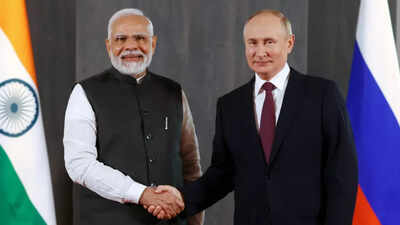
India’s rich cultural heritage and linguistic diversity have once again attracted international attention. Russian President Vladimir Putin has praised India’s remarkable variety of languages and its ancient civilisation, describing the country’s linguistic diversity as “stunning”. His remarks highlight the uniqueness of India, where people belonging to different regions, communities and cultures speak different languages while sharing a common national identity.
Putin expressed his admiration during a recent interview with Russian news agency Sputnik. While discussing India’s history and culture, he recalled a conversation with Prime Minister Narendra Modi about the number of Indians who speak the country’s principal language and those who communicate in their own regional languages.
Putin’s Appreciation of India’s Linguistic Diversity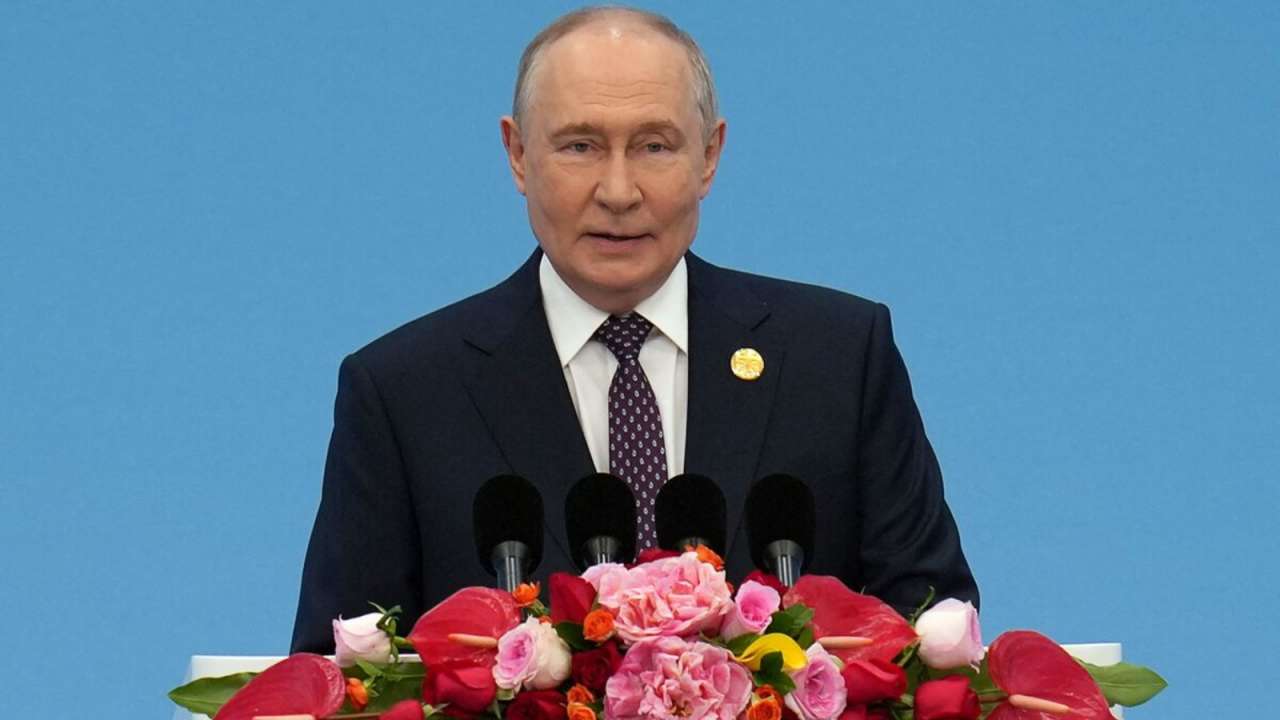
During the interview, Putin revealed that he had recently spoken with Prime Minister Narendra Modi and asked him how many citizens of India spoke the country’s official language.
According to Putin, Modi told him that approximately 600 million people spoke the language, while the remaining population communicated in their respective languages. Putin was impressed by this linguistic variety and responded, “Isn’t that amazing? It’s stunning!”
He further stated that the more he learned about Indian civilisation, the more fascinated he became. His comments reflect international recognition of India’s extraordinary cultural and linguistic identity.
India: A Land of Hundreds of Languages
India is one of the most linguistically diverse countries in the world. People across the country communicate in numerous languages, dialects and regional varieties. Hindi, Bengali, Tamil, Telugu, Marathi, Gujarati, Kannada, Malayalam, Punjabi, Assamese and Urdu are among the widely spoken languages.
The Constitution of India recognises 22 scheduled languages under its Eighth Schedule. Hindi is the official language of the Union, while English is also used for official purposes. India does not have a constitutionally declared national language.
Every region has its own linguistic identity. From Tamil in Tamil Nadu and Bengali in West Bengal to Punjabi in Punjab and Marathi in Maharashtra, languages represent the history, traditions and cultural experiences of different communities.
Language: The Foundation of India’s Cultural Identity
Language is much more than a medium of communication. It carries the history, traditions, literature, knowledge and emotions of a community. India’s languages preserve centuries-old stories, folk songs, religious teachings, poetry and philosophical ideas.
Sanskrit has contributed significantly to India’s classical knowledge and literary traditions. Tamil possesses one of the world’s oldest continuing literary traditions, while languages such as Bengali, Hindi, Urdu, Telugu and Malayalam have produced remarkable writers and poets.
Regional languages also play an important role in preserving local customs, festivals, folk traditions and indigenous knowledge. Their continued use connects younger generations with their cultural roots.
Unity in Diversity: India’s Greatest Strength
The most remarkable feature of India’s linguistic diversity is that it exists alongside national unity. People may speak different languages, follow different traditions and celebrate different festivals, yet they share a common constitutional and democratic identity.
India’s diversity teaches the importance of mutual respect, tolerance and peaceful coexistence. Linguistic differences should not become barriers; instead, they should encourage people to understand and appreciate one another.
The country’s multilingual character also provides opportunities for cultural exchange, education, literature, tourism and economic development.
Importance of Putin’s Remarks for India
Putin’s appreciation is significant because it brings international attention to an important aspect of India’s identity. His observations recognise that India’s strength lies not only in its population, economy or political influence but also in its extraordinary cultural heritage.
India and Russia have maintained longstanding diplomatic and cultural relations. Such positive remarks also underline the importance of cultural understanding in strengthening relationships between nations.
However, India’s linguistic diversity is not simply a matter of numbers. It represents the freedom of communities to preserve and express their identities.
Read more like this:
- COP31 Climate Talks Collapse: What Saudi Arabia, Iran and Russia Opposed and Why It Matters
- यूपी चुनाव 2027: कांग्रेस और सपा के बीच पहले दौर की सीट बंटवारे पर बातचीत पूरी, जल्द हो सकता है गठबंधन का ऐलान
Conclusion
Vladimir Putin’s description of India’s linguistic diversity as “stunning” is a proud moment for the country. His remarks remind the world that India is a civilisation where hundreds of linguistic traditions have developed and flourished over centuries.
India’s greatest achievement is not merely having so many languages but allowing different linguistic communities to coexist within one democratic nation. Preserving every language, respecting every culture and encouraging linguistic harmony are essential for the country’s future.
India’s linguistic diversity is not a division; it is a symbol of its unity, heritage and strength.