Join
Join
 Shorts

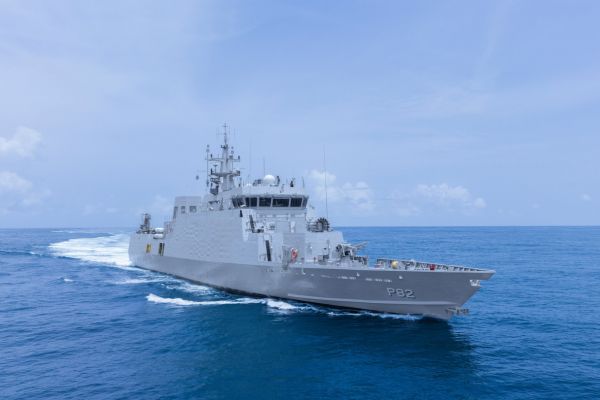
Indian Navy commissioned INS Mangrol (P82), its third Mahe-class Anti-Submarine Warfare Shallow Water Craft (ASW-SWC), at the Naval Dockyard in Mumbai on October 12, 2026. The induction marks an important step towards strengthening India’s maritime security and improving its ability to detect and counter submarine threats in coastal and shallow waters. The vessel has been indigenously designed and constructed by Cochin Shipyard Limited (CSL), Kochi, with more than 80 per cent indigenous content. This achievement highlights India’s growing capabilities in defence manufacturing and its commitment to self-reliance.
Commissioning Ceremony
The commissioning ceremony was presided over by Vice Admiral Sanjay Vatsayan, Flag Officer Commanding-in-Chief of the Western Naval Command. Senior naval officers, representatives of the Ministry of Defence, officials from Cochin Shipyard Limited, industry partners and other dignitaries attended the event.
During the ceremony, the importance of indigenous warships in strengthening India’s maritime surveillance and anti-submarine warfare capabilities was highlighted. The induction of INS Mangrol reflects the Indian Navy’s focus on modernisation, operational preparedness and technological advancement in response to the changing maritime security environment.
Advanced Capabilities of INS Mangrol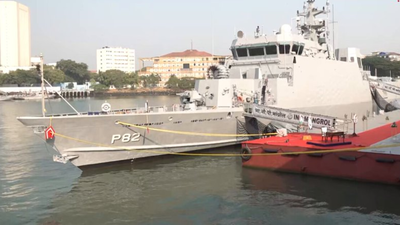
INS Mangrol has been specifically designed to operate in shallow and confined coastal waters, where larger warships may face operational limitations. Its primary role is to detect, track and counter hostile submarines that could threaten India’s coastline, ports, harbours and other important maritime installations.
The vessel is equipped with advanced sensors and weapon systems, including the Abhay hull-mounted sonar, lightweight torpedoes, an indigenous anti-submarine rocket launcher and the Maareech Advanced Torpedo Decoy System. These systems help the ship identify underwater threats and respond effectively to potential submarine attacks. The decoy system is designed to help protect the vessel against incoming torpedoes.
INS Mangrol is powered by three diesel engines driving waterjet propulsion units. This arrangement provides high manoeuvrability and rapid response, making the vessel suitable for operations in shallow waters and restricted maritime areas. Besides anti-submarine warfare, it can undertake underwater surveillance, low-intensity maritime operations and mine warfare-related tasks.
Importance for India’s Maritime Security
India has a long coastline and important maritime trade routes that require continuous monitoring and protection. Submarines can pose significant challenges because they can operate covertly beneath the sea and threaten naval assets and commercial shipping.
INS Mangrol will strengthen the Navy’s ability to monitor underwater activity and respond to emerging threats near the coast. It can operate alongside maritime patrol aircraft, helicopters and other naval vessels to improve surveillance and coordinate anti-submarine operations.
Its specialised design makes it particularly valuable for protecting ports, harbours, coastal approaches and strategically important maritime locations. The vessel will also support wider fleet operations by adding another platform dedicated to coastal defence.
At a time when maritime security challenges are becoming increasingly complex, the commissioning of INS Mangrol demonstrates the importance of developing specialised naval platforms to protect national interests.
Boost to Aatmanirbhar Bharat
One of the most significant features of INS Mangrol is its high level of indigenous content, which exceeds 80 per cent. The ship was built by Cochin Shipyard Limited under the government’s Make in India and Aatmanirbhar Bharat initiatives.
Its construction demonstrates the increasing ability of Indian shipyards, defence industries and domestic suppliers to contribute to the development of modern warships. Indigenous construction can strengthen the domestic industrial base, create opportunities for skilled employment and reduce dependence on foreign suppliers.
It also supports the development of technical expertise in shipbuilding, sensor integration and defence systems. As India continues to expand its naval capabilities, domestic manufacturing will remain important for maintaining, upgrading and producing advanced military platforms.
A Legacy Continued
INS Mangrol is named after the coastal town of Mangrol in Gujarat’s Junagadh district, a prominent fishing harbour. The name also honours the legacy of the earlier INS Mangrol (M85), a minesweeper that served the Indian Navy until April 7, 2004. This naming tradition connects the Navy’s historical service with its ongoing modernisation.
INS Mangrol follows the commissioning of INS Arnala and INS Androth, the first two vessels in the Mahe-class shallow-water anti-submarine warfare series. Together, these vessels represent an important effort to strengthen India’s coastal underwater defence capabilities.
Read more like this:
- ‘प्रिय सूर्यकांत…’: केरल कांग्रेस की पोस्ट में CJI से इस्तीफे की मांग, भाजपा ने उठाए सवाल
- जम्मू-कश्मीर में LoC के पास बारूदी सुरंग विस्फोट में लश्कर का शीर्ष कमांडर समेत 4 आतंकवादी मारे गए
Conclusion
The commissioning of INS Mangrol is a significant milestone for the Indian Navy and India’s indigenous defence industry. Equipped with modern sonar, weapons and manoeuvrable waterjet propulsion, the vessel will improve the Navy’s ability to detect and counter submarine threats in coastal waters. Its induction will contribute to the protection of vital maritime infrastructure and strengthen India’s operational preparedness.
More importantly, the ship demonstrates the progress made in indigenous warship construction under Make in India and Aatmanirbhar Bharat. INS Mangrol therefore represents not only an addition to the Navy’s fleet but also a step forward in India’s pursuit of maritime security, technological advancement and defence self-reliance.