Join
Join
 Shorts

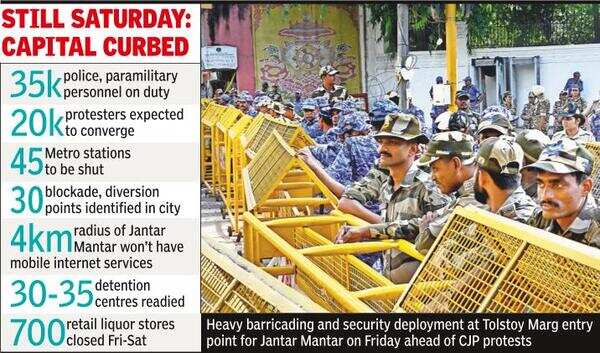
The national capital witnessed extensive security arrangements and travel restrictions ahead of a planned protest today by the Cockroach Janata Party (CJP) at Jantar Mantar on Saturday. Authorities introduced several precautionary measures, including mobile internet suspension in a designated area, restrictions at metro stations, road barricading and the cancellation of certain trains, raising concerns among commuters and residents.
The protest was called over alleged irregularities in the Special Intensive Revision (SIR) of electoral rolls and demands for accountability from Chief Election Commissioner Gyanesh Kumar. The developments triggered a political debate over the balance between maintaining public order and protecting the democratic right to peaceful protest.
Security Tightened Regarding CJP Protest Across Central Delhi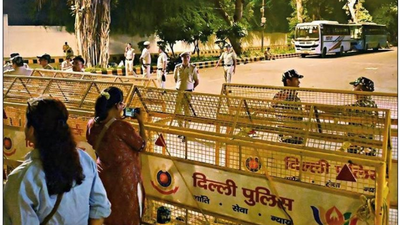
Delhi Police increased security in and around central Delhi ahead of the proposed demonstration. Barricades were installed at sensitive locations, while police personnel were deployed at important roads, public places and entry points to prevent unauthorised gatherings.
Security arrangements were also strengthened at several Delhi borders, including Ghazipur, Chilla, Tikri, Singhu, Gurugram, Kapashera, Loni and Badarpur. Authorities maintained heightened vigilance to monitor the movement of people entering the capital.
Police said the restrictions were necessary to maintain law and order, manage traffic and prevent possible disturbances. Residents and commuters were advised to remain alert and follow official instructions while travelling through affected areas.
Mobile Internet Services Suspended
One of the major measures involved the suspension of mobile internet services within a designated four-kilometre radius of the Janpath-Kartavya Path crossing. According to reports, the restriction was scheduled to remain in effect from 10 pm on Friday until 10 pm on Saturday.
The measure affected mobile internet connectivity in the specified area and was intended to address security concerns associated with the planned demonstration.
However, internet restrictions can also affect ordinary residents, office workers, students, businesses and people who depend on online services for daily activities. Mobile internet is widely used for digital payments, navigation, communication and accessing important information.
The suspension therefore added another challenge for people living in or travelling through the affected areas.
Metro Restrictions Affect Daily Commuters
Metro services also faced significant restrictions ahead of the protest. Delhi Police requested the closure of entry and exit gates at 57 metro stations for security reasons. The restrictions were scheduled to begin on Friday night and continue on Saturday, subject to official instructions.
The affected stations included several important locations in central Delhi and other parts of the network. These stations normally serve thousands of passengers travelling to offices, educational institutions, markets, railway stations and other destinations.
Although interchange facilities were expected to remain available at most affected stations, the restrictions created uncertainty for passengers planning their journeys.
Commuters were advised to check the latest Delhi Metro Rail Corporation (DMRC) announcements before leaving home and to allow additional time for travel.
Train Cancellations and Road Diversions
Railway services were also affected by the security arrangements. Certain mail and express trains scheduled to arrive at New Delhi and Hazrat Nizamuddin railway stations between 4 am and 2 pm on October 10 were cancelled under the announced arrangements.
The railway authorities cited the possibility of severe traffic congestion around the stations as a reason for the cancellations. The decision was expected to affect passengers travelling to the capital for work, education and other essential purposes.
Road barricades, security checks and possible diversions further increased the likelihood of delays in central Delhi. Travellers were encouraged to verify train information and traffic advisories before beginning their journeys.
Police Deny Permission for the CJP Protest
Delhi Police denied permission for the proposed CJP demonstration, citing the short notice given by organisers, alleged non-compliance with directions during an earlier demonstration and concerns about public safety and traffic management.
Police officials stated that the application had been received only a few days before the planned event, whereas the applicable guidelines require applications to be submitted well in advance. Prohibitory orders under Section 163 of the Bharatiya Nagarik Suraksha Sanhita were also in force in the New Delhi district.
CJP representatives, however, criticised the restrictions and questioned the extensive disruption to public transport. The controversy intensified the debate over whether the security measures were proportionate to the anticipated gathering.
Read more like this:
- भारतीय मूल की दक्षिण अफ्रीकी महिला नवी पिल्लई को मिला नोबेल शांति पुरस्कार
- मेट्रो और ट्रेनों पर पूरी तरह बैन नहीं लगाया जा सकता: CJP के प्रदर्शन से पहले दिल्ली में पाबंदियों पर सुप्रीम कोर्ट की फटकार
Public Order Versus Democratic Rights
The developments highlighted the difficult task of balancing public safety with freedom of expression and peaceful assembly. Authorities have a responsibility to prevent violence and protect public property, while citizens also have constitutional rights to express their views peacefully within the framework of the law.
The extensive restrictions raised concerns about their impact on ordinary people who were not participating in the protest. At the same time, officials maintained that preventive measures were necessary given the security situation.
For residents and visitors, the immediate priority remained navigating the disruptions safely. Checking official advisories, planning alternative routes and confirming transport schedules were essential steps.
The situation in Delhi demonstrated how a planned political demonstration can affect transport, communication and everyday life across a major city. The wider debate over the protest is likely to continue, particularly regarding the proportionality of security restrictions and the protection of democratic freedoms.