Join
Join
 Shorts

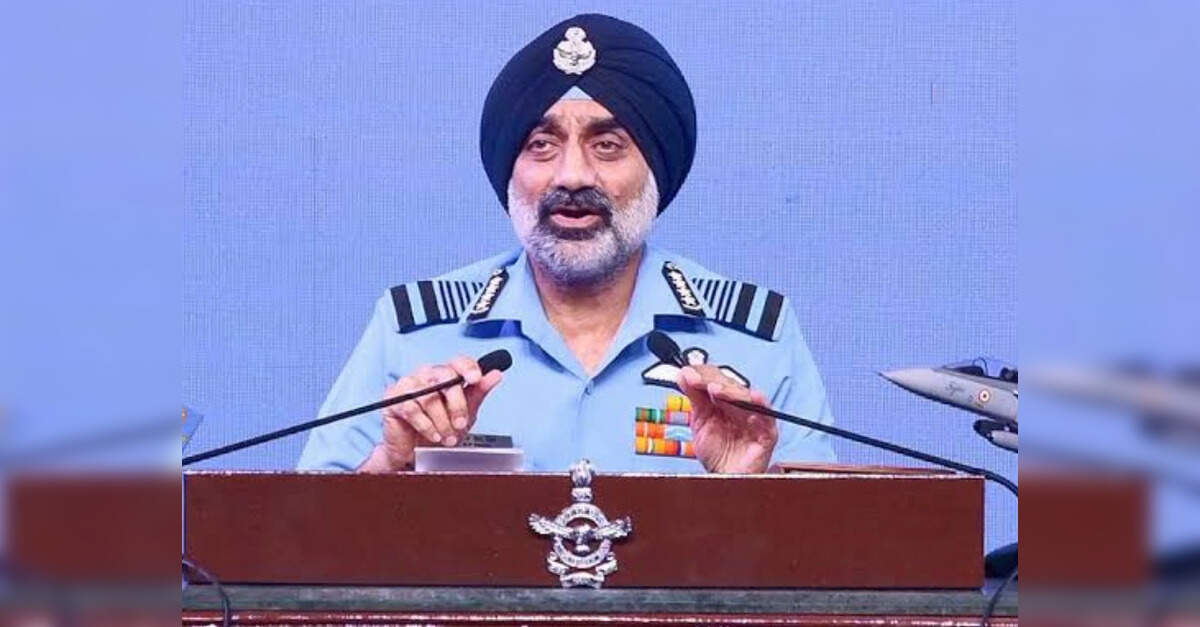
The Indian Air Force (IAF) is facing a growing shortage of fighter aircraft, with Air Chief Marshal A.P. Singh warning that delays in inducting new combat jets are beginning to affect the force. The IAF chief said the force needs to induct 36 to 40 fighter aircraft every year over the next few years to halt the decline in squadron strength and gradually rebuild its combat capability.
Speaking at his annual press conference ahead of Air Force Day, Singh said the delay in receiving new aircraft was a serious concern. He pointed to the declining number of fighter squadrons, particularly following the retirement of older platforms such as the MiG-21.
“There is no doubt that it is going to hurt us,” Singh said, underlining the operational impact of prolonged delays. He also reiterated the principle that “technology delayed is technology denied,” highlighting the importance of timely induction of modern military equipment.
IAF fighter squadron strength falls below sanctioned level
The IAF currently operates around 29 fighter squadrons, significantly below its authorised strength of 42.5 squadrons. The decline has been driven by the retirement of older aircraft and delays in bringing their replacements into service.
According to the Air Chief, the immediate objective is to prevent the number of operational fighter squadrons from falling further. To achieve this, the IAF wants to induct roughly two fighter squadrons every year, equivalent to about 36-40 aircraft annually.
However, Singh made it clear that simply maintaining the current level is not enough. Once the decline is arrested, the force will need a higher rate of induction to move towards its authorised strength.
The shortage has become an important issue for India as the security environment requires the Air Force to maintain sufficient combat aircraft for different operational contingencies.
Tejas Mk-1A delays raise concern
A major part of the IAF’s current modernisation plan is the indigenous LCA Tejas Mk-1A. However, deliveries of the aircraft have faced significant delays.
The Air Chief said the delay in the Tejas programme was longer than expected and was directly affecting the force’s ability to strengthen its fighter fleet.
The IAF has placed orders for Tejas Mk-1A aircraft, but the planned delivery schedule has not been met. Reports indicate that no Mk-1A aircraft had been formally delivered to the IAF by early October 2026 despite earlier delivery targets.
Singh said Hindustan Aeronautics Limited (HAL) is looking at producing around 20 to 24 Tejas Mk-1A aircraft annually. If production reaches the planned levels, the aircraft could become one of the most important contributors to the IAF’s fleet expansion.
Rafale and Sukhoi programmes also part of the plan
The IAF is looking at several programmes simultaneously to address the fighter shortage.
One of the major proposals is the Multi-Role Fighter Aircraft (MRFA) programme, under which India is considering acquiring 114 fighter jets. Singh indicated that the contract could potentially be finalised during the current financial year if the process proceeds as planned.
Under the proposed arrangement, around 12 aircraft a year could eventually be available to the IAF from the programme.
The Air Force is also counting on additional Su-30MKI aircraft. Combining these programmes with Tejas production could bring annual induction closer to the required 36-40 aircraft range.
Fifth-generation capability remains a concern
Apart from the immediate shortage, the IAF is also looking ahead to the development of fifth-generation combat aircraft.
India’s indigenous Advanced Medium Combat Aircraft (AMCA) programme is expected to provide the country with a domestic fifth-generation fighter capability. However, any significant delay in the programme could create an additional capability gap.
Singh indicated that the IAF may have to consider alternatives if the AMCA timeline slips substantially. Russia has offered its Su-57 fifth-generation fighter to India, although the Air Chief stressed that no decision had been taken on acquiring the aircraft.
The issue has also gained importance because of Pakistan’s reported efforts to acquire or operate Chinese fifth-generation fighter technology. Singh described the development as a concern, while also stressing that advanced aircraft alone do not determine the outcome of military operations.
Need for faster defence production
The Air Chief’s remarks highlight a broader challenge for India’s defence sector: producing advanced combat aircraft at the required pace.
India has been trying to increase domestic production and reduce dependence on foreign suppliers. However, the fighter aircraft sector involves complex supply chains, engines, avionics, weapons integration and testing requirements.
For the IAF, delays can create a difficult situation in which older aircraft are retired before sufficient numbers of new fighters arrive.
The need for 36-40 aircraft annually therefore represents not merely a procurement target but a requirement for sustained production capacity.
Read more like this:
- ‘बात सीट की नहीं, जीत की…’: सीट शेयरिंग पर खींचतान के बीच अखिलेश यादव की सहयोगियों को दो टूक
- Asian Games 2026 Conclude in Nagoya: India Finishes Fourth with 85 Medals
Modernisation will require multiple platforms
The IAF is unlikely to depend on a single aircraft programme to solve the fighter shortage. Instead, its future fleet is expected to consist of a combination of Tejas variants, Su-30MKIs, Rafales and eventually AMCA.
The objective is to create sufficient numbers while simultaneously introducing newer technologies and maintaining operational readiness.
The Air Chief’s comments suggest that the coming years will be critical for India’s air-power modernisation. Timely execution of existing contracts, faster indigenous production and decisions on future fighter programmes will determine whether the IAF can reverse the decline in squadron strength.
For now, the immediate requirement is clear: India needs to induct around 36-40 fighter aircraft every year simply to stop its combat fleet from shrinking further. The challenge will be converting planned programmes into actual aircraft on the flight line, and doing so quickly enough to keep pace with the retirement of older platforms.