Join
Join
 Shorts

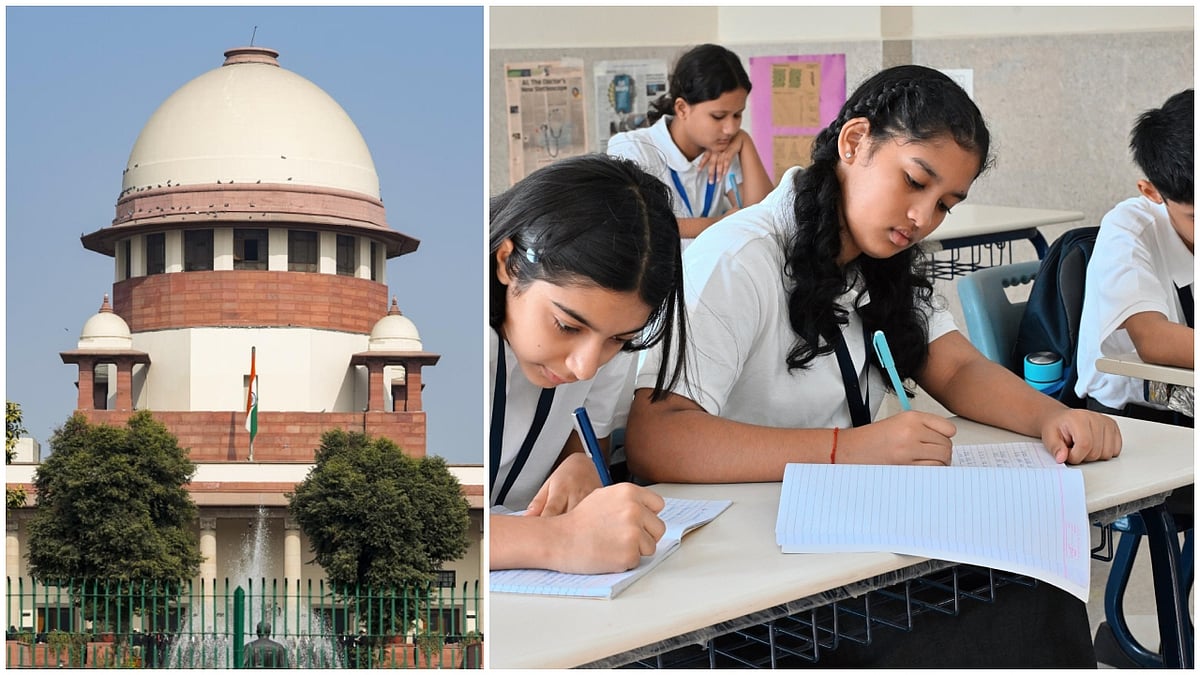
The Supreme Court has asked the Central Board of Secondary Education (CBSE) to reconsider the implementation timeline of its mandatory three-language policy for Class 6 students. During a hearing on September 17, 2026, the court suggested that the policy should become mandatory from January 1, 2027, instead of being imposed on the current Class 6 batch during the ongoing academic year.
The suggestion came while a bench comprising Chief Justice of India Surya Kant and Justices Joymalya Bagchi and V. Mohana was hearing petitions challenging the CBSE’s three-language framework. The court emphasized that the issue was not only related to the legal validity of the policy but also to the practical difficulties faced by students, parents and schools.
The CBSE has agreed to reconsider the matter and submit a fresh note after consulting the authorities.
Supreme Court Focuses on Students’ Convenience
Justice Joymalya Bagchi observed that the new language requirement should not come as a sudden burden for students and their families in the middle of an academic session. The court suggested that the third language could remain optional for the existing Class 6 students for the time being, while making the requirement compulsory for students entering Class 6 from January 2027.
The bench stated that the proposal was aimed at providing students and families with sufficient time to adjust to the new system. The court also clarified that the suggestion was being made from the perspective of convenience and logistics, and should not be treated as a final opinion on the legal challenges against the policy.
The matter is expected to be considered further after the Centre and CBSE respond to the court’s observations.
What Does the Three-Language Policy Require?
The CBSE’s new framework is linked to the National Education Policy (NEP) 2020 and the National Curriculum Framework for School Education 2023. Under the policy, students are required to study three languages, including at least two Indian languages.
The framework aims to promote Indian languages and multilingual education. Foreign languages may be selected as the third language only after students have opted for two Indian languages, or as an additional fourth language, according to the reported CBSE guidelines.
The policy has been introduced as part of a broader effort to strengthen language learning and encourage familiarity with India’s linguistic diversity. However, its implementation has raised questions concerning the availability of teachers, textbooks, learning materials and suitable infrastructure in schools.
CBSE’s Position on Exemption
During the hearing, the CBSE initially opposed granting a one-time exemption to the present Class 6 batch. The board argued that such an exemption could create learning gaps, disturb the progressive implementation of the language framework and lead to similar demands from future batches of students.
The board also maintained that students currently in Class 6 would appear for their Board examinations several years later, giving them time to adapt to the new system. However, the court questioned whether the implementation could be staggered to reduce the immediate pressure on students.
Additional Solicitor General Aishwarya Bhati, representing the CBSE, agreed to convey the court’s suggestion to the government. She indicated that different forms of relaxation were already being considered for students in other classes and that the arrangement for Class 6 could also be reviewed.
Different Arrangements for Other Classes
The discussion also highlighted the different relaxations reportedly available to students in Classes 7 to 10. The court questioned why similar consideration could not be extended to the present Class 6 batch.
According to reports, students in some higher classes have been given flexibility regarding language requirements and assessment methods. The Supreme Court indicated that a gradual implementation process could allow schools to prepare teachers, learning resources and timetables more effectively.
The court’s intervention does not mean that the three-language policy has been cancelled. Instead, it has asked the authorities to reconsider when and how the policy should become compulsory for the current Class 6 students.
Supreme Court Questions Over Language Classification
The Supreme Court has previously raised questions about the classification of languages under the CBSE framework. In an earlier hearing, the bench expressed reservations about describing English as a non-native language and sought greater clarity on the meaning of terms such as “indigenous” and “native.”
The court also asked authorities to explain whether schools possess the necessary infrastructure and educational resources to teach the languages included in the policy. These questions could become important during the continuing legal examination of the framework.
The petitioners have challenged aspects of the policy, while the government and CBSE are defending its implementation. The final legal position will depend on the court’s further consideration of the petitions and the responses submitted by the concerned authorities.
Read more like this:
- After 12 Years, Centre Hikes EPFO Wage Ceiling to Rs 25,000 a Month
- लद्दाख के विकास का रोडमैप: दिसंबर तक तैयार होगा ‘विकसित लद्दाख 2047’ विजन डॉक्यूमेंट
Next Steps for CBSE and Government
The CBSE is now expected to review the proposed January 2027 timeline and examine whether the current Class 6 students can be given temporary flexibility. The government’s response will determine whether the policy is modified for the ongoing academic year.
The Supreme Court has indicated that students who voluntarily wish to study three languages during the current session may still be allowed to do so. At the same time, mandatory implementation could be postponed until January 1, 2027, if the authorities accept the suggestion.
The debate reflects the challenges involved in introducing major education reforms. While multilingual education remains an important policy objective, effective implementation requires advance planning, trained teachers, suitable learning materials and clear communication with families.
The next hearing is expected to provide further clarity on the government’s position and the possible arrangements for Class 6 students. Until then, the policy remains under judicial consideration, and the CBSE’s revised response will be closely watched by schools, parents and students across the country.