Join
Join
 Shorts

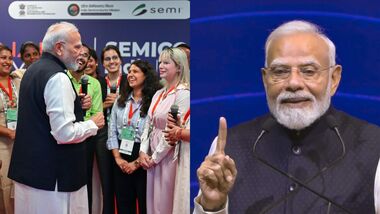
Prime Minister Narendra Modi has said India’s semiconductor ecosystem is expanding rapidly, creating fresh opportunities for investment, innovation and economic growth. Speaking inauguration of SEMICON India 2026 in New Delhi on September 17, the Prime Minister presented India as an emerging destination for companies seeking reliable and diversified locations for semiconductor manufacturing.
The three-day SEMICON India 2026 event, being held at Yashobhoomi from September 17 to 19, has brought together companies, investors, policymakers, researchers, start-ups and academic institutions from across the global semiconductor industry. More than 600 companies and representatives from 52 countries are participating in the event.
Global Demand for Chips Is Creating New Opportunities for India
Semiconductors are essential components in smartphones, automobiles, computers, telecommunications equipment, defence systems, satellites and artificial intelligence infrastructure. With demand for advanced computing and AI technologies increasing, countries are looking to strengthen their domestic and regional chip supply chains.
Against this background, Modi said the world needs new and trusted locations for semiconductor production and that India is preparing to meet this requirement.
The government is seeking to build capabilities across the semiconductor value chain rather than concentrating only on chip fabrication. This includes design, manufacturing, packaging, testing, equipment, materials, research and talent development.
12 Semiconductor Projects Already Approved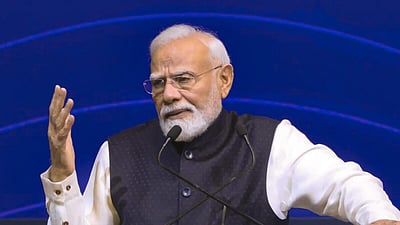
The Prime Minister highlighted the progress made under India’s semiconductor programme, noting that 12 projects have already received approval. The government expects the number of projects and the scale of investment to increase as the next phase of the programme gets underway.
India’s semiconductor push began with the India Semiconductor Mission and the Semicon India Programme. The government has been providing policy support and financial incentives to encourage companies to establish manufacturing, packaging and other semiconductor-related facilities in the country.
According to the government, the next phase is intended to build on the momentum created by the first phase and broaden participation across the industry.
India Semicon 2.0 Raises the Scale of the Programme
The Union Cabinet approved Semicon 2.0 in July 2026 with a total budget outlay of ₹1,27,500 crore. The programme is designed to strengthen India’s semiconductor design and manufacturing ecosystem over the longer term.
The initiative covers six broad pillars, including semiconductor design, manufacturing, advanced packaging, materials and equipment, research and development, and talent development. The government has said that the objective is to create a more complete and resilient ecosystem rather than relying on isolated projects.
The expansion of policy support is expected to provide companies with greater opportunities to participate in different stages of semiconductor production and related technologies.
Major Global Companies Show Interest in India
The growing interest in India is also reflected in fresh investment announcements. US semiconductor equipment company Applied Materials announced plans to invest $5 billion in India over the next decade. The investment is expected to support research, supply-chain development and workforce expansion.
Lam Research has also announced plans involving an investment of around ₹10,000 crore for a silicon component manufacturing facility and expanded research and development activities in India.
These developments indicate that investment opportunities are emerging not only in chip manufacturing but also in equipment, components, research and supporting technologies.
From Chip Design to Complete Ecosystem
One of the key changes in India’s semiconductor strategy is the effort to develop capabilities across the entire value chain. SEMICON India 2026 is being held under the theme “Silicon to Systems: Building the Ecosystem”, reflecting this broader approach.
The event covers areas ranging from semiconductor materials and equipment to chip design, fabrication, advanced packaging, electronics and complete systems. Start-ups, universities and research institutions are also being included in the ecosystem-building effort.
This approach could create opportunities for domestic companies working in specialised areas such as semiconductor design, testing, electronic components, industrial equipment and technology services.
Focus on Research and Skilled Talent
Building a semiconductor industry requires highly specialised engineering and technical skills. Recognising this requirement, the government and industry bodies are placing greater emphasis on workforce development, research and collaboration between companies and educational institutions.
SEMICON India 2026 includes a workforce development pavilion, student hackathon, start-up programmes and industry-academia initiatives. More than 40 semiconductor and electronics start-ups are expected to showcase their technologies at the event.
The development of skilled talent will be important as India seeks to expand beyond services and design into more advanced areas of semiconductor manufacturing and technology.
Read more like this:
- दिल्ली SIR के खिलाफ याचिका पर सुप्रीम कोर्ट ने जल्द सुनवाई को दी सहमति
- पीएम मोदी की दो दिवसीय ‘चिंतन बैठक’: सुधार, सुशासन और नीति-निर्माण पर होगा मंथन
Challenges Remain
Despite the expansion of India’s semiconductor ecosystem, building a globally competitive industry will require sustained investment, advanced infrastructure, reliable supply chains and access to specialised technology.
Large-scale semiconductor fabrication is particularly complex and capital intensive. India is therefore attempting to build capabilities gradually across multiple segments of the industry. Some packaging facilities have already begun commercial production, while major fabrication projects remain under development.
The coming years will show how effectively approved projects are converted into operational facilities and how deeply Indian companies become integrated into global semiconductor supply chains.
Conclusion
Prime Minister Narendra Modi’s remarks at SEMICON India 2026 underline the government’s ambition to make India an important destination for semiconductor manufacturing and investment.
With 12 projects approved, the launch of Semicon 2.0, rising international participation and new investments from global companies, India’s semiconductor strategy is entering a broader phase. The focus is increasingly moving from individual manufacturing facilities toward an integrated ecosystem covering design, fabrication, packaging, equipment, research and skilled talent.
For India, the semiconductor push represents an opportunity to strengthen domestic technology capabilities while becoming a more significant participant in global supply chains. The scale of investment and the success of projects already approved will determine how quickly that ambition translates into sustained industrial capacity and new economic opportunities.