Join
Join
 Shorts

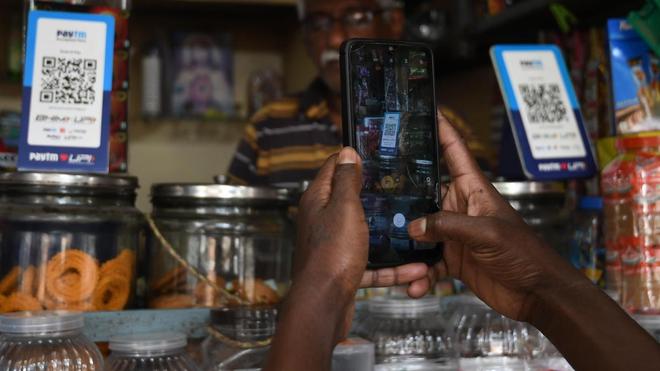
The Government of India has officially barred banks and payment system providers from imposing direct or indirect charges on Unified Payments Interface transactions of up to ₹2,000 and payments made through RuPay-powered debit cards. The notification issued by the Ministry of Finance on September 14 aims to protect small-value digital payments and encourage the continued use of India’s widely adopted cashless payment systems.
The move comes amid renewed discussions about introducing merchant charges on certain high-value UPI transactions. While consumers making small payments will continue to be protected from fees, the government has left open the possibility of charges being introduced for selected transactions above the ₹2,000 threshold.
What the Government Notification Says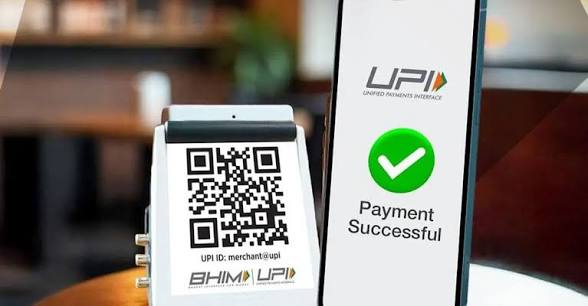
Under the notification issued by the Department of Financial Services, RuPay debit cards and UPI transactions up to ₹2,000 have been specified as protected electronic modes of payment.
The notification states that no bank or system provider shall impose any charge, whether directly or indirectly, on a person making or receiving a payment through these specified modes. This means that neither customers nor merchants can be charged for using RuPay debit cards or making eligible UPI payments.
The order has been issued under Section 10A of the Payment and Settlement Systems Act, 2007, following amendments to the law passed by Parliament in August 2026.
Small UPI Payments Will Remain Free
The decision provides relief to millions of users who rely on UPI for everyday transactions such as buying groceries, paying for transport, purchasing food and making payments to small businesses.
UPI has become a major part of India’s digital economy because of its convenience and zero-cost transaction model. Keeping payments up to ₹2,000 free is expected to protect small merchants and consumers from additional costs that could discourage digital payments.
The government has also clarified that person-to-person UPI transfers will continue to remain free. The proposed changes primarily concern merchant transactions rather than individuals sending money to family members, friends or other bank accounts.
What Happens to Payments Above ₹2,000?
The notification does not itself impose charges on UPI transactions above ₹2,000. Instead, it creates a legal framework under which charges could potentially be introduced for selected high-value merchant transactions.
A detailed directive on the proposed fee structure is expected to follow. Reports have suggested that a merchant discount rate, or MDR, could eventually be applied to certain transactions above the threshold, particularly those involving large merchants.
The exact rate, categories of businesses covered and the method of collecting charges have not yet been finalised. Therefore, UPI users should not assume that every transaction above ₹2,000 will immediately attract a fee.
Why Is MDR Being Discussed Again?
Merchant discount rate is a fee paid within the payment ecosystem when a digital transaction is processed. It is generally distributed among banks, payment service providers and other participants involved in completing the transaction.
India abolished MDR on UPI and RuPay debit card transactions in January 2020 to encourage digital payments. Since then, the government has provided financial incentives to banks and payment companies to compensate for the absence of merchant charges.
However, payment companies and banks have repeatedly argued that maintaining a completely free system has become financially difficult as transaction volumes have increased sharply.
The latest policy change appears to balance the two concerns: protecting low-value transactions while creating a possible revenue model for larger merchant payments.
UPI Transaction Volumes Continue to Grow
UPI has expanded rapidly across India and is now used by consumers, small businesses, large retailers and government departments.
During the 2025-26 financial year, more than 24,000 crore UPI transactions worth approximately ₹314 lakh crore were recorded, according to data cited in reports on the government’s notification.
Interestingly, transactions above ₹2,000 represented only around 4 percent of person-to-merchant UPI transactions by volume. However, these transactions accounted for nearly two-thirds of the total transaction value.
This distinction explains why policymakers are considering a separate approach for high-value payments. Small payments form the overwhelming majority of transactions, while larger payments represent a substantial share of the money moving through the system.
Government Support for Digital Payments
The government has continued to subsidise MDR-related costs through incentive schemes designed to promote RuPay debit cards and low-value BHIM-UPI transactions.
For the 2026-27 financial year, the government has allocated an estimated ₹2,000 crore for such support. Earlier allocations stood at ₹1,922.77 crore in 2024-25 and ₹2,196.21 crore in 2025-26.
The objective of these incentives is to ensure that banks and payment service providers can continue offering digital transactions without directly passing costs on to consumers or small merchants.
However, the rising scale of UPI transactions has increased the financial burden on the government, prompting discussions about a more sustainable payment ecosystem.
Impact on Consumers and Small Businesses
For ordinary users, the immediate impact is limited and largely positive. Payments up to ₹2,000 through UPI will remain free, while RuPay debit card transactions will continue to be protected from charges.
Small retailers, street vendors and local businesses are also likely to benefit because many of their daily transactions fall below the prescribed threshold.
The bigger uncertainty concerns larger merchants and businesses that process high-value UPI payments. If MDR is introduced for these transactions, businesses may have to absorb the cost or adjust their payment practices.
The government has indicated that any future charges would be limited and nominal, rather than comparable to the higher fees traditionally associated with credit card payments.
What Users Should Know
The latest notification does not mean that UPI has suddenly become a paid service. Users can continue making payments up to ₹2,000 without worrying about transaction charges.
Person-to-person transfers also remain free. Any future charges on higher-value merchant transactions will depend on subsequent government guidelines and the final framework adopted by banks and payment providers.
For now, the government’s decision reinforces its commitment to keeping digital payments affordable while addressing the long-term financial sustainability of India’s UPI ecosystem.
Read more like this :
Conclusion
The government’s decision to prohibit charges on UPI payments up to ₹2,000 and RuPay debit card transactions is an important step in protecting India’s small-value digital payment economy.
At the same time, the possibility of MDR on selected high-value transactions signals a shift in the country’s approach to financing its digital payment infrastructure. The challenge will be to ensure that any new charges do not weaken consumer confidence, discourage small businesses or undermine the accessibility that made UPI one of India’s most successful digital innovations.