Join
Join
 Shorts

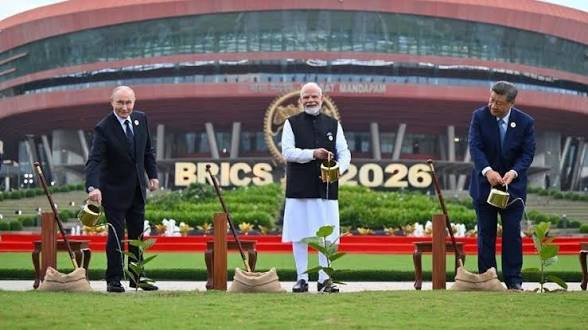
Prime Minister Narendra Modi has thanked leaders of BRICS member countries and partner nations for their participation and cooperation in making the 18th BRICS Summit in New Delhi a productive gathering. The two-day summit, held on September 12 and 13 under India’s chairship, focused on global conflicts, economic cooperation, technology, climate change and reforms in international institutions.
At the conclusion of the summit, Prime Minister Modi described BRICS as an increasingly important platform for dialogue and practical cooperation among countries of the Global South. He emphasised that the grouping must move beyond declarations and ensure that decisions taken by leaders result in tangible benefits for ordinary people.
PM Modi Thanks BRICS Leaders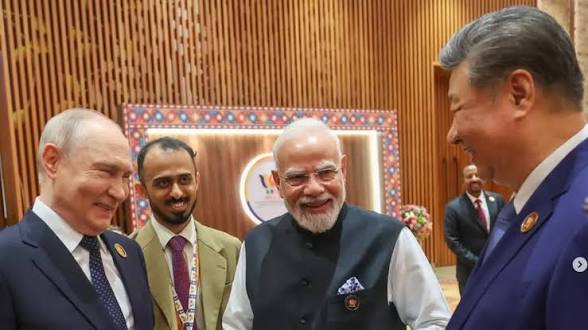
In his concluding remarks, Prime Minister Modi expressed appreciation to all participating leaders for their support during India’s BRICS presidency. He said the discussions in New Delhi had been constructive and had strengthened the spirit of cooperation among member countries.
Modi highlighted the importance of converting agreements and policy frameworks into real-world outcomes. According to the Prime Minister, BRICS should function as a solution-oriented ecosystem capable of responding to challenges affecting developing countries, including economic uncertainty, public health emergencies, climate-related disasters and disruptions to global supply chains.
India’s presidency focused on resilience, innovation, cooperation and sustainability. The government attempted to place practical development issues alongside traditional discussions on geopolitics and international security.
New Delhi Declaration Adopted
One of the major outcomes of the summit was the adoption of the New Delhi Declaration. The document reflects the collective priorities of BRICS members on international cooperation, economic development and global governance.
The declaration called for greater cooperation on food and energy security, artificial intelligence, climate action, digital connectivity and sustainable development. It also addressed ongoing conflicts and expressed support for peaceful resolution of international disputes through dialogue and diplomacy.
The declaration is significant because BRICS members have different political interests and regional alliances. Reaching consensus among countries including India, China, Russia, Iran, Saudi Arabia and the United Arab Emirates required extensive diplomatic negotiations.
Focus on Global South and International Reforms
Prime Minister Modi used the summit to advocate a stronger voice for developing countries in global decision-making institutions. He called for reforms in organisations such as the United Nations and the International Monetary Fund to reflect present-day economic and geopolitical realities.
India has argued that emerging economies should have greater representation in institutions that shape global financial, political and technological policies. Modi also emphasised that developing countries should not merely follow rules created by others but should have a meaningful role in creating them.
The Prime Minister’s position reflects India’s broader diplomatic effort to present itself as a bridge between developed economies and the wider Global South.
India Announces New Cooperation Initiatives
During the summit, India proposed several initiatives aimed at improving cooperation among BRICS countries. These included an integrated early warning system for infectious diseases, a logistics and supply chain cooperation framework, a startup innovation fund and centres of excellence in areas such as agro-ecology and energy storage.
The proposed initiatives are intended to strengthen preparedness for future pandemics, improve supply-chain resilience and encourage technological innovation among member countries.
India also stressed the importance of cooperation in digital public infrastructure, renewable energy, artificial intelligence and critical technologies. These sectors are becoming increasingly important as countries seek to reduce dependence on vulnerable global supply chains.
Trade and Financial Cooperation Remain Important
Economic cooperation was another major focus of the summit. BRICS countries represent a significant share of the world’s population, economic output and global trade.
India pushed for stronger trade links, improved cross-border payment systems and greater use of national currencies in international transactions. The objective is to make trade among member countries more efficient and reduce dependence on financial systems dominated by a small number of developed economies.
However, differences remain among BRICS members regarding tariffs, market access, currency arrangements and trade imbalances. India is expected to continue working towards practical mechanisms rather than attempting to create a single common currency in the immediate future.
Modi-Putin and Modi-Xi Meetings Add Strategic Importance
The summit also provided an opportunity for Prime Minister Modi to hold important bilateral meetings with Russian President Vladimir Putin and Chinese President Xi Jinping.
Modi and Putin discussed defence, energy, trade, space cooperation, critical minerals and the ongoing Russia-Ukraine conflict. India reiterated its support for dialogue and diplomacy as the preferred route to resolving international disputes. Putin also invited Modi to attend the next India-Russia Annual Summit in Russia, an invitation accepted by the Prime Minister.
Meanwhile, Modi and Xi Jinping discussed the gradual improvement in India-China relations. Their interaction focused on restoring business and transport links, improving people-to-people exchanges and maintaining peace along the disputed border. The meeting was closely watched because it followed years of tension after the 2020 border clash.
BRICS Expansion Increases Influence and Complexity
The expanded BRICS grouping now includes 11 full members, with countries such as Egypt, Ethiopia, Indonesia, Iran, Saudi Arabia and the United Arab Emirates joining the original members.
The expansion has increased BRICS’ demographic and economic influence. At the same time, it has introduced more complex political differences within the organisation.
Members have varying positions on conflicts, trade policies and relations with the United States and Europe. India’s chairship attempted to maintain consensus by focusing on development, cooperation and practical solutions instead of allowing geopolitical disagreements to dominate the agenda.
China Takes Over the Next BRICS Presidency
At the end of the summit, India handed over the BRICS chairship to China for the next term. Beijing is expected to focus on strengthening economic integration, artificial intelligence cooperation and the role of the expanded BRICS grouping in global governance.
India’s presidency has been seen as an effort to strengthen the organisation’s relevance while maintaining strategic autonomy on international issues. China’s upcoming chairship may bring greater emphasis on economic connectivity and the expansion of BRICS-led institutions.
Read more like this:
What the Delhi Summit Means for India
The successful conclusion of the BRICS Summit gives India an opportunity to strengthen its position as an influential power in the Global South. By hosting leaders from Russia, China, Iran, the UAE and other major emerging economies, New Delhi demonstrated its ability to engage with countries that often have competing geopolitical interests.
For Prime Minister Modi, the summit also reinforced India’s diplomatic priorities of strategic autonomy, economic development and reform of global institutions.
The real measure of success, however, will depend on whether the initiatives announced in New Delhi are implemented effectively. As Modi himself emphasised, BRICS must move from files and frameworks to real-life impact.