Join
Join
 Shorts

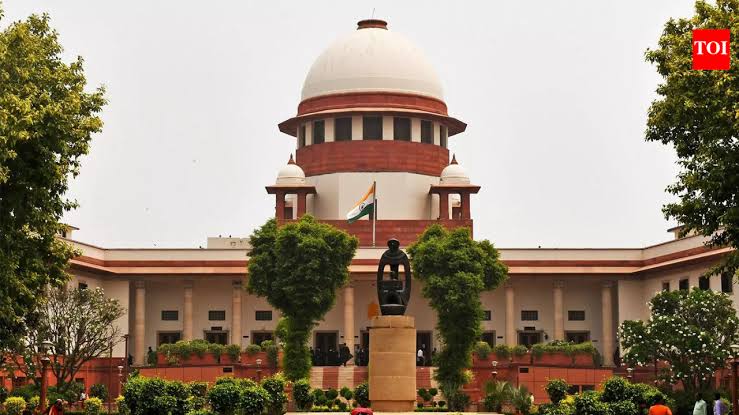
The Supreme Court has once again put the contentious issue of marital rape at the centre of a major constitutional and criminal-law debate. During proceedings concerning the criminalisation of sexual intercourse by a husband with his wife without her consent, the court raised a fundamental legal question: Can courts prosecute an act as “rape” when the legislature has not defined that conduct as rape under criminal law?
The question goes to the heart of the ongoing debate over whether forced or non-consensual sexual intercourse within marriage should be treated as a criminal offence in the same manner as rape outside marriage. The proceedings have brought renewed attention to the boundaries between judicial interpretation and legislative policy, while also highlighting the importance of consent within marriage.
The Supreme Court’s query does not itself amount to a final judgment on marital rape. Rather, it reflects the constitutional and statutory questions the court is examining while hearing challenges and arguments surrounding the existing legal framework.
What is the legal issue?
Indian criminal law has historically treated marriage differently from other relationships in the context of rape. The central issue is whether a husband should receive a specific legal protection when he has sexual intercourse with his wife without her consent.
The debate is not about consensual sexual relations within marriage. Instead, it concerns situations where a woman alleges that she did not consent and that her husband nevertheless forced sexual intercourse upon her
Petitioners and women’s rights advocates have argued that marriage cannot be treated as permanent consent and that a woman’s right to bodily autonomy and dignity should continue after marriage. They contend that the criminal law should recognise non-consensual sexual intercourse within marriage as a serious offence.
Opponents of criminalisation, however, have raised concerns about the impact on the institution of marriage, the possibility of misuse of criminal provisions and the appropriate role of courts in changing the existing statutory framework.
Supreme Court’s key question
The court’s question about whether judges can prosecute conduct that the State has not defined as “rape” raises an important principle of criminal jurisprudence.
Criminal offences are generally created by legislation. Courts interpret laws enacted by Parliament, but creating an entirely new criminal offence can raise questions concerning the separation of powers.
The issue therefore becomes whether recognising marital rape as a criminal offence would amount to interpreting existing law in accordance with constitutional rights or would effectively require the judiciary to create a new offence.This distinction is central to the proceedings.
Consent remains at the heart of the debate
The marital rape debate is fundamentally connected to the concept of consent. Supporters of criminalisation argue that consent must remain an individual choice regardless of marital status.
According to this view, entering into marriage cannot mean giving permanent or unconditional consent to sexual relations. A wife, like any other adult, should have the ability to say no to sexual activity.
The argument also draws on broader constitutional principles, including the right to life and personal liberty under Article 21. Over the years, the Supreme Court has expanded the interpretation of Article 21 to include dignity, privacy and bodily autonomy.
At the same time, determining whether these constitutional principles require the creation of a specific criminal offence remains a complicated legal question.
Why Parliament’s role is important
One of the most significant aspects of the present debate is the question of institutional responsibility.
If marital rape is to become a separate criminal offence, Parliament may have to determine its precise definition, punishment, evidentiary requirements and safeguards against misuse.
Lawmakers would also have to consider how such a provision would interact with existing offences relating to sexual violence, domestic violence, cruelty, hurt and other forms of abuse.
The Supreme Court’s question therefore highlights the possibility that a broad change in criminal law may require legislative action rather than judicial rewriting of the statute.
Earlier judicial developments
The Supreme Court has previously dealt with several aspects of sexual autonomy, privacy and women’s rights. In different judgments, the court has recognised that personal liberty includes the right to bodily autonomy and dignity.
Courts have also increasingly treated consent as a central component of sexual-offence jurisprudence.
At the same time, the question of marital rape has remained legally and politically sensitive because of the special statutory treatment of sexual relations between spouses.
The legal debate has continued for years, with women’s rights organisations seeking removal of the marital exception and opposing arguments warning against expanding criminal law through judicial intervention.
Why the case matters
The proceedings could have significant implications for India’s criminal justice system and the legal understanding of marriage.
If the court ultimately holds that existing constitutional protections require greater recognition of a wife’s right to refuse sexual intercourse, it could significantly change the legal landscape.
If the court instead concludes that such a major change must come from Parliament, the issue would return to the legislature, where lawmakers would have to decide whether and how to amend criminal law.
Either way, the case raises a larger constitutional question: How should courts respond when fundamental rights appear to come into tension with an existing statutory framework?
A wider social debate
Beyond the courtroom, the marital rape debate has generated strong reactions among women’s rights groups, legal experts, civil society organisations and political parties.
Supporters of criminalisation say that the absence of a specific rape offence within marriage can leave women without adequate criminal-law protection in cases of severe sexual violence.
Those opposing the move argue that criminal law should not become a tool for resolving every marital dispute and that adequate safeguards would be necessary to prevent false or malicious complaints.
The challenge for lawmakers and courts is therefore to protect women from sexual violence while maintaining due process and ensuring that criminal provisions are clearly defined.
Read more like this:
- PM POSHAN Yojana क्या है? जानिए कैसे ये योजना बच्चों को स्कूल से जोड़ने का काम कर रही है?
- कैबिनेट का रेलवे को बड़ा तोहफा: 20,804 करोड़ रुपये की आठ मल्टी-ट्रैकिंग परियोजनाओं को मंजूरी, 9 राज्यों के 31 जिलों को मिलेगा लाभ
- जनगणना 2027 के सवालों पर क्यों उठ रहे हैं सवाल? जाति, पहचान और निजी जानकारी को लेकर बढ़ी चिंता
What happens next?
The Supreme Court’s ongoing examination is expected to focus on the constitutional validity of the existing legal position, the meaning of consent within marriage, and the limits of judicial interpretation.
Importantly, the court’s latest question should not be interpreted as a final decision either in favour of or against criminalising marital rape.
The proceedings instead underline the complexity of the issue and the need to examine both constitutional rights and the principles governing criminal legislation.
Conclusion
The Supreme Court’s question—whether courts can prosecute conduct that the State does not itself define as “rape”—has brought the marital rape debate back to a fundamental issue of constitutional law.
At its core, the case involves two competing questions: Does marriage alter a person’s right to sexual consent and bodily autonomy, and can courts expand criminal law to protect that right when Parliament has not expressly done so?
The answer could have far-reaching consequences for women’s rights, criminal jurisprudence and the relationship between the judiciary and legislature.
For now, however, the Supreme Court’s observations form part of an ongoing hearing and should not be treated as a final ruling. The legal position will ultimately depend on the court’s final judgment and, potentially, any legislative action that may follow.