Join
Join
 Shorts

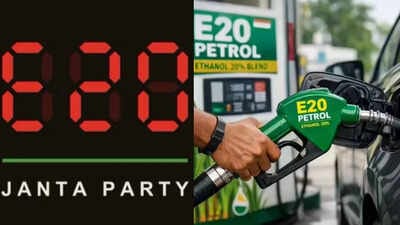
Riding on the momentum generated by the recent success of the Cockroach Janta Party (CJP) campaign, a new citizen-driven initiative calling itself the “E20 Janta Party” has emerged with a single-point agenda: giving Indian consumers the freedom to choose between E20 ethanol-blended petrol and 100% petrol at fuel stations. The movement has rapidly gained traction on social media, bringing India’s ethanol-blending policy back into the national spotlight.
The campaign comes just days after the CJP-led protests over examination reforms captured national attention. Inspired by that movement’s issue-based mobilization, the E20 Janta Party says it is not a conventional political party but a consumer rights campaign focused on fuel choice, transparency, and informed decision-making.
E20 Janta Party -A Demand for Consumer Choice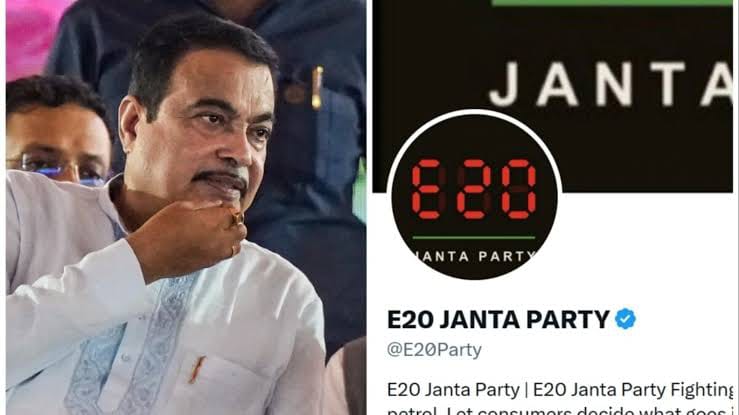
At the heart of the campaign is a straightforward demand: consumers should be allowed to purchase pure petrol if they prefer it, instead of being limited primarily to E20 fuel.
According to the group, the campaign is not seeking the withdrawal of ethanol-blended petrol. Instead, it argues that motorists deserve multiple fuel options, similar to the choices available in other consumer markets. The movement says drivers should be free to decide which fuel best suits their vehicles and driving needs.
The campaign has also demanded clear labeling at fuel stations, public disclosure of studies comparing different fuel blends, and independent research into mileage, engine performance, emissions, and long-term maintenance costs.
E20 Janta Party -Inspired by the CJP Movement
Organizers openly acknowledge that the movement draws inspiration from the style and public engagement strategy used by the Cockroach Janta Party (CJP).
Like the earlier campaign, the E20 Janta Party has relied heavily on social media platforms, online graphics, public statements, and digital participation instead of traditional political rallies. Within a short period, the campaign has attracted significant online attention and sparked widespread debate about India’s ethanol-blending policy.
The campaign’s messaging emphasizes that it is a citizen-led initiative rather than an electoral organization.
Why E20 Fuel Is Being Debated??
E20 petrol contains 20% ethanol blended with 80% petrol. The Government of India has promoted ethanol blending as part of a broader strategy to reduce dependence on imported crude oil, improve energy security, lower vehicle emissions, and increase income opportunities for sugarcane farmers through higher ethanol production.
Government officials have repeatedly stated that ethanol blending contributes to environmental sustainability while strengthening India’s domestic energy ecosystem.
However, sections of vehicle owners have expressed concerns regarding the impact of higher ethanol blends on older vehicles, fuel efficiency, maintenance costs, and engine durability. These concerns have fueled renewed public discussion over whether motorists should have greater flexibility in choosing fuel types.
Claims and Counterclaims
The E20 Janta Party argues that many motorists have reported reduced mileage and higher maintenance expenses after switching to ethanol-blended fuel. The campaign has therefore called for independent scientific assessments rather than relying solely on official statements or anecdotal experiences.
The Government, however, has maintained that there is no verified evidence of widespread engine failures caused by E20 fuel. Earlier official clarifications stated that social media claims regarding extensive vehicle damage were misleading and that ethanol blending had undergone extensive testing before nationwide implementation.
Calls for Transparency
Beyond the demand for pure petrol, the movement has outlined several broader recommendations aimed at increasing transparency in fuel policy.
Among its proposals are:
– Availability of both E20 and 100% petrol at fuel stations.
– Clear labeling of every fuel type sold.
– Publication of government data comparing fuel blends.
– Independent research on engine performance and maintenance.
– Greater public consultation before implementing future fuel policy changes.
Supporters argue that better information would allow consumers to make informed choices based on scientific evidence rather than speculation.
Political Dimension
The campaign has also acquired a political tone by demanding accountability from policymakers associated with India’s ethanol initiative. Some campaign supporters have called for the resignation of Union Road Transport and Highways Minister Nitin Gadkari, arguing that fuel policy should be revisited in light of consumer concerns.
At present, however, the movement remains primarily a digital advocacy campaign rather than a formal political organization.
Government’s Position on E20
The central government continues to defend the ethanol blending programme as a key component of India’s long-term energy strategy.
Officials argue that increasing ethanol usage helps reduce fossil fuel imports, strengthens rural incomes by supporting the agricultural sector, lowers greenhouse gas emissions, and improves national energy security. They have also emphasized that extensive technical evaluations were conducted before expanding ethanol blending nationwide.
The Petroleum Ministry has previously stated that no widespread vehicle failures directly attributable to ethanol blending have been documented.
Growing Public Debate
Automobile experts believe that the controversy highlights the need for greater communication between policymakers, automobile manufacturers, fuel suppliers, and consumers.
While newer vehicles are generally designed to operate efficiently on higher ethanol blends, experts note that questions continue to be raised regarding compatibility with older vehicles and long-term maintenance costs. Many specialists suggest that independent research and transparent public data could help bridge the information gap and reduce misinformation.
Industry observers also point out that India’s transition toward cleaner fuels will require continuous dialogue among stakeholders to balance environmental goals with consumer confidence.
Read more like this:
- जंतर-मंतर से आंदोलन के निशान मिटे: सफाई अभियान में हटाए गए पोस्टर, बैनर और टनों कचरा, सामान्य हुआ इलाका
- UPI Fraud 2026: ठगी के नए तरीके और बचने के जरूरी उपाय
- प्रह्लाद जोशी ने संभाला शिक्षा मंत्रालय का कार्यभार, धर्मेंद्र प्रधान के इस्तीफे के बाद नई जिम्मेदारी; शिक्षा सुधारों पर रहेगा फोकस
Social Media Drives the Movement
Unlike conventional political campaigns, the E20 Janta Party has largely evolved through digital platforms. Viral posts, online discussions, and citizen participation have played a significant role in expanding the movement’s reach.
Its rapid emergence illustrates how issue-based digital campaigns are increasingly influencing public discourse in India, particularly on matters directly affecting consumers.
Conclusion
The emergence of the E20 Janta Party marks a new phase in the national conversation surrounding India’s fuel policy. While the government continues to defend ethanol blending as an important environmental and economic reform, the new campaign argues that consumers should retain the freedom to choose between E20 and pure petrol. As the debate grows, policymakers may face increasing pressure to address concerns over transparency, vehicle compatibility, and consumer choice while pursuing the country’s long-term clean energy objectives.
Whether the campaign develops into a broader public movement remains to be seen, but it has already succeeded in placing fuel choice at the center of India’s policy debate.