Join
Join
 Shorts

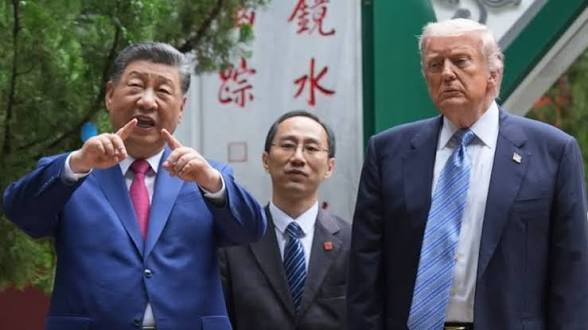
US President Donald Trump has alleged that China stole the personal data of 220 million American voters, accusing Beijing of carrying out one of the largest cyber theft operations targeting the United States. The remarks come amid renewed tensions between Washington and Beijing over cybersecurity, trade, and national security.
Trump claimed the alleged data breach posed a serious threat to the integrity of American institutions and called for stronger measures to counter cyber threats.
Alleged Data Theft Raises Security Concerns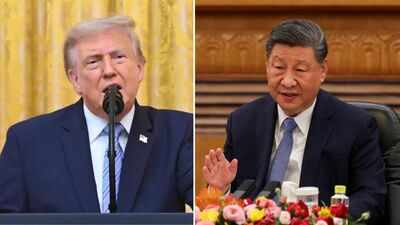
According to Trump’s statement, the alleged cyberattack involved the theft of sensitive voter-related information belonging to millions of Americans.
While specific technical details regarding the alleged breach were not immediately disclosed, the claim has renewed concerns over cybersecurity, election infrastructure, and the protection of personal data in the United States.
Officials are expected to examine the allegations and determine whether any federal investigations are required.
China Yet to Respond
At the time of Trump’s remarks, Chinese authorities had not issued an official response to the allegations.
In previous instances involving cyber espionage accusations, Beijing has consistently denied involvement in hacking operations targeting foreign governments or institutions. Chinese officials have often maintained that China itself is a victim of cyberattacks and supports international cooperation against cybercrime.
Any official response is expected to draw significant international attention.
Cybersecurity Remains a Key Issue
Cybersecurity has become one of the most contentious issues in US-China relations.
Over the years, both countries have exchanged allegations involving hacking, intellectual property theft, espionage, and attacks on critical infrastructure. The latest claims are likely to intensify discussions on digital security and the need for stronger safeguards against cyber threats.
Experts believe cyber warfare will remain a major geopolitical challenge in the coming years.
Political Reactions Expected
Trump’s allegations are expected to trigger political debate in Washington.
Lawmakers from both major political parties have repeatedly called for stronger cybersecurity measures to protect sensitive government systems and personal data. The latest claims may prompt renewed discussions on election security, digital infrastructure, and foreign cyber threats.
Analysts believe the issue could remain a significant topic in US domestic and foreign policy.
Growing Focus on Election Security
The alleged theft of voter data has once again highlighted concerns surrounding election-related cybersecurity.
Experts emphasize that protecting voter databases, government networks, and digital infrastructure is essential for maintaining public confidence in democratic institutions. Federal agencies are expected to continue strengthening cybersecurity systems against evolving threats.
Election security has remained a major priority for US authorities in recent years.
US-China Relations Under Strain
Relations between the United States and China remain tense across multiple areas, including trade, technology, military affairs, and cybersecurity.
The latest allegations are likely to add another point of friction between the two global powers. Diplomatic engagement between Washington and Beijing is expected to continue even as disagreements persist over several strategic issues.
International observers are closely watching developments given their potential global implications.
Read more like this :
What Happens Next
The allegations are expected to attract further scrutiny from US officials and cybersecurity experts as more information becomes available.
Any formal investigation or official response from the United States or China could significantly influence bilateral relations. Meanwhile, cybersecurity is expected to remain a central issue in discussions between the world’s two largest economies as governments continue to strengthen protections against emerging digital threats.