Join
Join
 Shorts

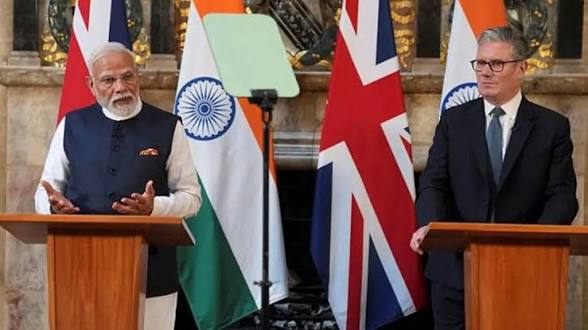
The India-United Kingdom Free Trade Agreement (FTA) has officially come into effect, marking a major milestone in bilateral economic relations. The agreement is expected to boost trade, reduce tariffs on a wide range of goods, and create new opportunities for businesses, exporters, and consumers in both countries.
Officials from both nations have described the FTA as one of the most significant trade agreements signed by India in recent years.
What Will Become Cheaper?
With the implementation of the FTA, import duties on several products have been reduced or eliminated, making many goods more affordable.
Consumers are expected to benefit from lower prices on products such as premium Scotch whisky, automobiles, cosmetics, medical devices, chocolates, processed foods, and selected consumer goods imported from the UK. The reduction in tariffs is expected to increase product availability and encourage greater competition in the market.
The agreement is also likely to make several Indian products more competitive in the UK market.
Indian Exporters to Gain
Indian exporters are expected to receive duty-free or preferential access for a large number of products entering the UK.
Key export sectors expected to benefit include textiles and garments, leather goods, footwear, gems and jewellery, engineering products, pharmaceuticals, marine products, chemicals, and agricultural goods.
Industry experts believe the agreement will significantly enhance India’s export potential over the coming years.
Major Industries Set to Benefit
Several Indian industries are expected to gain from the Free Trade Agreement.
The textile and apparel sector is likely to witness higher exports due to improved market access. Pharmaceutical companies may benefit from smoother trade procedures and stronger cooperation in healthcare. Engineering manufacturers and automobile component producers are also expected to expand their presence in the UK.
The agreement is expected to create new opportunities for small and medium-sized enterprises as well.
Employment and Investment Opportunities
The FTA is expected to generate employment across multiple sectors by encouraging higher exports, increased manufacturing, and greater foreign investment.
Businesses from both countries are likely to explore new investment opportunities in technology, renewable energy, financial services, education, and advanced manufacturing.
Experts believe the agreement will strengthen economic cooperation and support long-term job creation.
Services Sector Receives a Boost
India’s services industry is also expected to benefit significantly from the agreement.
Professionals working in information technology, finance, legal services, education, and consulting could gain improved market access and greater mobility under agreed provisions. Enhanced cooperation between businesses in both countries is expected to create additional opportunities for skilled professionals.
The FTA also promotes collaboration in innovation and digital services.
Strengthening Bilateral Economic Ties
The agreement reflects the growing strategic and economic partnership between India and the United Kingdom.
Both governments have expressed confidence that the FTA will increase bilateral trade, strengthen supply chains, and encourage greater business collaboration. The agreement is also expected to support innovation, sustainable development, and long-term economic growth.
Officials believe the partnership will contribute to stronger commercial ties in the years ahead.
Read more like this:
What Happens Next?
With the India-UK Free Trade Agreement now in force, businesses, exporters, and consumers are expected to gradually experience its benefits as tariff reductions and trade provisions are implemented.
Industry leaders believe the agreement will improve market access, attract fresh investments, and enhance India’s position in global trade. As implementation progresses, both countries are expected to work closely to maximize the economic opportunities created by one of their most comprehensive trade agreements.