Join
Join
 Shorts


Europe is battling one of the most severe early-summer heatwaves in recent history, with more than 1,300 heat-related deaths reported since June 21. Health authorities and meteorologists say an unusual atmospheric phenomenon known as the “Omega Block” has trapped scorching air over much of the continent, pushing temperatures to record-breaking levels and turning cities into dangerous heat zones.
The prolonged heat has not only claimed lives but also disrupted transportation, damaged infrastructure, strained healthcare systems, and intensified concerns over climate change.
What Is an Omega Block?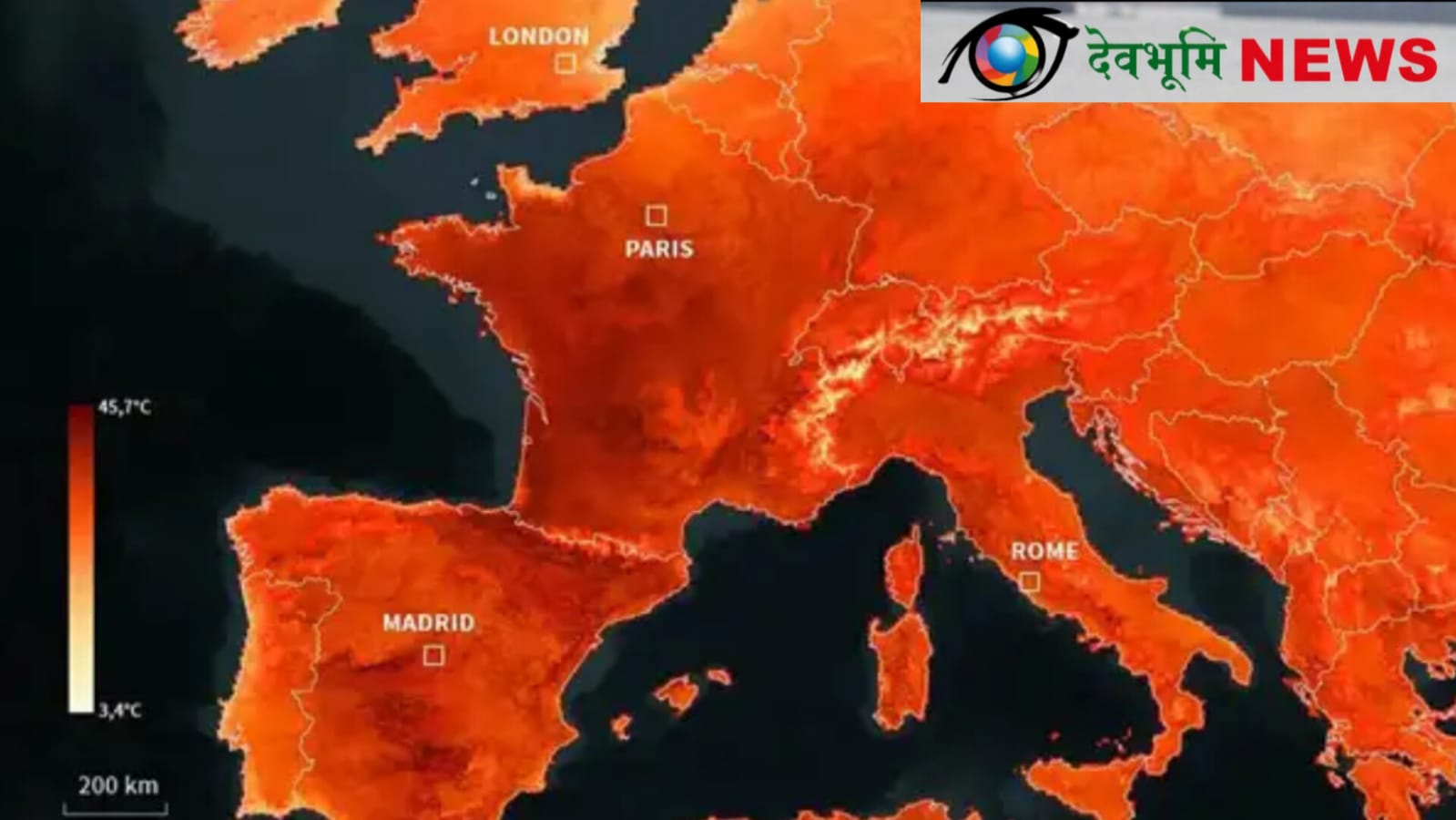
The primary driver behind Europe’s current heatwave is a weather pattern called an Omega Block, named after its resemblance to the Greek letter Ω (Omega) on meteorological maps.
An Omega Block forms when a powerful high-pressure system becomes trapped between two low-pressure systems. This configuration prevents normal weather systems from moving through, allowing hot air to remain stationary over the same region for several days or even weeks.
As a result, temperatures continue to rise day after day with little opportunity for cooler air, rainfall, or cloud cover to provide relief. Meteorologists describe the pattern as a “heat dome” that locks extreme temperatures over large geographical areas.
More Than 1,300 Lives Lost in Europe
According to estimates cited by the World Health Organization (WHO), over 1,300 excess deaths have occurred across Europe since the heatwave began.
Most of the victims are elderly people, individuals with pre-existing health conditions, outdoor workers, and those without access to adequate cooling. Hospitals across several countries have reported a sharp increase in patients suffering from dehydration, heatstroke, respiratory distress, and cardiovascular complications.
Record Temperatures Across Europe
The Omega Block has pushed temperatures far beyond seasonal averages across much of Western and Central Europe.
Several countries have witnessed historic records:
France recorded temperatures above 44°C in some regions.
Paris crossed 40°C, setting a new June record.
The United Kingdom experienced its hottest June day on record, with temperatures exceeding 36°C.
Italy, Spain, Germany, Poland, and several other countries have remained under severe heat alerts for consecutive days.
Infrastructure Under Severe Stress in Europe
The prolonged heat has exposed the vulnerability of Europe’s infrastructure.
Extreme temperatures have caused:
Roads to soften and partially melt.
Railway tracks to warp, forcing speed restrictions.
Power grids to face increased demand due to air conditioning.
Nuclear power generation to decline in some regions because river water used for cooling became too warm.
Schools, museums, and tourist attractions to shorten operating hours or temporarily close.
Climate Change Intensifying Heatwaves in Europe
Scientists emphasize that while the Omega Block is a naturally occurring weather phenomenon, climate change has significantly intensified its impacts.
Global warming has raised average temperatures worldwide, meaning that when weather systems like Omega Blocks occur, they begin from a much warmer baseline.
According to climate researchers, Europe is warming at more than twice the global average. Recent scientific assessments suggest that heatwaves of this magnitude have become dramatically more likely because of human-induced climate change.
Experts also note that nighttime temperatures are rising faster than daytime temperatures, reducing opportunities for people to recover from prolonged heat exposure.
Why Europe Is Particularly Vulnerable?
Although Europe is one of the world’s most developed regions, many of its cities were built for temperate climates rather than prolonged extreme heat.
Older residential buildings often lack modern insulation and air-conditioning systems. Historic city centers with dense concrete structures absorb and retain heat, creating powerful urban heat island effects.
Public health experts say these structural challenges have amplified the deadly consequences of the current heatwave.
Governments Introduce Emergency Measures
Governments across Europe have implemented emergency measures to reduce heat-related risks.
Authorities have:
Issued red and orange heat alerts.
Opened cooling centres and public shelters.
Adjusted working hours for construction and outdoor labourers.
Closed schools in some regions.
Advised citizens to stay indoors during peak afternoon temperatures.
Increased emergency medical staffing.
Several cities have also distributed drinking water, expanded public health messaging, and urged residents to check on elderly neighbours and vulnerable family members.
Economic Impact Continues to Grow
Beyond the humanitarian crisis, the heatwave is expected to inflict significant economic losses.
Agriculture has suffered as crops experience heat stress and livestock productivity declines. Tourism has been disrupted, with many outdoor attractions limiting visitor access during peak temperatures.
Businesses have also reported lower productivity due to shorter working hours and safety restrictions for employees working outdoors.
Energy consumption has surged because of increased cooling demand, placing additional pressure on electricity networks already operating under difficult conditions.
Read more like this:
- Tata Sierra EV: The legend returns with electric attitude
- पश्चिम बंगाल के हल्दिया रिफाइनरी में भीषण आग: नेफ्था पाइपलाइन में विस्फोट जैसी घटना से 20 से अधिक लोग घायल, रेल सेवाएं प्रभावित
- चुनाव आयोग के SIR विवाद पर विपक्ष का सुप्रीम कोर्ट का दरवाजा खटखटाने का फैसला, 23 दलों ने CJI को लिखा संयुक्त पत्र
Experts Warn Such Events May Become More Common
Meteorologists caution that Omega Blocks themselves are natural atmospheric patterns, but a warming climate makes the heat trapped beneath them far more dangerous.
Climate scientists believe that unless greenhouse gas emissions are reduced and adaptation measures strengthened, Europe could experience more frequent and more intense heatwaves in the coming decades.
Experts recommend expanding early warning systems, improving urban planning, increasing green spaces, modernizing buildings for better cooling efficiency, and strengthening healthcare preparedness to reduce future fatalities.
Conclusion
The devastating European heatwave has become a stark reminder of how natural weather patterns and climate change can combine to produce catastrophic consequences. The Omega Block has transformed a normal summer weather event into a prolonged continental emergency, claiming more than 1,300 lives while disrupting infrastructure, transportation, healthcare, and economic activity.
As Europe struggles to cope with record-breaking temperatures, the crisis highlights the urgent need for stronger climate adaptation strategies, resilient infrastructure, and improved public health preparedness.
Scientists warn that extreme heat events are no longer isolated incidents but are becoming an increasingly common feature of a warming world, making long-term planning and international climate action more important than ever.