Join
Join
 Shorts

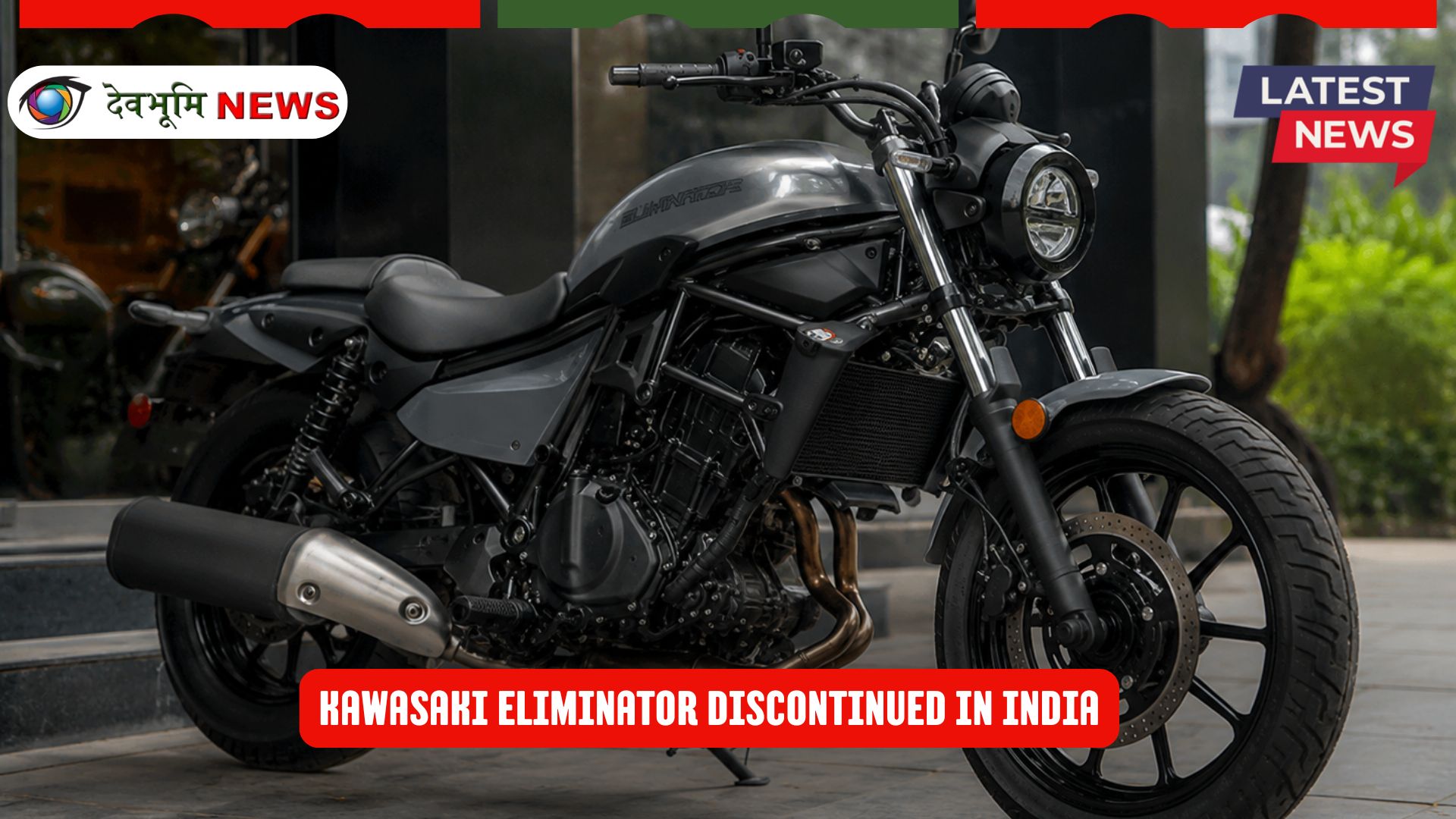
Kawasaki Eliminator discontinued in India is not the kind of news cruiser fans wanted to hear in 2026. The Eliminator had only recently returned to India with a clean design, approachable seat height, smooth parallel-twin engine, and that unmistakable “I ride slow, but I look expensive doing it” attitude.
But according to recent reports, Kawasaki is preparing to pull the plug on the Eliminator in India once existing dealer stock is sold out. The key reason? The motorcycle is reportedly not E20-compliant, and Kawasaki does not seem keen on updating it for India’s newer ethanol-blended fuel requirements.
That is a surprisingly quiet exit for a motorcycle that arrived with a fairly loud name. After all, when your bike is called the Eliminator, people expect it to eliminate rivals, not quietly eliminate itself from the showroom floor.
What Happened to the Kawasaki Eliminator in India?
The big update is simple: Kawasaki Eliminator discontinued in India reports suggest that the cruiser will not continue once existing units at dealerships are sold. Kawasaki has not made a loud public farewell announcement, but the market direction appears clear.
The Eliminator was launched in India as a premium middleweight cruiser with a 451cc, liquid-cooled, parallel-twin engine. It offered the relaxed stance of a cruiser without the heavy, intimidating feel that often comes with bigger motorcycles.
It was low, friendly, stylish, and properly Kawasaki. The motorcycle looked like it could take you to Ladakh, a Sunday breakfast ride, or your ex’s wedding with equal confidence. Unfortunately, confidence alone does not solve emission and fuel-compliance headaches.
Why Is the Kawasaki Eliminator Being Discontinued?
The biggest reason behind Kawasaki Eliminator discontinued in India news is its reported lack of E20 compatibility. India has been moving toward petrol blended with 20 percent ethanol, commonly called E20 fuel. For new petrol vehicles, compatibility with this fuel blend has become increasingly important.
The Eliminator sold in India is reportedly not E20-compliant. That means Kawasaki would need to update or revalidate the engine for India’s changing fuel norms. For a high-volume motorcycle, that investment may make business sense. For a low-volume CBU cruiser, the calculation becomes much colder.
And this is where the motorcycle business becomes less romantic. Enthusiasts think in horsepower, torque, exhaust notes, and weekend rides. Companies think in homologation cost, compliance paperwork, margins, and sales charts. Somewhere between those two worlds, the Eliminator seems to have lost its parking spot.
The E20 Fuel Problem Explained
E20 fuel contains 20 percent ethanol and 80 percent petrol. India’s shift toward ethanol-blended fuel is aimed at reducing crude oil imports, lowering emissions, and supporting the domestic biofuel economy.
That sounds good on paper. But motorcycles and cars need to be engineered to handle higher ethanol content. Ethanol can affect rubber parts, seals, fuel lines, calibration, mileage, and long-term durability if a vehicle is not designed for it.
This is why the Kawasaki Eliminator discontinued in India story matters beyond just one cruiser. It shows how India’s fuel policy is now directly shaping which imported motorcycles survive here.
For brands like Kawasaki, the decision is not just “Can we update it?” The real question is, “Will enough people buy it after we update it?” In the Eliminator’s case, the answer may not have been strong enough.
Price, CBU Import Status, and Low Sales
Another reason behind Kawasaki Eliminator discontinued in India news is pricing. The Eliminator came to India as a CBU, or completely built-up import. That made it expensive compared to locally assembled or locally manufactured rivals.
At around ₹6.16 lakh ex-showroom in 2026, the Eliminator was not exactly a casual purchase. It sat in a tricky space. It was more premium than most entry-level cruisers, but not powerful or feature-rich enough to tempt every big-bike buyer.
That is the classic CBU problem. The motorcycle may be good, but the price tag starts doing comedy. Sadly, it is not stand-up comedy. It is “stand near the showroom and think for 45 minutes” comedy.
Kawasaki already has E20-compliant models in India, including motorcycles like the Vulcan S, Z650RS, and Versys 650. These CKD models are better positioned in Kawasaki’s portfolio. The Eliminator, being a CBU with limited sales, likely did not justify the cost of an India-specific update.
Kawasaki Eliminator Engine and Specs
The Eliminator was not a bad motorcycle. In fact, that is what makes this exit slightly painful.
It used a 451cc, liquid-cooled, parallel-twin engine producing around 44.7bhp and 42.6Nm of torque. The engine was paired with a six-speed gearbox and an assist and slipper clutch. This made it easy to ride in traffic and relaxed enough for highway cruising.
Key highlights included:
- 451cc liquid-cooled parallel-twin engine
- Around 44.7bhp and 42.6Nm
- Six-speed gearbox
- Assist and slipper clutch
- Low seat height
- Trellis frame
- Round LED headlamp
- Digital instrument cluster
- Smartphone connectivity through Kawasaki’s Rideology app
- 176kg kerb weight
The Eliminator’s biggest charm was accessibility. It had a low seat, manageable weight, and smooth engine. It did not try to behave like a loud, chest-thumping old-school cruiser. Instead, it felt modern, calm, and easy-going.
Think of it as a cruiser that drank green tea instead of black coffee.
Should You Buy One Before Stock Runs Out?
This is the million-rupee question, or more accurately, the ₹7 lakh on-road question.
If you love the Kawasaki Eliminator and are getting a good dealer-level offer, it may still be worth considering. The motorcycle remains stylish, refined, and easy to ride. For someone who wants a premium twin-cylinder cruiser with Japanese reliability, it still has appeal.
However, buyers should be practical. Before booking, ask the dealer about:
- Remaining stock availability
- Manufacturing year
- Warranty support
- Spare parts availability
- E20 fuel compatibility clarity
- Service support in your city
- Any official discount or dealer benefit
The Kawasaki Eliminator discontinued in India situation does not automatically make the bike a bad purchase. But it does make it a more emotional purchase than a logical one.
And emotional purchases are fine. Motorcycling itself is emotional. Nobody buys a cruiser because Excel sheets told them to. But emotions should still wear a helmet.
Best Alternatives to the Kawasaki Eliminator in India
With Kawasaki Eliminator discontinued in India reports gaining attention, buyers may start looking at alternatives. The most obvious options depend on budget and riding style.
Royal Enfield Super Meteor 650
The Royal Enfield Super Meteor 650 is the most natural cruiser alternative. It has a larger 648cc parallel-twin engine, strong road presence, better pricing, and a much wider service network. It is heavier than the Eliminator, but it also feels more traditional and substantial.
Royal Enfield Shotgun 650
The Shotgun 650 is for riders who want a more custom-inspired roadster-cruiser look. It is not as relaxed as the Super Meteor, but it has attitude. Lots of it.
Kawasaki Vulcan S
If you want to stay within Kawasaki’s family, the Vulcan S remains a stronger long-term option. It is more expensive, but it is locally assembled as a CKD model and better established in India.
Benelli 502C
The Benelli 502C offers muscular styling and a relaxed riding position. It may not have the same brand pull as Kawasaki, but it does offer visual drama. And in India, visual drama sells. Just ask any SUV with fake vents.
What This Means for Kawasaki India
The Kawasaki Eliminator discontinued in India development shows that Kawasaki is becoming more selective with its Indian portfolio. The brand may continue focusing on motorcycles that either sell in reasonable numbers or justify updates through CKD assembly.
This could also raise questions about the Ninja 500, which uses the same 451cc engine platform. If that model also faces E20 compliance challenges, Kawasaki may need to make a similar decision there.
For enthusiasts, this is a reminder that not every good motorcycle survives the market. Sometimes a bike can be well-engineered, attractive, and genuinely enjoyable, yet still lose because of pricing, regulations, and low demand.
That is the slightly philosophical part of the story. Motorcycles are freedom machines, but they are also products. They live or die by spreadsheets.
External Links
Read More
- Peddi Box Office Collection: 10 Powerful Reasons Ram Charan’s 2026 Smash Became South India’s No. 1 Hit
- NCPI और TMC विद्रोह: कैसे एक छोटी पार्टी बन सकती है NDA की दूसरी सबसे बड़ी सहयोगी?
- राम मंदिर दान मामला: उत्तर प्रदेश सरकार ने बनाई 3 सदस्यीय SIT, अयोध्या दान विवाद की होगी गहन जांच
Final Thoughts
The Kawasaki Eliminator discontinued in India story is disappointing, but not shocking. It was a stylish, smooth, approachable cruiser that deserved more attention than it got. But between E20 compliance, CBU pricing, and limited sales, the motorcycle seems to have reached the end of its Indian road.
For buyers, the message is clear. If you really want one, check with Kawasaki dealers soon and negotiate smartly. But if long-term peace of mind matters more, looking at alternatives like the Super Meteor 650 or Vulcan S may be wiser.
The Eliminator may be leaving India, but it leaves behind an interesting question: do we really ignore good motorcycles until they are gone?
Because sometimes, the bikes we overlook are the ones we miss the most after the showroom lights go out.