Join
Join
 Shorts

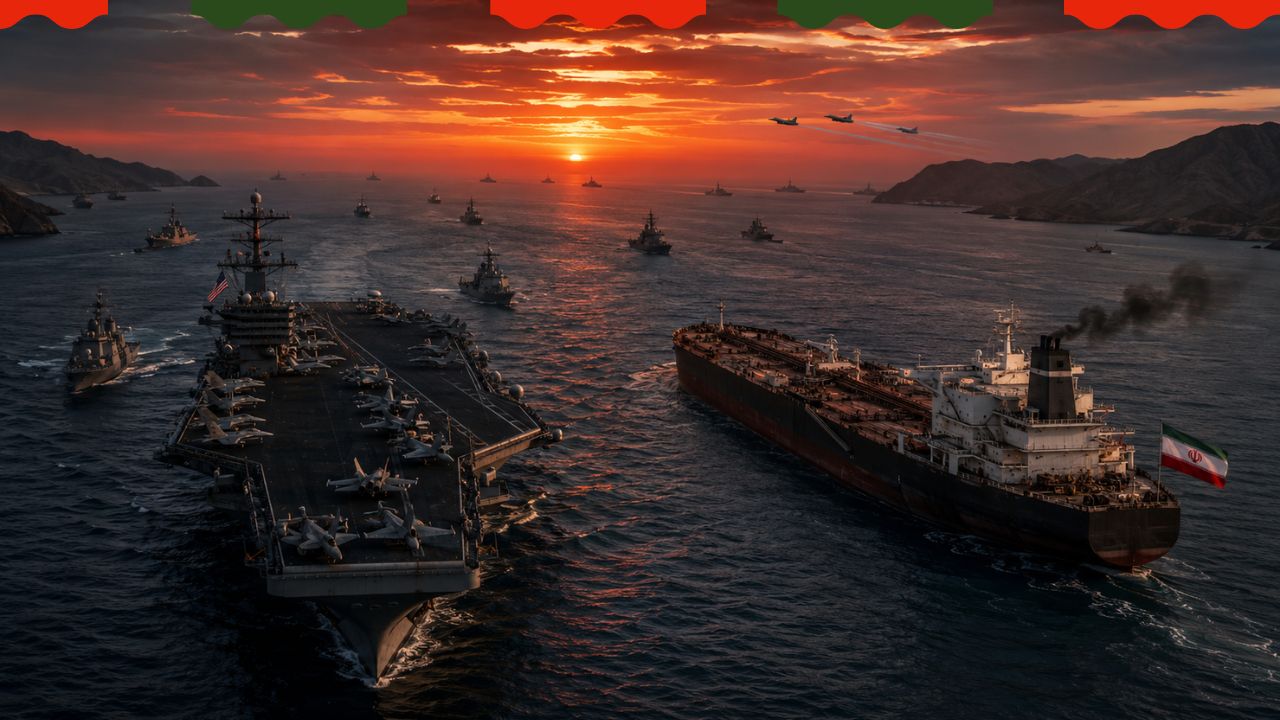
Iran Denies Disabling Oil Tanker as Trump Threatens Intensified Bombing—Nuclear Deal Talks Hang in the Balance: While diplomatic efforts continue via Pakistani intermediaries as they continue to work with Pakistani mediators, President Donald Trump warned Iran on Wednesday that the country is in danger of an American strike “at a much higher level and intensity” if it agrees to the current conditions of a proposed peace accord—even though Tehran declared that it was looking into the plan and that it would take action through Islamabad.
What Happened: The Tanker Incident in the Gulf of Oman
U.S. Central Command announced that on Wednesday, American forces disabled an Iranian-flagged crude tanker operating within the Gulf of Oman after its crew failed to heed warnings that they violated the current U.S. Navy blockade against Iran. A U.S. fighter jet fired multiple rounds on the rudders of the tanker, rendering the ship in a position to proceed towards its Iranian port of entry.
“CENTCOM forces continue to act deliberately and professionally to ensure compliance,” Central Command stated in a statement noting that the vessel is “no longer transiting to Iran.”
Iran has, however, claimed that the incident did not occur in the manner described. Iranian state-run television has disputed that U.S. account, calling American assertions regarding the effectiveness of the blockade “baseless and entirely false.” This kind of conflicting narrative is a common feature of the ongoing conflict for months over the strategic Strait of Hormuz—the most crucial energy chokepoint.
As of Wednesday, the U.S. blockade—in effect since the 13th of April—was reversing itself for 52 vessels that were trying to get into or out of Iranian ports.
Trump’s Ultimatum: “Much Higher Level” Strikes Unless Iran Agrees
In a tweet in the Truth Social platform on Wednesday morning, President Trump issued a stark warning to Tehran and said that Iran could be in danger of an American strike “at a much higher level and intensity” unless it “agrees to give what has been agreed to—which is, perhaps, a big assumption.”
The threat came in the midst of the officials’ description of a significant back-and-forth negotiation between the two parties, which was facilitated by Pakistan over several weeks. The Trump administration has confirmed the specifics of the most recent plan.
Trump’s ultimatum is a continuation of increasing deadlines through the conflict, which started at the end of February 2026, when the United States and Israel launched coordinated strikes against Iran. A tentative ceasefire was signed on April 8, and Trump prolonged it until April 21 in order to make the possibility of diplomacy possible; however, tensions have since risen yet again in the Strait of Hormuz.
Iran Reviews the U.S. Peace Proposal Through Pakistani Intermediaries
The Iranian Foreign Ministry spokesman Esmaeil Baqaei confirmed on Wednesday that Tehran is examining the most recent U.S. peace proposal and will communicate its views to Pakistani intermediaries following the finalization of an answer.
The most important issue is unresolved. Iran has yet to refuse to sign any other peace deal that doesn’t also include a stop to Israeli forces’ operations against Hezbollah within Lebanon. Israel and Hezbollah continue to exchange fire even after Trump first declared the Lebanon cease-fire, and both parties repeatedly accuse each other of committing violations.
Iranian Foreign Minister Abbas Araghchi met with Chinese Foreign Minister Wang Yi in Beijing on Tuesday, a sign that Tehran is seeking to shore up the diplomatic support of Beijing in the face of pressure from Washington increasing.
Netanyahu-Trump Coordination: Dismantle Iran’s Enrichment Capabilities
Israeli Premier Benjamin Netanyahu said Wednesday that he and President Trump communicate “almost daily” and that there are “no surprises” between the two allies.
“We share common goals, and the most important goal is to remove the enriched material from Iran—all the enriched material—and dismantle Iran’s enrichment capabilities,” Netanyahu declared in a taped declaration.
The Israeli leader said he would have a direct conversation with Trump regarding Trump’s Iran situation, but it was unclear if the White House had confirmed the time of the call.
Strait of Hormuz: France and the UK prepare a multinational naval force.
The impact of the conflict on shipping worldwide has drawn attention to important European powers. The French Ministry of the Armed Forces announced on Wednesday that its Charles de Gaulle aircraft carrier, as well as escort vessels, will travel through the Suez Canal toward the southern Red Sea as part of the “upcoming multinational initiative to secure the Strait of Hormuz.”
France, as well as the United Kingdom, has been leading an alliance that includes European as well as Persian Gulf nations working to form a joint naval force that will ensure the safety of commercial travel through the Strait when the U.S.-Israeli military conflict is over or even during it, should a compromise be reached.
The strait is shut to all commercial vessels since the war started on the 28th of February. Iran is threatening ships trying to cross the Strait without permission, and the disruption has forced nations all over Europe and Asia, which depend heavily on Persian Gulf oil and gas, to push up fuel, food, and other costs for consumers across the world.
Trump temporarily put off his “Project Freedom” mission—under which the U.S. military was guiding commercial vessels across the Strait in order to allow for the development of diplomatic relations. It is still in effect. The U.S. naval blockade of Iranian ports is still in full force.
Read Also: Russia Ukraine War update: Civilians struggle for Survival in Oleshky Mega City
Background: How the Naval Blockade Has Squeezed Iran
The United States imposed its naval blockade of Iran on the 13th of April, 2026, following the breakdown of the Islamabad Talks. Since then, the economic impact for Iran has been a serious one. It was estimated that the U.S. Department of Defense estimates that Iran suffered losses of around $4.8 billion worth of oil revenues from April 13 to May 1, with 31 loaded tankers carrying 53 million barrels of Iranian oil stranded within the Gulf.
Iran has responded with the seizure of international cargo vessels close to the Strait of Hormuz, attacking commercial vessels, and firing missile and drone strikes against U.S. allies in the region, such as those of the United Arab Emirates. The UAE condemned what it described as “renewed treacherous Iranian aggression” after being hit by a missile for the very first time following the cease-fire that began earlier this week.
The blockade is perceived by analysts as being strategically different from previous U.S. naval blockades because Iran is responding by reopening the Strait of Hormuz, which means that the longer the blockade lasts, the more damage will be that is inflicted on the global economy, not only on Tehran.
What Comes Next: Key Developments to Watch
Many crucial elements will influence the course of the conflict in the next few days:
Iran’s official response to its formal response to the U.S. peace proposal—The official response from Iran to the U.S. peace proposal—Tehran has stated that it will communicate its position via Pakistani intermediaries following an internal audit. If Tehran accepts, declines, or counter-proposes, it will determine whether a peace deal is feasible.
The multinational military mission—its deployment by the Charles de Gaulle carrier group signals a growing desire from the world for restoring Hormuz shipping, either with or without U.S. unilateral control.
Trump-Netanyahu call. Both leaders are expected to discuss how to resolve the Iran situation. Any changes to Israeli conditions, particularly regarding Hezbollah in Lebanon, could cause problems or speed up diplomacy.
Trump’s credibility in bombing threats—Trump has extended and issued numerous ultimatums throughout the conflict. If he sticks to this time or extends the deadline remains a major issue for markets as well as allies and even adversaries.
The role of China, the Iranian foreign minister’s meeting with Wang Yi in Beijing, suggests Tehran might be looking for Chinese leverage or a cover for its nuclear negotiations. The nuclear negotiations get underway.
Key Facts at a Glance
| Detail | Status |
|---|---|
| War start date | February 28, 2026 |
| U.S.-Iran cease-fire | April 8, 2026 (extended April 21) |
| Naval blockade start | April 13, 2026 |
| Vessels are turned around | 52 (as of May 7) |
| Iran oil revenue lost | ~$4.8 billion (Apr 13-May 1) |
| Peace broker | Pakistan |
| Iran’s most important condition | Halt to Israeli ops in Lebanon |
| U.S.-Israel goal | Remove all enriched materials from Iran |