Join
Join
 Shorts

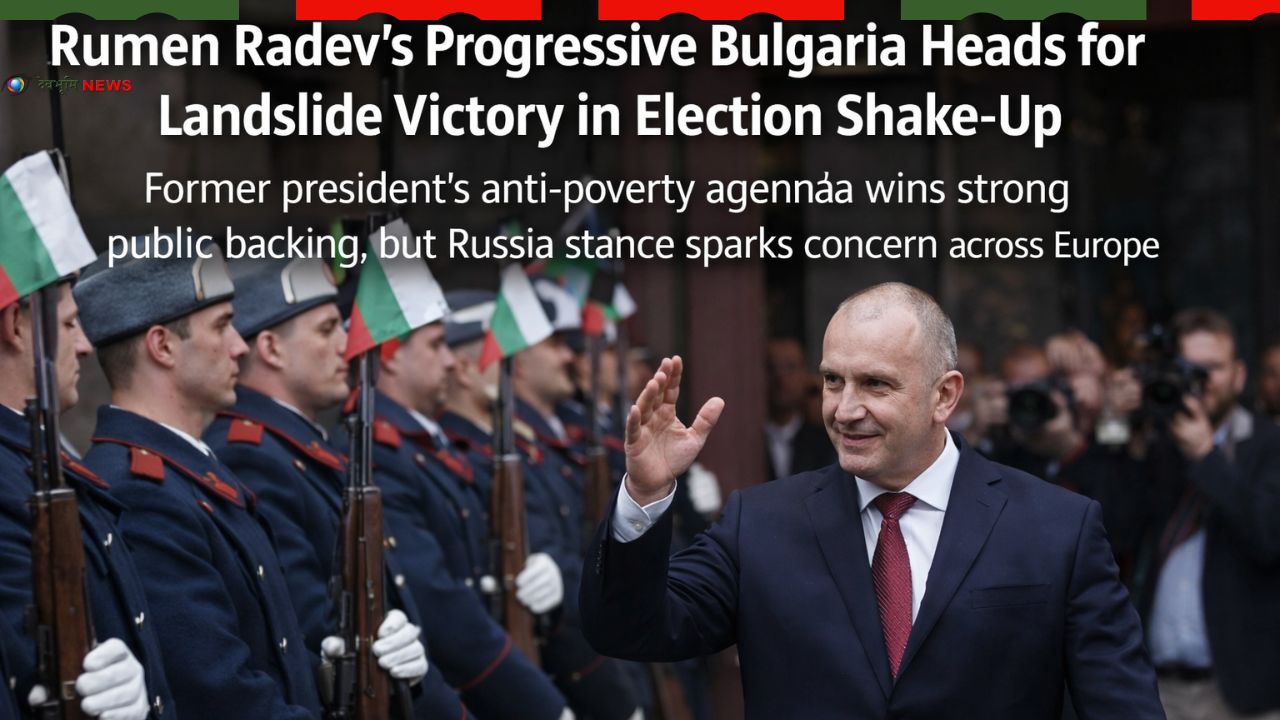
Rumen Radev’s Progressive Bulgaria: A former Bulgarian Presidency Rumen Radev is poised for a major victory in the elections through his newly-formed Progressive Bulgaria party, marking an important change in the country’s political environment.
Radev has been campaigning on the promise to fight the effects of inflation, poverty and the oligarchic monopoly that has been enshrined, Radev has captured widespread popular support, though the “pragmatic” approach toward Russia has raised doubts with European allies.
Official preliminary results released on Monday following Bulgaria’s eighth general election in the past five years shows Progressive Bulgaria leading decisively. The party has won 61% the ballots taken into account, the party has gained 44.6 percent of the votes.
It is far over the more pro-European Continue Change alliance, which has 14.3%. Change/Democratic Bulgaria alliance, which boasts 14.3 percent. Then there’s GERB which is led by Boyko Borissov with 13%. This is the lowest percentage since the party came to prominence in 2008.
The projections suggest that Progressive Bulgaria could win around 130 seats in the parliament of 240 members which could result in the majority. In a press conference following the conclusion of results, Radev described the result as “a victory over apathy,” but acknowledged the lingering distrust of the political system.
He described the outcome by saying “hope over desperation and freedom over fear,” however, he was hesitant to confirm if he wants to run for prime minister.
Read Also: Strait of Hormuz on Edge as Iran Rejects US Negotiations
If the result is confirmed, it could be regarded as one of the most significant victories of the history of Bulgaria’s democracy, similar to the landslide of 1997 by the United Democratic Forces, which opened the door to Bulgaria’s accession to both the EU as well as NATO.
The turnout of voters was estimated at 48.8 percent, almost 10% higher than the election of October 2024. Based on Alpha Research, Progressive Bulgaria was a strong performer throughout all age categories, with a notable exception for younger voters between the ages of 18-30, who became more politically active in protests against the establishment in the latter half of 2025. Even though they led those protests but it was the We Continue the Change/Democratic Bulgaria coalition was not able to turn this enthusiasm into voting.
Radev has launched Progressive Bulgaria just a month earlier after he quit the presidency to run for elections. The campaign was heavily focused on economic reforms and dismantling the oligarchic influence inside the political structure.
However his foreign policy stances have come under scrutiny. Radev has advocated for an even greater “pragmatic” European approach toward Russia and has criticized military aid to Ukraine and expressing displeasure over sanctions against Moscow.
Radev has also opposed North Macedonia’s EU entry and was previously against Bulgaria moving to the euro. In the same way he has reiterated Bulgaria’s loyalty to the EU as well as NATO and occasionally criticised Russia.
Read Also: Middle East Crisis 2026 News:Causes, Impact, and Global Response
Before he entered politics Radev worked as a air commanding officer of the force. Radev became president in the year 2016 with the support from his party, the Bulgarian Socialist Party and was elected again in 2021. He resigned in the spring of this year, and started Progressive Bulgaria in March.
This new lawmaker will comprise members of the Movement for Rights and Freedoms – New Beginning, led by Delyan Peevski, along with the pro-Moscow extreme-right party Revival however both of them did not perform as expected.
In a stunning setback The Bulgarian Socialist Party failed to reach the threshold of electoral representation for the parliamentary seat.
conclusion:
Rumen Radev’s rapid political comeback marks a defining moment for Bulgaria’s future. His party’s strong mandate reflects deep public frustration with the old political order and a clear demand for economic reform and accountability.
However, while his promises to tackle poverty and curb oligarchic influence have resonated with voters, his nuanced stance on Russia and key European issues is likely to keep both domestic and international observers cautious. As Bulgaria enters this new political phase, the real challenge for Radev will be balancing reform at home with maintaining stability and trust among its European and NATO partners.