Join
 Shorts


Swiggy’s quick-commerce business, Instamart, is reportedly laying off around 340 employees as the company faces mounting financial pressure and intensifying competition in India’s rapidly growing quick-commerce market. The workforce reduction is part of a broader organisational restructuring aimed at improving operational efficiency, reducing costs and preparing the business for its next phase of growth.
The development comes at a challenging time for Instamart, as its losses have widened despite increasing customer demand and expansion of its delivery network. The company is also looking to adopt artificial intelligence (AI), simplify internal operations and strengthen its position against competitors such as Blinkit, Zepto and Amazon Now.
340 Employees Likely to Be Affected by Restructuring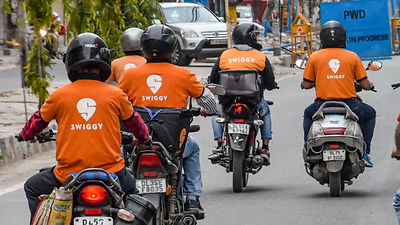
According to reports, approximately 340 employees are being affected by Instamart’s restructuring exercise. The job cuts are primarily concentrated in corporate and support functions rather than frontline delivery and warehouse operations.
The restructuring is expected to eliminate overlapping responsibilities, improve accountability and make decision-making faster. The company is also reviewing its organisational structure to adapt to changing business requirements and increasing use of technology.
Affected employees are reportedly being offered severance benefits and other transition assistance. These measures include statutory payments, accelerated employee stock option (ESOP) vesting, relocation assistance for eligible employees and outplacement support.
Health insurance and wellness benefits are also being extended to affected employees until May 2027, according to media reports.
Rising Losses Put Pressure on Instamart
The layoffs come as Instamart continues to struggle with profitability despite recording growth in its business operations.
During the September quarter of FY2026-27, Instamart’s adjusted EBITDA loss increased to approximately Rs 895 crore, compared with Rs 778 crore in the previous quarter.
The widening losses highlight the financial challenges associated with operating a quick-commerce business. Maintaining dark stores, managing inventory, offering discounts, handling logistics and ensuring extremely fast deliveries require significant investments.
Although the company is attracting more customers and increasing its order value, controlling operating expenses remains a major challenge.
Swiggy has indicated that it believes Instamart’s losses may have peaked and expects profitability metrics to improve in the coming quarters.
Competition From Blinkit and Zepto Intensifies
India’s quick-commerce sector has become increasingly competitive, with several companies fighting to capture a larger share of the online grocery and essentials market.
Instamart faces strong competition from Eternal-owned Blinkit, Zepto, Flipkart Minutes and Amazon Now.
These platforms are competing through faster deliveries, wider product selections, attractive discounts and expanding dark-store networks.
The intense competition has forced companies to invest heavily in customer acquisition, technology, supply chains and delivery infrastructure.
For Instamart, the challenge is not simply attracting new customers but also increasing order frequency and encouraging existing users to spend more on the platform.
This competitive environment has made cost management and operational efficiency increasingly important for long-term business sustainability.
AI Adoption and Organisational Changes
Another important factor behind the restructuring is the growing adoption of artificial intelligence and new working methods.
Companies across the technology and e-commerce sectors are increasingly using AI-powered systems to automate repetitive tasks, analyse customer behaviour, improve inventory management and streamline business operations.
Instamart is also looking to incorporate generative AI into its operations and organisational structure.
However, the reported layoffs should not be interpreted as meaning that all 340 positions are being directly replaced by AI. The restructuring also involves removing overlapping roles and improving internal efficiency.
The company aims to create a more streamlined organisation that can respond quickly to changing customer expectations and market conditions.
Instamart Continues to Expand Its Business
Despite the workforce reduction, Instamart is not abandoning its expansion plans.
During the September quarter, its gross order value increased to approximately Rs 9,230 crore, representing 16.7 per cent growth compared with the previous quarter.
The company also added 69 dark stores, taking its total network to approximately 1,240 stores.
This expansion indicates that Swiggy continues to see significant growth opportunities in India’s quick-commerce market.
Instamart is also strengthening its product assortment through private-label initiatives, including Noice for snacks and beverages and Nectr for fresh fruits and vegetables.
The strategy is intended to improve product differentiation, increase customer engagement and potentially strengthen margins.
What Lies Ahead for Swiggy Instamart?
The latest layoffs represent an important development in Swiggy’s efforts to improve the financial performance of its quick-commerce business.
The company now faces the difficult task of balancing expansion, customer satisfaction and profitability. While demand for rapid grocery deliveries continues to create opportunities, the high cost of operating this business model remains a significant concern.
Instamart’s future performance will depend on its ability to manage expenses, improve delivery efficiency, increase customer retention and compete effectively against established rivals.
The restructuring under its new leadership, along with greater AI adoption and changes to its business model, could play an important role in shaping its next phase of growth.
Read more like this:
- 5.47 लाख का सोफा, 11.56 लाख का झूमर! दिल्ली सरकार ने खोला अरविंद केजरीवाल के ‘शीशमहल’ का दरवाजा, 58 करोड़ के खर्च की कहानी आई सामने
- वडोदरा एयरफोर्स स्टेशन पर आतंकी हमले की साजिश नाकाम, जैश-ए-मोहम्मद से जुड़े संदिग्ध को गुजरात ATS ने किया गिरफ्तार
Conclusion
Swiggy Instamart’s reported decision to cut around 340 jobs highlights the growing pressure on quick-commerce companies to move beyond aggressive expansion and focus on sustainable growth.
With losses widening and competition intensifying, operational efficiency has become a priority for the company. Although Instamart continues to expand its customer base and store network, achieving consistent profitability will remain its biggest challenge.
The coming quarters will be crucial in determining whether Swiggy’s restructuring and strategic changes can improve Instamart’s financial performance and strengthen its position in India’s competitive quick-commerce industry.