Join
 Shorts

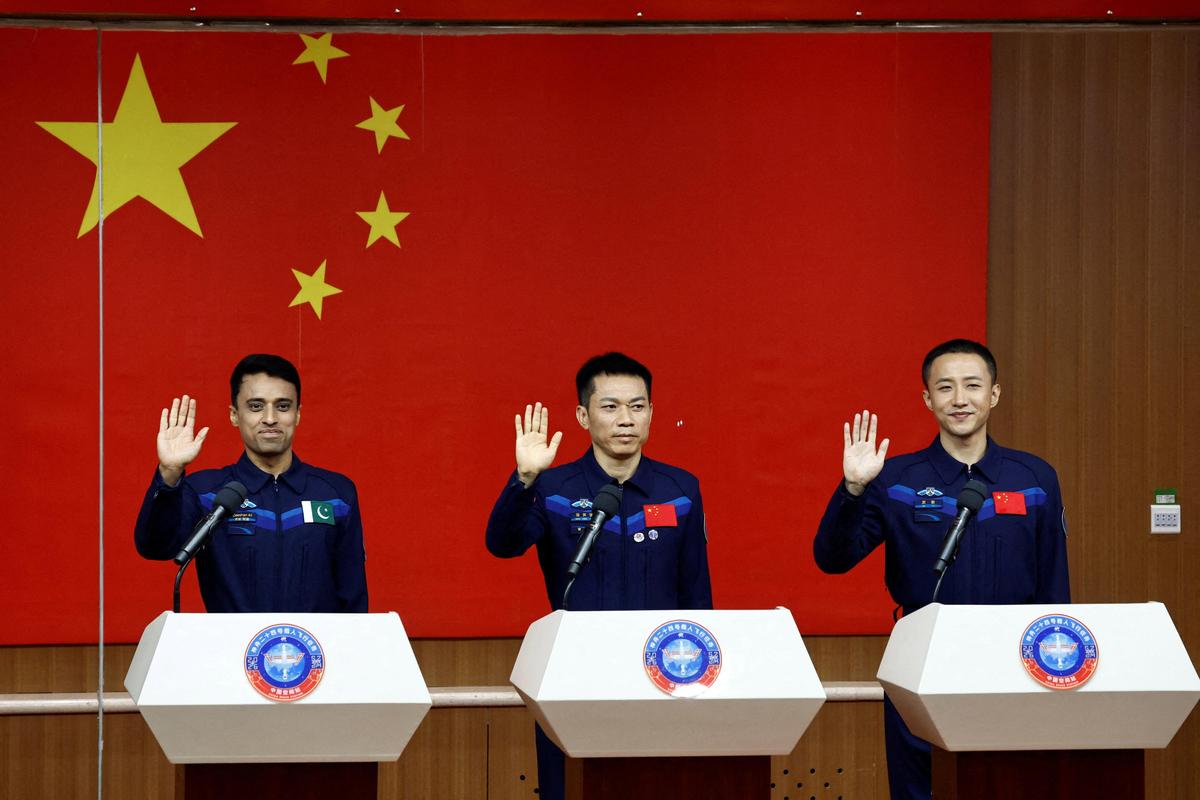
China has achieved a historic milestone in space exploration by sending its Shenzhou-24 spacecraft into space with a Pakistani astronaut as part of its crew. The mission marks the first time a foreign astronaut has participated in China’s human spaceflight programme and visited its Tiangong space station. Pakistani astronaut Muhammad Zeeshan Ali has joined two Chinese astronauts, making the mission an important development in international space cooperation. This achievement also highlights the growing strategic and scientific partnership between China and Pakistan.
Historic Achievement for Pakistan
Muhammad Zeeshan Ali, a 40-year-old former Pakistan Air Force pilot, has become the first Pakistani astronaut to travel into orbit. His participation represents a major achievement for Pakistan’s emerging space programme.
Ali was selected as one of the first foreign astronauts for China’s human spaceflight programme in April 2026. After his selection, he underwent intensive training in China to prepare for the mission. His journey is particularly significant because he is also the first foreign national to visit China’s Tiangong space station.
For Pakistan, this achievement is a source of national pride and an important step towards strengthening its position in space science and technology.
Details of the Shenzhou-24 Mission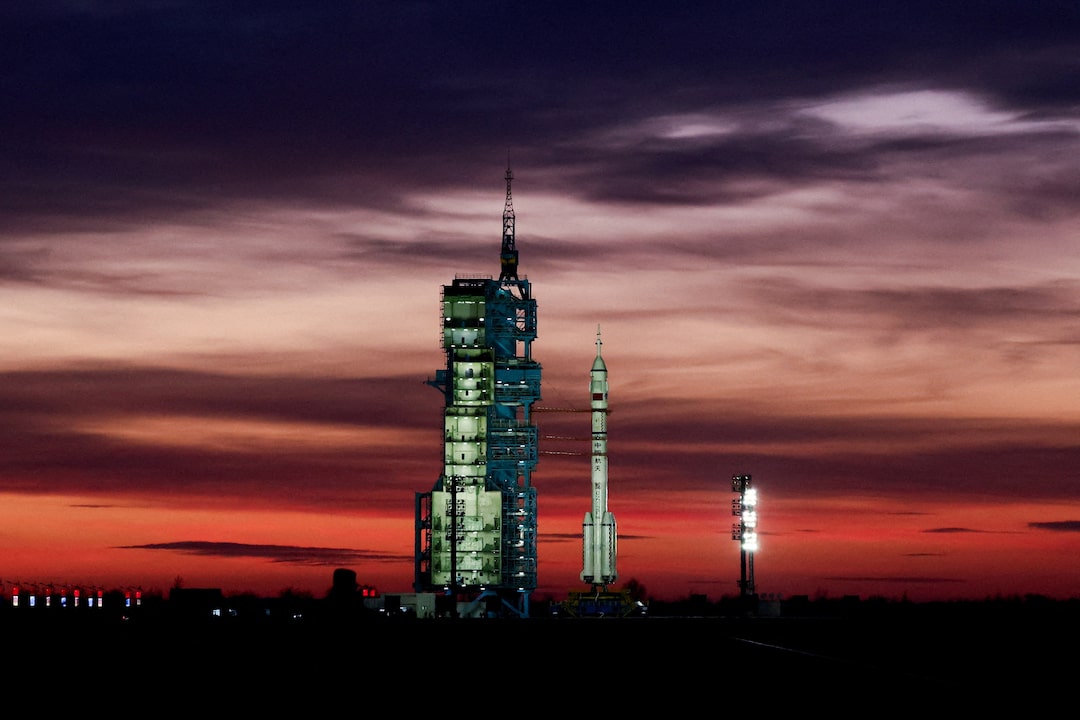
The Shenzhou-24 spacecraft was launched on November 25, 2026, from the Jiuquan Satellite Launch Centre in northwest China. It was carried into space by China’s Long March-2F rocket.
The three-member crew consists of:
- Tang Hongbo – Chinese astronaut and mission commander.
- Wu Yi – Chinese astronaut and flight engineer.
- Muhammad Zeeshan Ali – Pakistani astronaut and payload specialist.
The spacecraft successfully entered its planned orbit following the launch. The mission is part of China’s continuing efforts to expand its human spaceflight capabilities and promote international cooperation in space exploration.
Role of the Pakistani Astronaut
Muhammad Zeeshan Ali will serve as a payload specialist during the mission. His primary responsibilities will include participating in scientific experiments and assisting with research activities aboard the Tiangong space station.
He will work on joint China-Pakistan scientific projects, particularly in biotechnology and materials science. One important experiment will involve photosynthetic cyanobacteria, which are microorganisms that can use sunlight to produce energy.
Such research could contribute to future developments in biological science, space agriculture and life-support systems for long-duration space missions.
Ali will also participate in routine activities alongside Chinese astronauts, demonstrating the importance of teamwork and international coordination in space.
Intensive Training and Preparation
Before joining the mission, Ali completed several months of specialised training in China. His preparation included spacecraft operations, space station systems, emergency response procedures and scientific experiment management.
Language training was another important part of his preparation. He learned Chinese to communicate effectively with his fellow astronauts and understand technical instructions.
He also participated in teamwork exercises with Chinese crew members to develop coordination and mutual understanding.
His training demonstrates that modern space missions require not only technical knowledge but also discipline, adaptability and the ability to work in an international environment.
China-Pakistan Space Cooperation
The Shenzhou-24 mission reflects the growing cooperation between China and Pakistan in science, technology and space exploration.
Both countries have been working to strengthen their partnership through research, technology exchange and joint scientific projects. Their agreement on astronaut cooperation, signed in February 2025, created opportunities for Pakistani participation in China’s human spaceflight programme.
This mission could open the door to further cooperation in satellite technology, space research, biotechnology and advanced scientific experiments.
It also demonstrates China’s willingness to make its space programme more internationally accessible.
Importance for Global Space Exploration
The participation of a Pakistani astronaut in a Chinese space mission is significant beyond the two countries. It represents a new step towards international collaboration in human spaceflight.
Space exploration is becoming increasingly important for scientific discoveries, climate research, communication technology and understanding the universe.
Countries can achieve greater progress by sharing knowledge, resources and scientific expertise. International missions also provide opportunities for developing countries to participate in advanced space research.
China’s Tiangong space station could become an important platform for such cooperation in the coming years.
Future Prospects
The success of this mission may encourage Pakistan to invest further in astronaut training, space science and advanced technology. It could also inspire young students to pursue careers in science, engineering, astronomy and research.
China is also working towards its ambitious goal of sending astronauts to the Moon before 2030. Greater international cooperation could support future scientific activities and expand opportunities for participating countries.
Ali has expressed hope that China-Pakistan cooperation will develop from a single astronaut’s flight into multiple joint missions, potentially extending towards the Moon and Mars.
Read more like this:
- Indian Stock Market Sees Massive Rally! Sensex Surges 1,400 Points, Nifty Jumps Over 600; Investors Gain ₹2.2 Lakh Crore – 3 Major Reasons Behind the Boom
- NTPC ने 1 नवंबर को हुई असिस्टेंट ऑफिसर परीक्षा की रद्द, हजारों अभ्यर्थियों की बढ़ी चिंता; भविष्य को लेकर असमंजस
Conclusion
China’s Shenzhou-24 mission is a historic achievement for both China and Pakistan. By including Muhammad Zeeshan Ali, China has opened a new chapter in its human spaceflight programme, while Pakistan has achieved an important milestone in its space ambitions.
The mission demonstrates how international partnerships can create opportunities for scientific progress and technological development. More importantly, it sends a message that space exploration should be driven by cooperation, knowledge-sharing and peaceful purposes.
The journey of Pakistan’s first astronaut aboard a Chinese spacecraft is not merely an individual achievement; it is a significant step towards a more collaborative future in space exploration.