Join
 Shorts

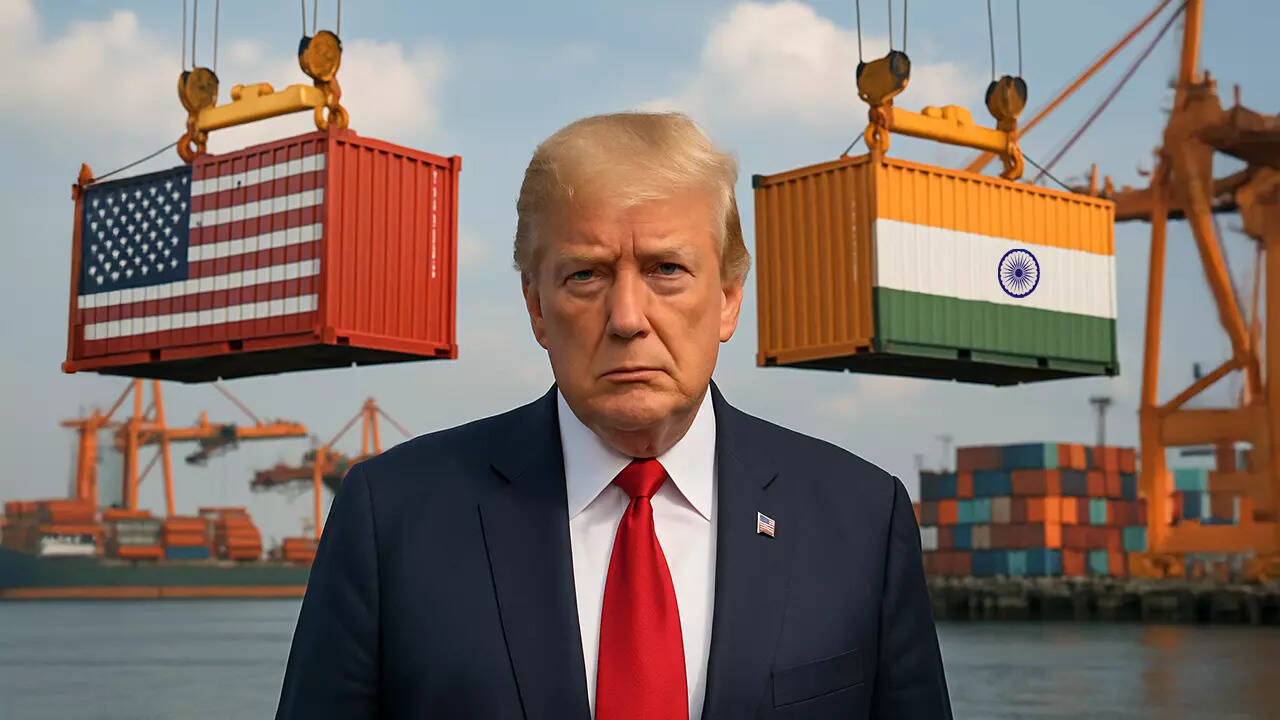
US President Donald Trump is preparing another round of trade tariffs targeting India, China, the European Union and 13 other economies following a major investigation into alleged excess industrial capacity and government support for domestic industries. The proposed move could increase trade tensions between the United States and several of its major trading partners.
The US Trade Representative (USTR) is expected to release the findings of its investigation soon, potentially paving the way for additional duties on imported goods. The development has attracted particular attention in India, as New Delhi is already engaged in trade negotiations with Washington.
Why Is Trump Planning New Tariffs?
Investigation Into Excess Industrial Capacity
The Trump administration launched an investigation under Section 301 of the Trade Act of 1974 to examine whether foreign governments are supporting domestic industries in ways that create excess production capacity.
Washington argues that some countries produce more goods than their domestic markets can absorb and subsequently export the surplus at competitive prices. According to the US administration, this creates unfair competition for American manufacturers and puts pressure on domestic industries.
The investigation focuses on government subsidies, manufacturing support and production capacity across 16 major economies. The United States believes that these practices could weaken its industrial base and negatively affect American businesses.
Section 301 gives the US government authority to take trade action against countries it considers responsible for unfair trade practices.
Which Countries Could Face Higher Tariffs?
India, China and the European Union Among the Targets
The investigation covers 16 economies, including some of the world’s biggest manufacturing and trading centres.
The countries and economic blocs under scrutiny are:
- India
- China
- European Union
- Japan
- South Korea
- Mexico
- Vietnam
- Taiwan
- Thailand
- Malaysia
- Indonesia
- Switzerland
- Norway
- Singapore
- Bangladesh
- Cambodia
The proposed tariffs could affect a wide range of imported products. However, the final tariff rates, product exemptions and implementation details have not yet been confirmed.
Reports suggest that the new duties could be imposed in addition to existing tariffs, potentially increasing the overall cost of exporting goods to the American market.
Why Is China Facing Particular Attention?
Washington’s Concerns Over Chinese Manufacturing
China is expected to face significant scrutiny because of its large manufacturing sector and extensive presence in international markets.
The Trump administration has repeatedly criticised China’s industrial policies, arguing that government support allows Chinese manufacturers to maintain production levels beyond market demand.
Industries such as steel, aluminium, electric vehicles, solar panels, cement and household appliances have become important areas of concern.
China, however, has rejected accusations of unfair production practices. Beijing has argued that its export performance reflects manufacturing efficiency, technological development and competitive advantages.
Any additional tariffs could further complicate trade relations between the world’s two largest economies.
What Does the Development Mean for India?
New Challenges for Indian Exporters
India could face fresh pressure if Washington proceeds with additional import duties. Indian businesses exporting products to the United States may experience higher costs and increased competition.
Sectors dependent on the American market could face uncertainty, particularly manufacturers that compete with suppliers from other Asian economies.
However, the Indian government has maintained that the country’s manufacturing surplus does not result from structural excess capacity created through unfair subsidies. Indian officials have argued that production expansion reflects expectations of growing domestic and international demand.
New Delhi is also closely monitoring the investigation because India and the United States are negotiating a bilateral trade agreement.
India hopes to secure favourable market access and a competitive tariff position compared with other exporting countries.
Impact on Global Trade and Consumers
Possibility of Higher Prices
Fresh tariffs could have consequences beyond the countries directly involved. American companies importing foreign goods may face higher expenses, which could eventually be passed on to consumers through increased retail prices.
Businesses relying on international supply chains may also reconsider their sourcing strategies.
Meanwhile, affected exporting countries could explore alternative markets to reduce their dependence on the United States.
The possibility of retaliatory trade measures could further increase uncertainty in international markets.
What Happens Next?
Final Tariff Rates Still Awaited
The USTR’s investigation findings are expected to be followed by hearings and further consultations before final tariff decisions are announced.
Reports indicate that the process could take approximately 45 days after the findings are released, although the timeline may change.
Governments are likely to use this period to negotiate with Washington and seek exemptions or more favourable tariff arrangements.
For India, the outcome will be particularly important in determining the future direction of its trade relationship with the United States.
Read more like this:
- 52 गेंदों में दोहरा शतक! वैभव सूर्यवंशी ने रचा इतिहास, एक ही पारी में तोड़ डाले कई विश्व रिकॉर्ड
- दिल्ली के प्रीत विहार कैफे में महिला से सामूहिक दुष्कर्म का आरोप, दो महिलाओं समेत तीन गिरफ्तार
Conclusion
Donald Trump’s proposed tariff action represents another significant development in global trade relations. By targeting India, China and 14 other economies, Washington is seeking to address what it considers unfair industrial competition and excess manufacturing capacity.
However, higher tariffs could also create challenges for American consumers, international businesses and exporting nations.
For India, the coming weeks will be crucial. The government will need to balance its trade negotiations with the United States while protecting domestic manufacturers and export interests. The final tariff rates and exemptions will determine how seriously the new measures affect India’s economy and its position in global trade.