Join
 Shorts

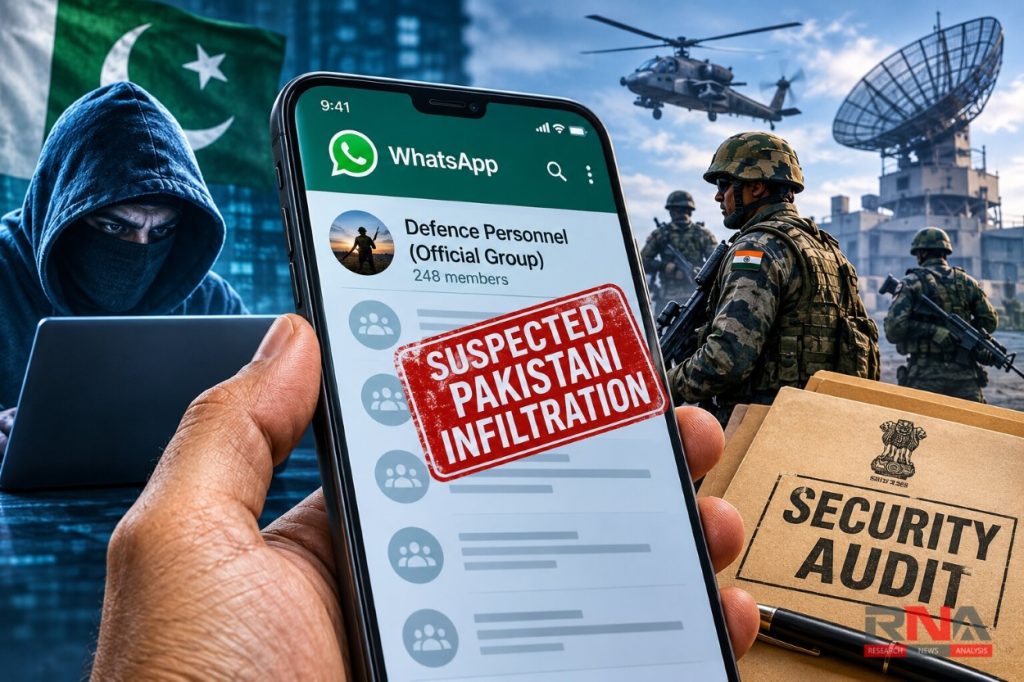
The security of the nation is not limited to its borders, military installations or battlefields. In today’s digital age, national security also depends on how responsibly people use social media and online communication platforms. The Border Roads Organisation (BRO) has reportedly cautioned defence personnel against the presence of suspected Pakistani operatives in WhatsApp groups associated with military and defence communities. This warning highlights the growing threat of espionage, information leakage and cyber-based intelligence gathering.
1. WhatsApp Groups: A Potential Target for Espionage
WhatsApp has become one of the most widely used communication platforms for sharing messages, photographs, videos and documents. Defence personnel often use messaging applications to communicate with colleagues, friends and family members.
However, when individuals associated with the armed forces or defence organisations participate in online groups without proper verification, these platforms may become potential targets for hostile intelligence agencies.
Suspected operatives may attempt to enter such groups by using fake identities, misleading profile pictures or fabricated personal backgrounds. Once inside, they may gradually establish relationships with group members and collect sensitive information.
2. How Pakistani Operatives May Gather Information
Foreign intelligence operatives may use different methods to obtain information from unsuspecting individuals. These methods can include:
- Fake identities: Creating false social media profiles to appear as ordinary citizens, journalists or defence enthusiasts.
- Social engineering: Building friendships and gaining the trust of defence personnel through regular conversations.
- Information gathering: Asking indirect questions about military activities, infrastructure and official movements.
- Suspicious links: Sharing malicious links or files to compromise devices and obtain personal information.
- Photographs and videos: Encouraging members to share images that may unintentionally reveal sensitive locations or operational details.
Even seemingly harmless conversations can become a source of valuable intelligence when information from multiple individuals is combined.
3. Why Defence Personnel Must Remain Alert
Defence personnel have access to information that may be sensitive from a national security perspective. Even information that appears routine or unimportant can potentially be misused by hostile agencies.
Details concerning troop movements, military exercises, road construction, strategic infrastructure, deployment patterns and operational activities must never be shared through unauthorised platforms.
The consequences of careless online communication can extend beyond an individual and may affect the safety of personnel, military preparedness and national security.
Therefore, every individual associated with defence establishments must understand that digital discipline is an essential part of professional responsibility.
4. BRO’s Role in National Security
The Border Roads Organisation plays an important role in strengthening India’s strategic infrastructure, particularly in border and remote regions. It constructs and maintains roads, bridges, tunnels and other essential infrastructure that support civilian connectivity as well as defence mobility.
Because of its involvement in strategically important areas, information security is particularly significant for the organisation.
Any warning regarding suspicious online activities should be taken seriously. Personnel must follow official security instructions, maintain confidentiality and report suspicious communication through authorised channels.
5. Essential Precautions for Defence Personnel
To minimise the risk of espionage and information leakage, defence personnel should follow certain precautions:
- Join only verified WhatsApp groups and avoid unknown invitations.
- Never share classified, confidential or operational information on social media.
- Do not disclose troop locations, movements, photographs of restricted areas or infrastructure details.
- Avoid clicking suspicious links or downloading unknown attachments.
- Verify the identity of unfamiliar individuals before engaging in conversations.
- Do not share personal details, official documents or identity information with unknown contacts.
- Report suspicious profiles, messages and activities to the appropriate security authorities.
- Follow the social media and cybersecurity guidelines issued by the organisation.
These precautions should also be followed by family members who may inadvertently become targets of social engineering.
6. Cybersecurity Is a Shared Responsibility
National security cannot be protected by security agencies alone. Every citizen, especially those connected with defence services, has an important role in preventing information leaks.
Awareness, vigilance and responsible digital behaviour are essential in an environment where intelligence gathering increasingly takes place through online platforms.
Personnel should remember that strangers on social media may not always be who they claim to be. A friendly conversation, an attractive offer or a seemingly innocent request for information could potentially be part of a larger intelligence-gathering effort.
Read more like this:
- SCO: पाकिस्तान देगा भारत को न्योता, क्या इस्लामाबाद जाएंगे प्रधानमंत्री नरेंद्र मोदी? भारत-पाकिस्तान संबंधों पर फिर चर्चा तेज
- India and Nepal to Hold 20th Edition of Joint Military Exercise Suryakiran
Conclusion
The warning concerning suspected Pakistani operatives in WhatsApp groups of defence personnel serves as an important reminder of the evolving nature of national security threats. Modern espionage is no longer restricted to traditional methods; social media and digital communication platforms can also be exploited to gather sensitive information.
Defence personnel must exercise extreme caution while participating in online groups and should never compromise professional confidentiality for casual conversations or online friendships.
Cybersecurity is national security. Staying alert, verifying identities and protecting sensitive information are not merely personal responsibilities but essential duties towards the nation.