Join
 Shorts


A Historic Victory in American Politics
American politics witnessed a historic moment on November 3, 2026, Democrat Abdul El-Sayed defeated Republican Mike Rogers in Michigan’s closely watched US Senate election. His victory made him the first Muslim American ever elected to the United States Senate, marking a significant milestone for political representation and diversity in the country.
At 42, El-Sayed has achieved something that once seemed far removed from his original career ambitions. A trained doctor, epidemiologist and former public health official, he did not initially imagine himself becoming a politician. However, his journey from public health to the centre of American politics has now made history.
From Medicine to Public Service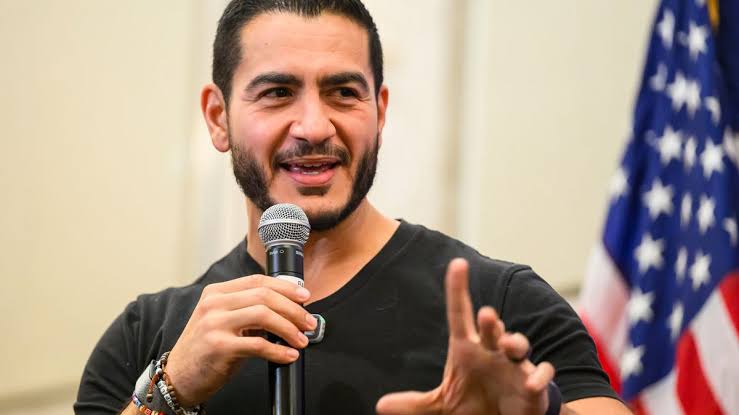
A Different Beginning
Born in Michigan to Egyptian immigrant parents, Abdul El-Sayed grew up with an understanding of the importance of education, opportunity and public service. He pursued higher education at the University of Michigan, the University of Oxford and Columbia University, building an impressive academic background.
He earned a medical degree and a doctorate in public health-related research. Rather than immediately entering electoral politics, he focused on improving people’s lives through healthcare and public administration.
Leading Detroit’s Health Department
One of the important chapters of his professional career came when he became executive director of the Detroit Health Department. In this position, he worked on public health challenges, including access to healthcare, infectious diseases and health inequalities.
His experience helped him understand how economic difficulties, inadequate healthcare facilities and social inequalities affect ordinary families. These experiences later became central to his political message.
The Journey into Politics
El-Sayed’s transition into politics was driven by his belief that public health problems could not be solved without addressing broader economic and political inequalities.
In 2018, he ran for governor of Michigan as a progressive Democrat. Although he did not win the Democratic primary, the campaign introduced him to a wider audience and established him as a prominent voice for progressive politics.
He continued advocating for universal healthcare, economic justice, affordable education and a political system that gives ordinary citizens a stronger voice.
His unsuccessful gubernatorial campaign did not end his political ambitions. Instead, it provided experience and helped him build a network of supporters.
A Senate Campaign Against Powerful Opposition
Challenging the Political Establishment
In 2026, El-Sayed entered the race for Michigan’s open US Senate seat. He faced a competitive Democratic primary, defeating establishment-backed Congresswoman Haley Stevens to secure his party’s nomination.
His campaign focused on healthcare affordability, economic inequality, working-class interests and reducing the influence of wealthy donors in politics.
He also attracted attention for his criticism of American foreign policy, particularly US support for Israel and military spending.
Facing Attacks Over His Muslim Identity
His campaign was not without controversy. El-Sayed faced repeated attacks and questions about his Muslim identity and national loyalty. Some political opponents attempted to make his religion a central issue in the election.
However, he maintained that his faith should not determine his ability to serve the country. He argued that he was running to represent American citizens, not to promote a religious identity.
The campaign highlighted the continuing challenges faced by Muslim Americans seeking leadership positions in national politics.
A Victory That Made History
On November 3, 2026, voters in Michigan delivered a historic result. El-Sayed defeated Republican Mike Rogers, winning the Senate seat previously held by retiring Democratic Senator Gary Peters.
According to election projections reported by major US media organisations, his victory made him the first Muslim American elected to the US Senate. He is expected to take office when the new Congress convenes in January 2027.
His victory was particularly significant because Michigan is an important battleground state, where political competition between Democrats and Republicans is often intense.
It also demonstrated that a candidate with a progressive agenda and a background outside traditional political circles could build a winning coalition.
What His Victory Means for America
El-Sayed’s election represents more than an individual political achievement. It is an important moment for Muslim Americans and immigrant communities who have long sought greater representation in national institutions.
His success may encourage a new generation of young Americans from diverse backgrounds to participate in politics and public service.
At the same time, his election brings considerable expectations. Voters will look to him to address rising living costs, healthcare affordability, economic inequality and other important national concerns.
His ability to turn campaign promises into meaningful policies will ultimately determine the impact of his Senate career.
Read more like this:
- मंदिरों में रेप वाले बयान पर नेहा बोरा घिरीं, BJP का तीखा हमला; कांग्रेस के सहयोगी दलों ने भी की आलोचना
- यूपी चुनाव 2027 से पहले योगी आदित्यनाथ का बड़ा ऐलान, दिवाली और होली पर मिलेगा मुफ्त LPG सिलेंडर
Conclusion:
A New Chapter in American History
Abdul El-Sayed’s journey from medicine and public health to the United States Senate is a remarkable story of ambition, perseverance and political change.
He may not have originally planned to become a politician, but his historic victory has placed him among the most significant new figures in American politics.
As America’s first Muslim senator-elect, El-Sayed represents a milestone in the country’s democratic journey. His election sends a powerful message that political leadership can emerge from different communities, professions and backgrounds.
His biggest challenge now begins: transforming a historic election victory into meaningful change for the people he has promised to represent.