Join
 Shorts

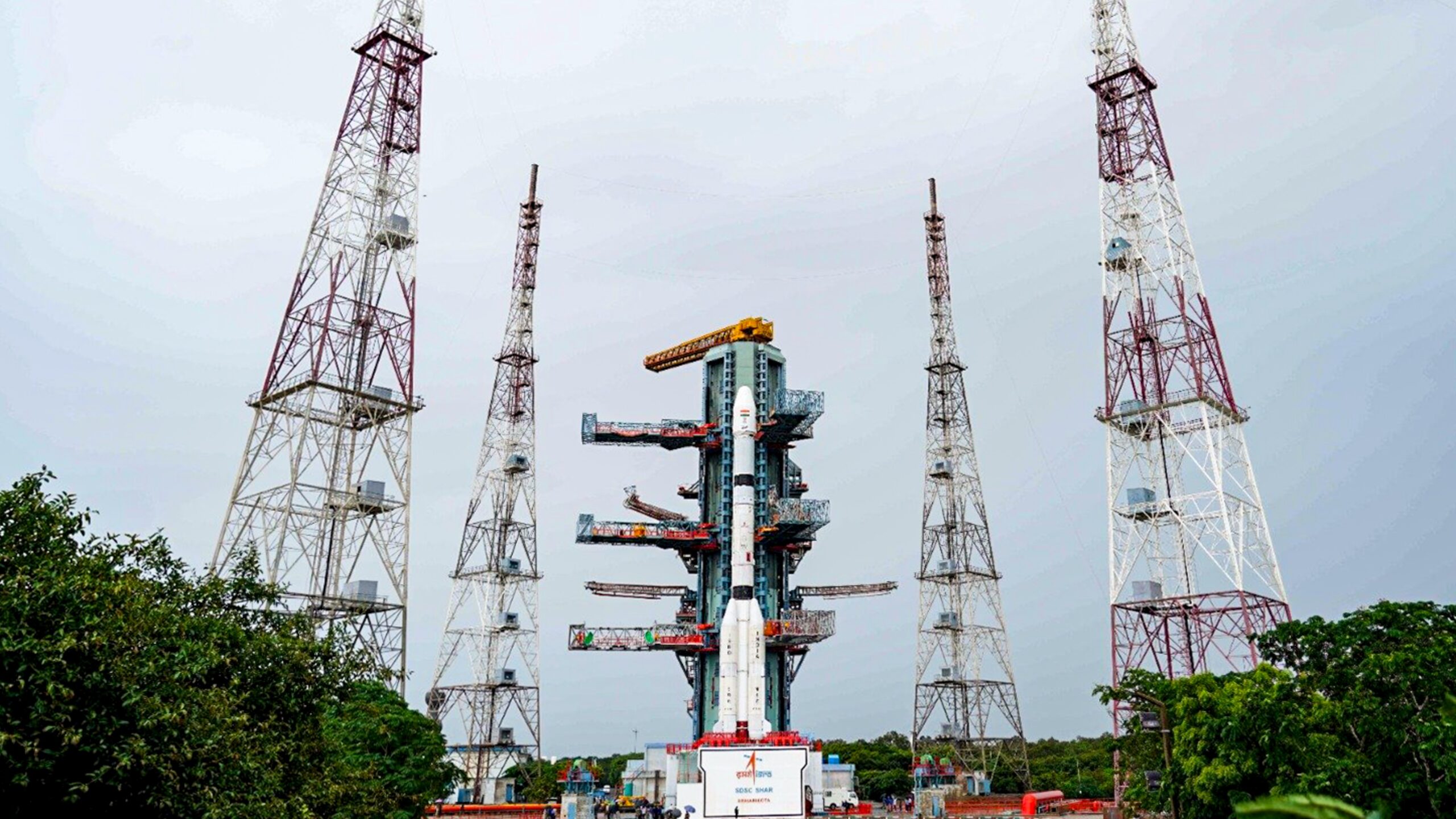
Indian Space Research Organisation (ISRO) is preparing for another major milestone in India’s space programme as the countdown for the launch of its next-generation navigation satellite, NVS-03, continues to progress. The satellite will be carried into space by the Geosynchronous Satellite Launch Vehicle (GSLV-F18), with the launch scheduled for October 30, 2026, at 11:51 PM IST.
The mission is particularly important for strengthening India’s indigenous satellite navigation system, Navigation with Indian Constellation (NavIC). It is also expected to improve the reliability and continuity of navigation services for civilian, commercial and strategic applications.
24-Hour Countdown Begins at Sriharikota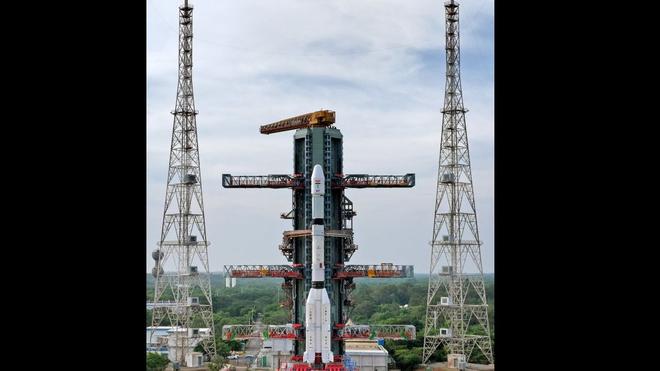
Launch Preparations Enter the Final Stage
According to ISRO, the 24-hour countdown officially began at 11:51 PM on Thursday, October 29. The launch is scheduled to take place from the Second Launch Pad at the Satish Dhawan Space Centre (SDSC-SHAR), Sriharikota, Andhra Pradesh.
The countdown involves several important technical operations, including checking the rocket’s systems, monitoring communication links, verifying onboard instruments and filling the necessary propellants.
The 50-metre-tall GSLV-F18 rocket has a lift-off mass of approximately 420 tonnes. The three-stage launch vehicle will carry the NVS-03 satellite, weighing approximately 2,232 kg, into a Geosynchronous Transfer Orbit (GTO).
The launch vehicle is expected to complete its flight in approximately 20 minutes before deploying the satellite into its targeted orbit.
What Is the GSLV-F18 Mission?
India’s Powerful Satellite Launch Vehicle
GSLV-F18 represents the 20th flight of India’s Geosynchronous Satellite Launch Vehicle (GSLV). It has been designed to carry the NVS-03 navigation satellite into the required transfer orbit.
The rocket uses a three-stage configuration, combining solid, liquid and cryogenic propulsion technologies. Its cryogenic upper stage plays a particularly important role in delivering the satellite to the required orbital conditions.
According to the mission plan, the satellite will be injected into an orbit with a perigee of approximately 170 kilometres and an apogee of 37,023 kilometres, with an inclination of 20.75 degrees.
After reaching the transfer orbit, the satellite will undergo further orbit-raising manoeuvres to reach its designated geosynchronous position.
NVS-03: An Important Addition to NavIC
Strengthening India’s Independent Navigation System
NVS-03 is the third satellite in India’s second-generation navigation satellite series. Its primary objective is to ensure continuity and improve the performance of the Indian Regional Navigation Satellite System, popularly known as NavIC.
NavIC is India’s independent regional satellite navigation system, developed to provide positioning, navigation and timing services.
It covers the Indian landmass and an area extending approximately 1,500 kilometres beyond India’s geographical boundaries.
The system is designed to provide two categories of services:
- Standard Positioning Service (SPS): Intended for civilian and commercial users.
- Restricted Service (RS): An encrypted service designed for authorised strategic users.
With the addition of NVS-03, ISRO aims to strengthen the satellite constellation and improve the availability of navigation services.
Indigenous Atomic Clock: A Major Technological Feature
Improving Navigation Accuracy
One of the most important features of NVS-03 is its indigenous atomic clock, developed by ISRO’s Space Applications Centre.
Atomic clocks are essential components of satellite navigation systems because they provide extremely accurate time measurements.
Satellite navigation works by calculating the time taken by signals to travel between satellites and receivers on Earth. Even a tiny timing error can lead to significant positioning inaccuracies.
The satellite will carry an indigenous atomic clock along with procured atomic clocks, providing an important technological capability for India’s space programme.
Another major feature is the inclusion of the L1 frequency band alongside the existing L5 and S-band signals.
The L1 signal is widely used by modern navigation receivers, including those integrated into smartphones and other consumer devices. Its inclusion is expected to improve compatibility with modern navigation equipment.
Why Is the NVS-03 Mission So Important?
Lessons from the NVS-02 Mission
The upcoming launch is also significant because of the challenges faced during the previous NVS-02 mission.
In January 2025, ISRO launched NVS-02 aboard GSLV-F15. However, the satellite could not reach its intended operational orbit because of a technical problem involving the drive signal to the oxidiser-line pyro valve during the orbit-raising operation.
Following an investigation, a high-level committee recommended corrective measures to improve the reliability of the propulsion and pyrotechnic systems.
For the GSLV-F18 mission, ISRO has incorporated these recommendations. In an unusual engineering configuration, the NVS-03 satellite will fly with its pyrotechnic valves already open to address the earlier connector-related problem.
The success of this mission will therefore be important for demonstrating the effectiveness of the corrective measures and restoring confidence in the next-generation NavIC satellite programme.
Benefits for Civilian and Strategic Applications
Supporting Multiple Sectors
A stronger NavIC system can benefit several important sectors across India.
- Transportation: Improved navigation support for road, rail, maritime and aviation operations.
- Agriculture: Assistance in precision farming and location-based agricultural applications.
- Disaster Management: Better positioning and timing support during emergencies and natural disasters.
- Defence: Strengthening India’s independent navigation capabilities for authorised strategic applications.
- Mobile Technology: Greater compatibility with modern navigation-enabled devices through the L1 signal.
The system will also support applications requiring reliable positioning and timing information.
India’s Growing Space Capabilities
Moving Towards Technological Self-Reliance
The GSLV-F18/NVS-03 mission reflects India’s continued efforts to strengthen its indigenous space technology and reduce dependence on foreign navigation systems.
NavIC provides India with an independent regional alternative to global satellite navigation services such as GPS.
Successful deployment of NVS-03 will represent another important step towards building a more reliable and technologically advanced navigation constellation.
Read more like this:
- प्रधानमंत्री नरेंद्र मोदी का दो दिवसीय गुजरात दौरा आज से शुरू, ₹14,000 करोड़ से अधिक की परियोजनाओं की देंगे सौगात
- भूटान में ग्लेशियल झील फटने से बाढ़ का खतरा, भारत की संकोश नदी के किनारे रहने वाले लोगों को सुरक्षित स्थानों पर पहुंचाया गया
Conclusion
The countdown for ISRO’s GSLV-F18 launch carrying the NVS-03 navigation satellite marks an important moment for India’s space programme. Scheduled for October 30 at 11:51 PM IST, the mission aims to strengthen NavIC through advanced navigation signals and indigenous atomic clock technology.
Beyond placing another satellite into orbit, the mission represents India’s commitment to technological self-reliance, strategic autonomy and improved navigation services. Its success could play a significant role in strengthening India’s position among the world’s leading spacefaring nations.