Join
Join
 Shorts

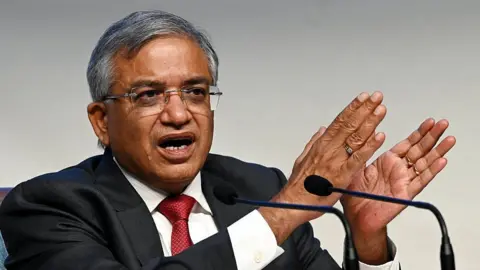
The possibility of Gyanesh Kumar’s exit could carry significant political implications for the Bharatiya Janata Party (BJP), depending on the circumstances surrounding his departure and the wider institutional and political context. While any assessment must distinguish between confirmed developments and speculation, the question highlights the importance of key constitutional and administrative figures in India’s political landscape.
Gyanesh Kumar, who became Chief Election Commissioner of India in February 2025, occupies a position of considerable national importance. The Election Commission of India is responsible for conducting elections to Parliament, state legislatures, and the offices of the President and Vice-President, in accordance with the Constitution and applicable laws. Consequently, changes in its leadership can attract considerable political attention.
Why His Position Matters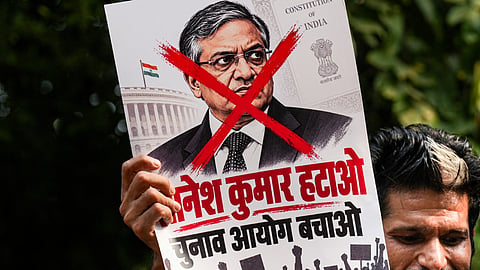
The Chief Election Commissioner leads an institution that plays a central role in safeguarding the electoral process. Its responsibilities include overseeing election schedules, supervising electoral machinery, enforcing the Model Code of Conduct, and ensuring that elections are conducted in an orderly manner.
For the BJP, as for other political parties, the functioning and credibility of the Election Commission are important because electoral outcomes determine political power at both the national and state levels.
However, the significance of Gyanesh Kumar’s position should not be reduced to his perceived political associations. The Election Commission is a constitutional body, and its decisions are expected to be guided by the Constitution, electoral laws, and established procedures rather than the interests of any political party.
The BJP’s Political Calculations
The BJP has built a substantial electoral presence across India through organisational expansion, leadership, welfare programmes, ideological messaging, and election campaigning. Its electoral performance depends on many factors, including voter sentiment, alliances, candidate selection, local issues, and the credibility of electoral institutions.
A change involving the Chief Election Commissioner could become politically consequential if it triggers a major public controversy, raises questions about institutional continuity, or becomes the subject of sustained opposition criticism.
In such a situation, the BJP could face difficult political questions, particularly if opponents attempt to frame the development as evidence of a wider institutional problem. The party might then need to respond through public statements, parliamentary debate, or explanations of the legal and constitutional process involved.
Nevertheless, it would be inaccurate to conclude that Gyanesh Kumar’s departure would automatically weaken the BJP electorally. The political impact would depend on the circumstances, public reaction, and the evidence available.
Opposition Parties Could Gain Political Ground
The opposition could use a controversial departure to demand greater transparency and accountability. Parties critical of the government might argue that the independence and credibility of constitutional institutions deserve closer scrutiny.
Such arguments could become prominent in Parliament, public discussions, and election campaigns. They might also influence debates about electoral reforms, institutional appointments, and safeguards against perceived political interference.
But opposition parties would need credible evidence to turn the issue into a sustained political advantage. Public attention alone does not necessarily translate into votes, and voters often prioritise employment, inflation, economic opportunities, public services, and local leadership when making electoral choices.
Institutional Credibility Is the Bigger Issue
Beyond party politics, the more important question concerns public confidence in the electoral process. Democratic institutions depend not only on constitutional authority but also on public trust in their impartiality and transparency.
Any leadership change at the Election Commission should therefore be assessed through verifiable facts: the legal basis for the departure, the applicable appointment or succession procedures, official explanations, and the institution’s ability to continue its work without disruption.
A properly managed transition can preserve institutional stability. Conversely, a departure accompanied by credible allegations of misconduct or procedural irregularities could generate a much larger debate about accountability and democratic safeguards.
These considerations apply regardless of which party holds power. A credible electoral system benefits the BJP, the opposition, and voters alike by ensuring that political competition takes place under established rules.
What Could Happen Next?
The consequences of Gyanesh Kumar’s exit would depend on whether it occurs, why it occurs, and how the transition is handled. If the process is routine and legally sound, its direct political impact could be limited. If it becomes controversial, the episode could intensify political debate about institutional independence and electoral transparency.
For the BJP, the central challenge would be to address legitimate questions with clear explanations while avoiding unnecessary speculation. For the opposition, the challenge would be to substantiate its claims rather than rely exclusively on political rhetoric.
Read more like this:
- CJP तिरंगा प्रदर्शन LIVE: दिल्ली पुलिस ने चुनिंदा समूह को झंडा लहराने की दी अनुमति, आम जनता से दूर रहने की अपील
- ‘न्यायपालिका को कोई दबाव में नहीं ला सकता’: सुप्रीम कोर्ट ने राहुल गांधी, अखिलेश यादव समेत अन्य नेताओं को भेजा नोटिस
Conclusion
Gyanesh Kumar’s possible exit could become politically significant because of the importance of the office he holds, but its impact on the BJP should not be assumed in advance. The decisive factors would be the circumstances of the departure, the credibility of the available evidence, and the response of political parties and the public.
Ultimately, the larger issue extends beyond any individual or party: maintaining confidence in India’s electoral institutions remains essential to the health of its democracy.