Join
Join
 Shorts

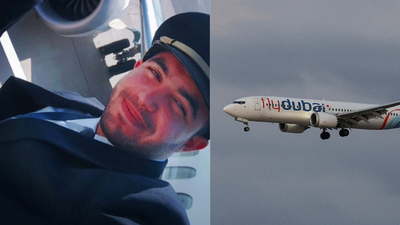
New details have emerged from the investigation into the alleged terror attack attempt aboard a Flydubai flight bound for Israel, with investigators reportedly focusing on the motive and previous plans of Omani co-pilot Hamam al-Hammami.
According to Israeli officials familiar with the investigation, al-Hammami allegedly told interrogators that he wanted to carry out the attack as “revenge for Gaza” and that he wanted to “die as a martyr.” The claims were reported by Israeli media and cited in reports about the ongoing investigation. Israeli security agency Shin Bet has also sent interrogators to the United Arab Emirates to participate in questioning the detained co-pilot.
The revelations have added a new dimension to an incident that already raised serious questions about aviation security, intelligence sharing and the screening of foreign airline crew members.
Alleged plan to crash Flydubai aircraft
Investigators reportedly believe that al-Hammami had considered attacking an Israel-bound aircraft even before he was employed by Dubai-based Flydubai.
According to Israeli officials cited in the investigation, the Omani national allegedly told UAE interrogators that he had planned to crash the aircraft into Ben Gurion Airport. Another report said he had previously operated a flight to Tel Aviv and had considered hijacking and crashing that aircraft as well, but ultimately did not carry out the plan at that time.
Investigators are now examining whether the alleged motive developed independently or whether the suspect had contact with extremist individuals or organisations.
Authorities are also looking into his previous travels and possible connections outside Oman and the UAE.
Attack on Indian captain
The incident unfolded aboard Flydubai flight FZ1073 while the aircraft was travelling toward Israel.
According to reports, al-Hammami allegedly attacked Indian captain Smit Machchhar with an emergency crash axe while the aircraft was over Jordan. The attack caused the situation inside the cockpit to rapidly deteriorate.
Despite being injured, Captain Machchhar managed to open the cockpit door and alert an off-duty pilot who was travelling among the passengers. Passengers and crew members then intervened and helped restrain the co-pilot.
The aircraft subsequently diverted to Saudi Arabia and landed safely in Tabuk. The flight was carrying more than 170 passengers and crew, most of them Israeli, according to reports.
Attempt to regain control of the aircraft
The investigation has also focused on what happened after al-Hammami was prevented from controlling the cockpit.
According to the Times of India report, investigators believe that after his initial plan was disrupted, he allegedly attempted to force the aircraft into a steep descent and damage its controls. Off-duty pilots eventually took control and issued an emergency alert before diverting the aircraft to Saudi Arabia.
The United Arab Emirates has officially described the incident as a terrorist attack, while the wider investigation is examining the suspect’s intentions, background and whether anyone else assisted him.
Shin Bet joins the investigation
The involvement of Israel’s Shin Bet has highlighted the seriousness with which authorities are treating the incident.
Israeli officials have reportedly been kept informed by UAE authorities as the investigation progresses. Shin Bet interrogators travelled to the UAE to participate in questioning al-Hammami, according to reports.
Investigators are reportedly examining whether his alleged plan was connected to an organised extremist network or whether it was the result of individual radicalisation.
At this stage, no publicly established evidence has conclusively demonstrated that he was acting on behalf of a specific organisation.
Questions over aviation security
The incident has triggered scrutiny of how al-Hammami was able to serve as a co-pilot on a flight to Israel.
Reports indicate that authorities are examining his professional history and previous interactions with aviation authorities. Questions have also been raised about intelligence sharing between Oman, the UAE and Israel.
The investigation has gained further attention because Israeli authorities reportedly had access to the crew and passenger information before the flight departed, yet al-Hammami was not flagged before boarding.
That has prompted questions about whether existing screening systems adequately identify security risks involving foreign airline crews.
A wider investigation into his background
Authorities are also looking into al-Hammami’s previous education, pilot training and employment history.
Reports indicate that he had spent time abroad for education and aviation training, including a period in New Zealand. Investigators are examining whether he encountered extremist influences during his time outside Oman and whether any of his previous activities should have raised security concerns.
The probe is expected to examine his digital activity, travel history, professional records and contacts.
Read more like this:
- मुझे लगता है मैंने अपनी ड्यूटी पूरी कर दी’, हरमनप्रीत कौर ने छोड़ी भारतीय महिला टीम की कप्तानी
- चिराग पासवान का UP चुनाव वाला दांव, अपनों के ही खिलाफ क्यों ताल ठोक रहे मोदी के ‘हनुमान’?
What happens next?
The case remains under investigation, and several of the most serious claims about al-Hammami’s intentions come from reports citing officials familiar with the questioning rather than from a publicly released interrogation transcript.
For investigators, the key questions now are whether the alleged attack was entirely self-directed, whether anyone helped plan or facilitate it, and how he was able to gain access to an Israel-bound flight despite possible warning signs in his background.
The episode has also renewed debate over aviation security and the need for stronger intelligence coordination between countries.
For the passengers and crew aboard the Flydubai flight, the intervention of Captain Smit Machchhar, an off-duty pilot and passengers prevented what could have become a major aviation disaster. The investigation will now determine the full chain of events behind the failed attack and whether wider security failures contributed to the incident.