Join
Join
 Shorts

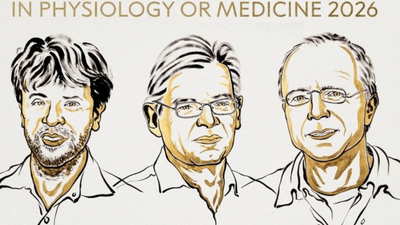
The 2026 Nobel Prize in Physiology or Medicine has been jointly awarded to three scientists — Karl Deisseroth, Peter Hegemann and Georg Nagel — for their pioneering discoveries involving light-gated ion channels and optogenetics, a technique that has transformed the study of the brain.
The Nobel Assembly at the Karolinska Institutet announced the award on Monday, recognising research that has given scientists an unprecedented way to control the activity of individual nerve cells using light. The breakthrough has opened new avenues for understanding how neural circuits influence memories, feelings and behaviour in living brains.
The three laureates will share a prize of 12 million Swedish kronor. Deisseroth is associated with Stanford University and the Howard Hughes Medical Institute in the United States, while Hegemann is based at Humboldt University of Berlin and Nagel at the University of Würzburg in Germany.
What is optogenetics?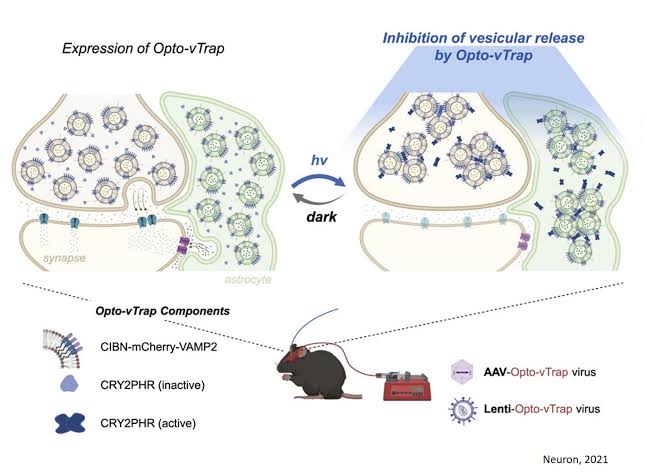
Optogenetics combines optics and genetics to control selected cells using light. In neuroscience, the technique allows researchers to activate or suppress specific nerve cells with remarkable precision.
Before optogenetics, scientists could observe broad patterns of brain activity but had much less ability to establish exactly how individual groups of neurons caused particular behaviours or biological responses.
The Nobel Committee said optogenetics has fundamentally changed that picture by allowing researchers to map neural circuits and investigate how particular nerve cells contribute to memories, emotions and behaviour.
It started with a tiny single-celled alga
The story behind the Nobel-winning discovery began with Peter Hegemann’s research into Chlamydomonas, a single-celled green alga that can move towards light.
Hegemann wanted to understand how this microscopic organism detects light and uses that information to guide its movement. His work eventually led to the identification of a remarkable light-sensitive protein.
Hegemann and Georg Nagel discovered channelrhodopsin, a protein that forms a light-sensitive channel in the cell membrane. When exposed to blue light, the channel opens and allows charged ions to flow through the cell, producing an electrical response.
The researchers found that introducing the protein into other cells could make those cells responsive to light. That observation provided the crucial biological tool that would later become the foundation of optogenetics.
Deisseroth turned the discovery into a brain-control tool
Karl Deisseroth took the discovery a major step further.
Using genetic techniques, Deisseroth introduced the gene responsible for channelrhodopsin into nerve cells. He demonstrated that shining blue light on these modified neurons could trigger electrical signals.
In 2005, he reported a breakthrough showing that the technique could control nerve-cell activity. Two years later, he demonstrated that the light-controlled switch could work in the brains of living mice.
This established the basic principle of modern optogenetics: researchers could use light to switch specific neurons on or off and then observe the resulting effects on behaviour.
Why the discovery is important
The human brain contains billions of nerve cells connected through extremely complex networks. Understanding how these networks produce memories, emotions, movement and behaviour has been one of neuroscience’s biggest challenges.
Optogenetics has provided researchers with a highly precise experimental tool to investigate those connections.
Scientists can now target particular groups of neurons and observe what happens when their activity is changed. This has helped researchers investigate neural circuits associated with learning, fear, addiction, movement and other behaviours.
The technique has also been used to study mechanisms linked to neurological and psychiatric conditions, including disorders affecting memory, mood and movement.
Could it lead to future treatments?
Although optogenetics remains primarily a research technology, its potential medical applications are attracting significant scientific interest.
Researchers are investigating whether light-controlled neural systems could eventually contribute to treatments for conditions such as Parkinson’s disease, epilepsy, addiction and certain forms of visual impairment.
In particular, researchers have already been exploring optogenetic approaches aimed at restoring some degree of sight in people with retinal disorders. The technology is also being investigated as a possible route toward more precise interventions in neurological disease.
However, many of these applications remain experimental. The Nobel recognition celebrates the foundational scientific discoveries rather than indicating that optogenetic treatments are already established therapies for these conditions.
A new era in neuroscience
The Nobel Committee described the laureates’ work as laying the foundation for a new era in neuroscience.
The significance of their research lies in the way it has changed scientists’ ability to study the living brain. Instead of simply observing broad patterns of activity, researchers can manipulate individual neural pathways and examine their effects.
That ability could help answer some of the most difficult questions about how the brain works — including how memories are formed, how emotions arise and how neural circuits influence behaviour.
Read more like this:
- Russia’s Pneumonic Plague Scare: Nearly 200 Quarantined After Lab Worker’s Death
- IndiGo Hikes Fuel Charges for All Flights: Here’s How Much More Passengers Will Pay
Who are the 2026 Nobel Medicine laureates?
Karl Deisseroth, an American psychiatrist and neuroscientist, is affiliated with Stanford University and the Howard Hughes Medical Institute.
Peter Hegemann, a German biophysicist, is associated with Humboldt University of Berlin and played a key role in discovering the light-sensitive proteins that made optogenetics possible.
Georg Nagel, a German scientist at the University of Würzburg, collaborated with Hegemann in identifying and characterising channelrhodopsin.
Their work represents a scientific chain spanning algae, molecular biology, genetics and neuroscience — ultimately producing a technique that allows scientists to use light as a precise switch for nerve cells.
The 2026 Nobel Prize in Physiology or Medicine therefore recognises not only a single discovery, but a sequence of breakthroughs that fundamentally changed how researchers can investigate the brain.