Join
Join
 Shorts

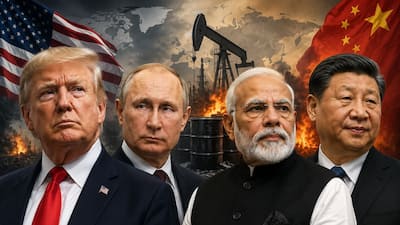
The United States House of Representatives has approved a major Russia sanctions bill that could give President Donald Trump the authority to impose tariffs of up to 100% on countries purchasing Russian oil and gas. India and China, among the major buyers of Russian energy, could potentially face the consequences of the legislation.
The bill, officially titled the Lindsey O. Graham Sanctioning Russia and Iran Act of 2026, passed the House on September 16 by a vote of 262–159. It had already secured approval in the Senate and will now be sent to President Trump for his signature. However, the legislation itself does not automatically impose a 100% tariff on India. Instead, it creates a legal framework that could allow the US president to take such action.
Why Washington Is Targeting Russian Energy Buyers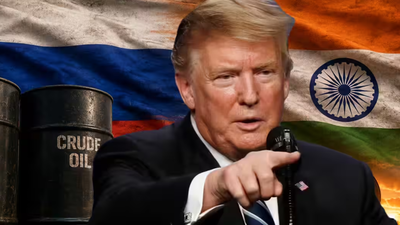
The legislation is designed to increase economic pressure on Moscow over its continuing war in Ukraine. It targets Russian officials, financial institutions, energy-related activities and vessels associated with the country’s so-called shadow fleet.
The proposed tariff authority is aimed at countries that continue to purchase significant quantities of Russian oil and gas. Washington’s broader objective is to reduce the revenue Russia receives from energy exports, which contribute to its economy and support its ability to finance military operations.
Supporters of the bill argue that stronger sanctions could encourage countries to reconsider their commercial relationships with Moscow. The measure also reflects growing pressure within the US Congress for tougher economic action against Russia.
India Among the Countries That Could Be Affected
India has become one of the important buyers of Russian crude oil, particularly after Western sanctions and changes in global energy markets following Russia’s invasion of Ukraine. Indian refiners have purchased Russian oil based on commercial considerations, including availability and pricing.
The new US legislation could therefore create additional uncertainty for India’s energy trade. If the tariff authority is used against India, duties on Indian goods entering the US market could increase substantially. Such a move could affect exporters, supply chains and the competitiveness of Indian products in the American market.
It is important to note that the bill authorises potential tariffs but does not establish that India will automatically receive a 100% duty. The final decision would depend on the Trump administration’s interpretation of the law, subsequent policy decisions and any exemptions or waivers that may be considered.
Senate Approval and House Vote
The Senate had previously approved the legislation by an 86–11 vote. The House subsequently passed the bill with support from lawmakers belonging to both major political parties.
According to reports, 58 Democrats supported the measure, while seven Republicans voted against it. The bipartisan backing reflects congressional concern over Russia’s continued military activities and the desire to increase pressure on Moscow.
At the same time, some lawmakers expressed concerns about granting the president extensive tariff powers. Critics warned that broad tariff authority could have economic consequences for American businesses and consumers, particularly if duties increase the cost of imported products.
Concerns Over Presidential Tariff Powers
The tariff provision has generated debate in Washington because it could provide the White House with considerable flexibility in dealing with countries that continue buying Russian energy.
Supporters see the authority as a tool for encouraging international cooperation against Russia. Opponents, however, have questioned whether such powers could be used too broadly or create uncertainty in global trade.
Tariffs imposed on countries such as India and China could also have indirect consequences for American companies that rely on imported goods and international supply chains. The economic impact would depend on the products targeted, the scale of duties and the responses of affected countries.
The legislation reportedly includes provisions allowing the president to waive sanctions under certain circumstances when national interests are involved. This could become relevant if Washington considers the economic and diplomatic implications of imposing severe tariffs.
Implications for India-US Relations
The development comes at a sensitive time for India-US relations. The two countries have expanded cooperation in areas such as defence, technology, trade and strategic security. However, differences over India’s energy purchases from Russia have remained an important point of friction.
India has consistently maintained that its energy decisions are guided by national interests, market conditions and the requirements of its population. Any additional US trade restrictions could lead to discussions between New Delhi and Washington regarding exemptions, negotiations and the wider impact on bilateral commerce.
The potential tariff threat may also encourage Indian policymakers and businesses to assess alternative markets, diversify energy sources and strengthen domestic economic resilience.
Read more like this:
- India’s Semiconductor Ecosystem Expands, PM Modi Highlights New Investment Opportunities
- दिल्ली SIR के खिलाफ याचिका पर सुप्रीम कोर्ट ने जल्द सुनवाई को दी सहमति
What Happens Next?
The next major step is President Trump’s decision on whether to sign the bill. If enacted, the administration would then determine how and when to use the powers provided under the legislation.
The White House may consider several factors, including Russia’s conduct, India and China’s energy purchases, the impact on American consumers and the broader diplomatic situation. The implementation process could also involve further guidelines and decisions about targeted countries and exemptions.
For India, the immediate issue is not an automatic 100% tariff but the possibility of additional trade pressure from Washington.
Conclusion
The US House’s approval of the Russia sanctions bill has created a fresh challenge for countries that continue to purchase Russian energy, including India. The legislation provides President Donald Trump with the potential authority to impose tariffs of up to 100%, but such duties are not automatically applicable.
The bill’s progress highlights the growing use of trade measures as part of Washington’s strategy to pressure Moscow. India will closely monitor the next steps while assessing the possible consequences for its energy security, exports and relations with the United States.
The final impact will depend on President Trump’s decision, the implementation of the law and the diplomatic response from affected countries.