Join
Join
 Shorts

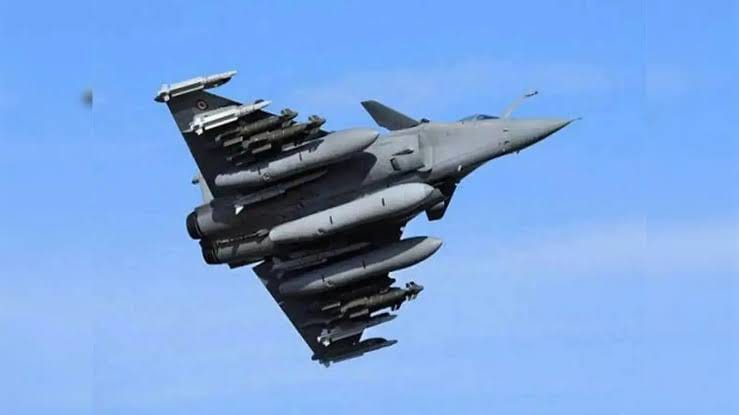
India has taken another significant step toward strengthening its air combat capabilities, with French aerospace major Dassault Aviation formally submitting its proposal for the Indian Air Force’s ambitious plan to procure 114 Rafale multi-role fighter aircraft.
The proposal marks a major milestone in one of India’s largest defence acquisition programmes and could significantly enhance the operational strength of the Indian Air Force (IAF), which has long expressed concerns over its declining fighter squadron strength.
The submission comes under the Indian Air Force’s Multi-Role Fighter Aircraft (MRFA) programme, a project aimed at modernising the country’s air power while addressing the growing security challenges posed by an evolving regional strategic environment. If the deal progresses as expected, it would become one of India’s biggest defence procurement contracts and further deepen defence cooperation between India and France.
Rafale – A Major Boost for the Indian Air Force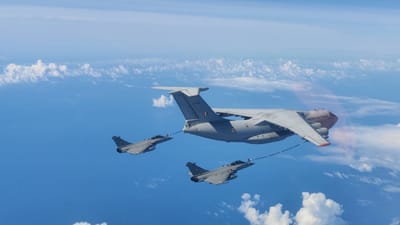
The Indian Air Force has consistently highlighted the urgent need for new fighter aircraft to replace ageing fleets such as the MiG-21 and other legacy platforms that are gradually being phased out.
While the induction of 36 Rafale fighter jets significantly improved the IAF’s combat capability over the past few years, officials have maintained that additional aircraft are essential to restore squadron strength to the desired operational levels.
At present, the IAF operates fewer fighter squadrons than its sanctioned strength, making the MRFA programme a strategic priority. The acquisition of 114 advanced fighters is expected to bridge this capability gap and ensure that the Air Force remains prepared for future security challenges.
Dassault’s Proposal
According to reports, Dassault Aviation has officially responded to India’s request by submitting its comprehensive proposal for the 114-aircraft requirement.
The proposal reportedly includes not only the supply of Rafale fighter jets but also provisions for technology transfer, maintenance infrastructure, training programmes, logistics support and large-scale manufacturing in India
Industry observers believe Dassault is expected to highlight its experience from the earlier Rafale deal with India, under which the aircraft have already demonstrated impressive operational performance in diverse climatic conditions ranging from the Himalayas to desert regions.
Rafale’s Performance in India
The Rafale fighter has become one of the Indian Air Force’s most advanced combat platforms since its induction.
Equipped with cutting-edge avionics, advanced electronic warfare systems, long-range air-to-air missiles, precision-guided weapons and superior radar technology, the aircraft significantly enhances India’s aerial strike capability.
The Rafales are currently deployed at strategic air bases, enabling rapid response across both the western and northern sectors.
Military analysts note that the aircraft has already proven its effectiveness in multiple operational exercises conducted by the Indian Air Force, earning praise for its versatility and reliability.
Strengthening Strategic Partnership with France
The latest proposal also underscores the growing strategic partnership between India and France, particularly in the defence sector.
Over the past decade, the two countries have expanded cooperation in areas including defence manufacturing, maritime security, space technology, artificial intelligence, and Indo-Pacific security.
France has emerged as one of India’s most trusted defence partners, supplying advanced military platforms while supporting India’s vision of greater defence self-reliance.
Focus on ‘Make in India’
One of the key aspects of the MRFA programme is India’s emphasis on domestic manufacturing.
The government has repeatedly stressed that future defence acquisitions should contribute to the country’s “Make in India” initiative by encouraging local production, technology transfer and employment generation.
Industry experts expect Dassault’s proposal to include substantial localisation commitments through partnerships with Indian defence manufacturers.
Competition in the MRFA Programme
Although Dassault’s proposal marks an important development, the Rafale is not the only aircraft competing in the MRFA programme.
Several leading global aerospace manufacturers have expressed interest in the project, offering different fighter platforms with varying capabilities.The Indian government is expected to conduct a comprehensive technical and commercial evaluation before selecting the final aircraft.
Addressing Regional Security Challenges
India’s fighter modernisation programme comes at a time when the regional security environment continues to evolve rapidly.
With neighbouring countries modernising their air forces and investing heavily in advanced military technologies, maintaining technological superiority remains a key objective for the Indian Air Force.
Defence experts believe that acquiring additional 4.5-generation fighter aircraft like the Rafale would significantly improve India’s deterrence capability while complementing indigenous programmes such as the Light Combat Aircraft (LCA) Tejas and future Advanced Medium Combat Aircraft (AMCA).
Economic and Industrial Impact
Beyond military capability, the proposed acquisition could generate significant economic benefits.
Large-scale manufacturing in India would create employment opportunities, enhance domestic aerospace manufacturing capabilities and encourage investment in high-technology sectors.
Technology transfer provisions could also enable Indian companies to develop expertise in advanced aviation systems, potentially benefiting future indigenous defence programmes.
Government’s Procurement Process
The submission of Dassault’s proposal represents only one stage of India’s defence procurement process.
The Ministry of Defence is expected to carefully examine all proposals received under the MRFA programme before initiating further negotiations.
The process may involve multiple stages, including technical assessments, field evaluations, commercial discussions and approval by various government committees.
Read more like this:
- फोन का इंटरनेट दूसरे डिवाइस तक कैसे पहुंच जाता है? Hotspot का खेल समझिए
- SQL क्या होती है और यह कैसे काम करती है? आसान भाषा में समझें
- CJP आंदोलन के बाद बदली सियासी रणनीति, RSS ने युवाओं तक पहुंच बढ़ाने के लिए तेज किए अभियान; नई पीढ़ी को साधने की कोशिश पर चर्चा
Industry Outlook
Aviation experts view the current development as a positive signal for the future of India’s air power modernisation.
The Indian Air Force has repeatedly stated that replacing retiring aircraft while maintaining operational readiness remains one of its highest priorities.
If the procurement moves forward successfully, the additional Rafale fleet could serve alongside existing Rafales, Su-30 MKIs, Tejas fighters and future indigenous aircraft, creating a highly capable and flexible combat force.
Looking Ahead
The formal submission of Dassault Aviation’s proposal marks an important milestone in India’s long-term effort to modernise its fighter fleet. While several stages of evaluation and negotiation remain before a final decision is reached, the development highlights the government’s continued commitment to strengthening national security and enhancing the operational capability of the Indian Air Force.
Whether the Rafale ultimately secures the contract or another platform is selected, the MRFA programme is expected to shape the future of India’s air combat capability for decades. The outcome will not only influence military preparedness but also play a crucial role in advancing India’s defence manufacturing ambitions and strategic partnerships with global aerospace leaders.